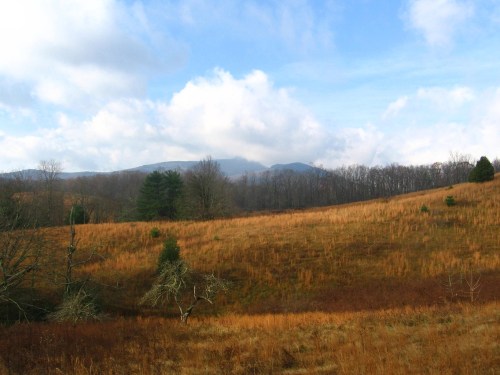
This is actually a snapshot taken the day before all the rest of this post and the next, but still in the same meadow as the second photo below, or on the Frank Park Trail Loop, the longest trail in Frank Park at approx. 5 miles.

View of Granddaddy Mtn. from the meadow, important in Mossman mythology as the source of their fabled Rock Gods.
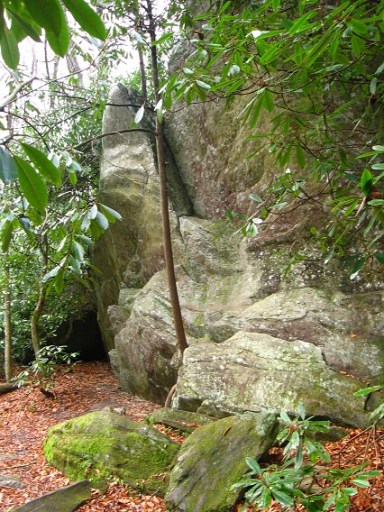
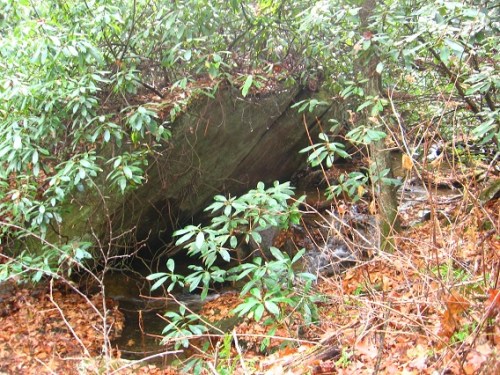
Then in continuing on the loop, we descend into the rhododendon forest and follow Bee Line Creek for about a mile to a mile and a 1/2. The trail runs by 3 larger rocks after the rather steep descent from the meadow, leveling off in the process as it begins to parallel the creek.
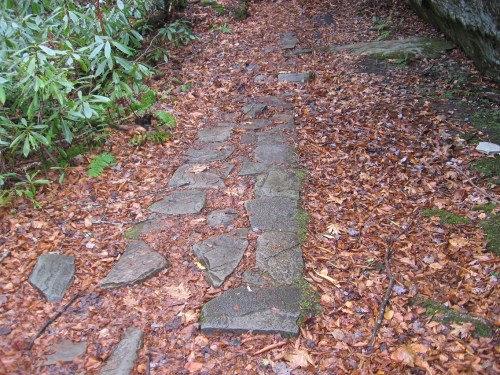
At the last of these rocks, the trail turns into a type of stone sidewalk for a brief spell before reverting back to dirt.
But before long, there’s another much more substantial stretch of the Loop Trail that turns into another element besides dirt, this time *water*. Yeah, that’s a stream actually running through the trail, and this continues for about a football field in length probably but which seems *much* longer. Not recommended for kids or novice hikers looking for a relaxing day out in the woods. Didn’t bother me much, though, since I had more involved reasons for being here (blog mythologies).
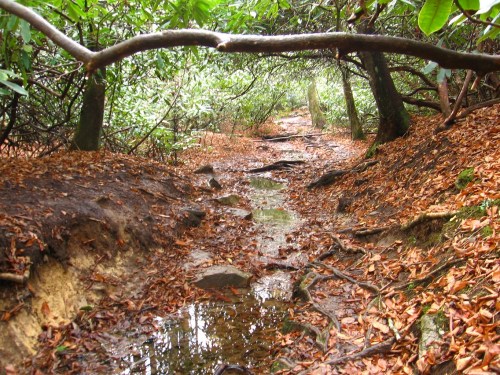
Even taking away that tough stretch where it turns to water, the Loop Trail seemed considerably longer than what I remember, with many rocks and places along the way seeming new to me. Is it possible for a trail to actually grow over time psychologically and perhaps even physically? I’m sure Hucka D. would give a resounding “yes” to this. He’s most likely right. I should add that I haven’t walked this loop in its entirety for a number of years, although I frequently hike various fragments of it. Loop Trail circumnavigates what in essence is the wild, beating heart of Frank Park, and helps the hiker grasp and absorb its raw, powerful nature better than any other park trail.
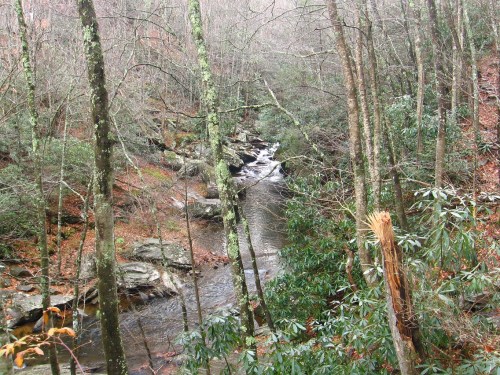
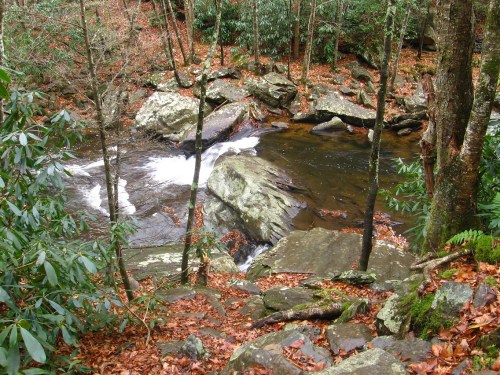
An example would be frequent vistas along its northern side of roaring Spoon Fork rapids and cascades such as those pictured below. Spoon Fork is the largest stream by far in either Frank or Herman Parks, and could be classified as an actual river. It is mentioned in the Baker Blinker Blog most prominently through the Portal System supposedly uncovered by Mossmen as they continued to settle the area of Frank Park. They did not create it however, making the system of unknown, ancient origin. Was it designed by those Rock Gods we mentioned before? I’ll hafta talk with Hucka D. about that whole, large subject soon.
Then we come to Crack Rock, which is, no, not an entrance to a den of illegal substance iniquity but a simple lightning strike shaped crack running perhaps 30 feet up one side a large rock. We’re still on the northern side of Frank Park and fairly high above Spook Fork after just accomplishing a steep ascent. We’re also heading upstream on Spoon Fork after descending along (and even in!) Bee Line Creek up until reaching the northern corner of the park, where Bee Line also empties into Spoon Fork at around the 2 mile point in our loop.
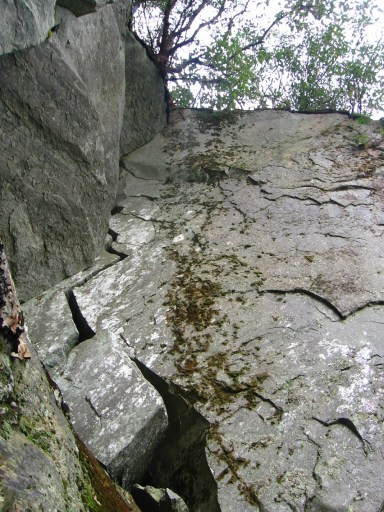
With a bit of effort, I was able to climb to the summit of the rock pictured above, where interesting patches of vegetation were found.

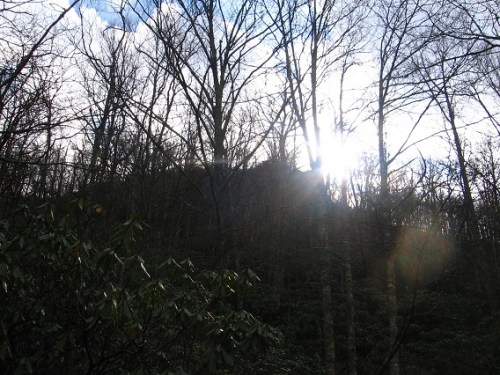
It was also from this summit that I was able to glimpse more, larger rocks near the top of this ridge, which I decided to name Sunrise Rocks because the sun was rising just above them as I took the below photo. Thick rhododendron, however, lies between me and these rocks higher up on the ridge. I decided a visit would have to wait until another time.
 Sunklands
Pingback: Wild Wonderful Frank Park 02 « Frank & Herman, Einstein!