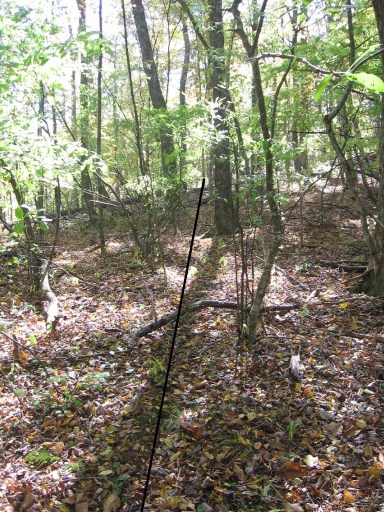
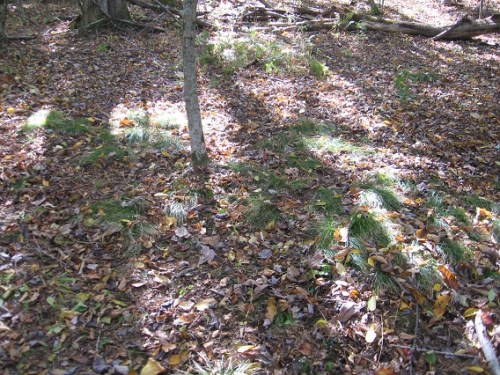
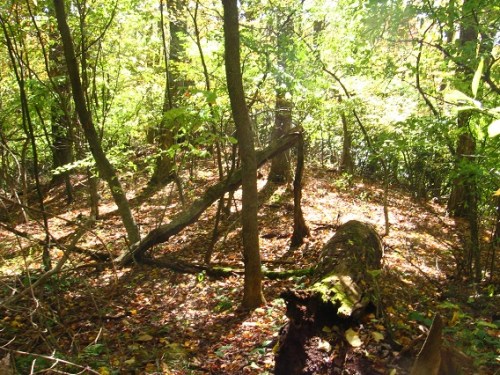
Revisited Kentucky yesterday and produced the following pictures. First up is of a string I set up running all along the Bee Line of Kentucky, which I was surprised to find out runs about 60-70 yards across the ridge. Amazingly long, straight line, then, and I’m starting to strongly suspect a direct affinity with DSotR2, another amazing alignment of considerable length. If these two line-ups are essentially one underneath it all, or directly related to each other, then this casts the Tin S. Man/Wallace3 relationship in nearby Green Oz Valley in a new light, perhaps one of renewed cooperation.
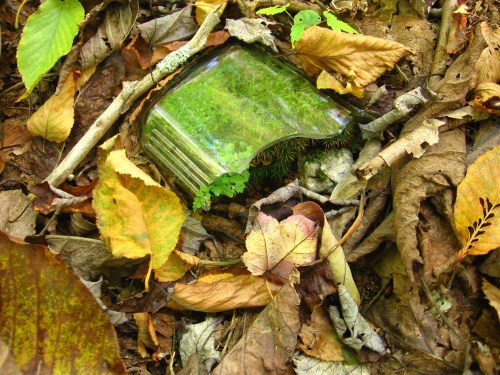
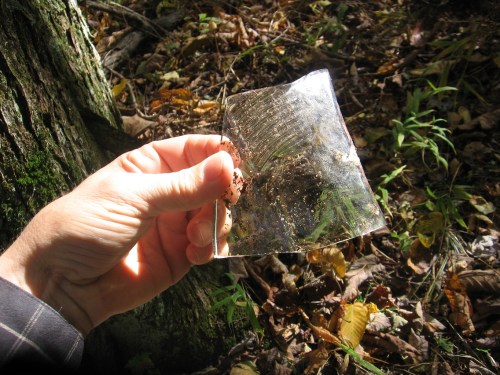
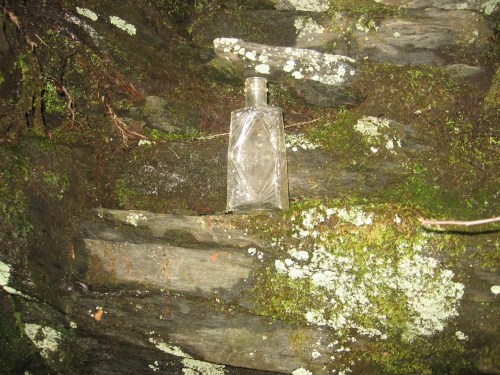
First up in our stringed line pictures comes the glass shard left in the ground just up from what I consider now the two central maple trees of our Kentucky story — more on those trees just below. As you can see, the string representing the Bee Line almost directly crosses over this buried segment of glass.

Bee Line running past the tree with the hole at the bottom pictured in this earlier post, and also Split Log just behind it, mentioned in the same post.

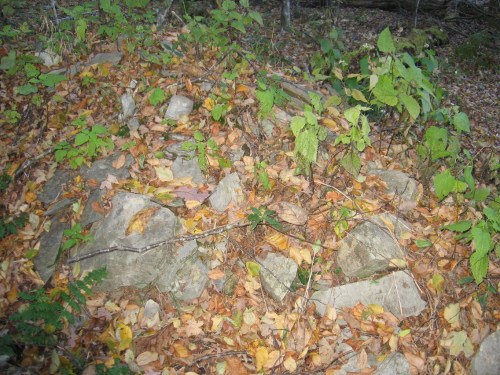
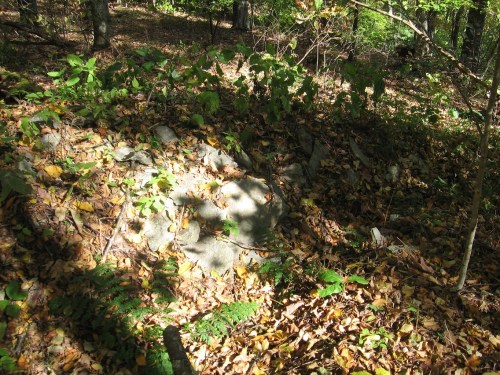
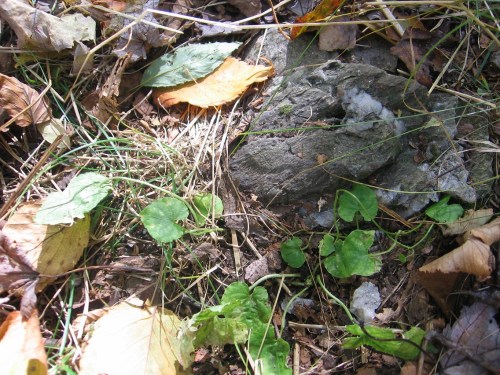
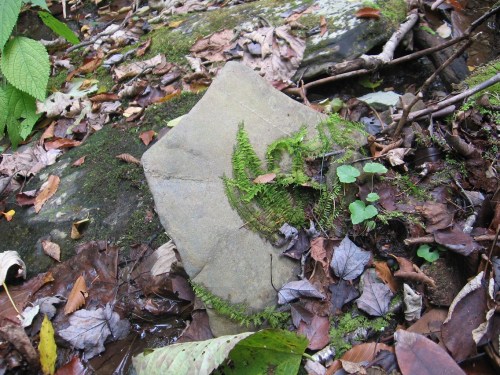
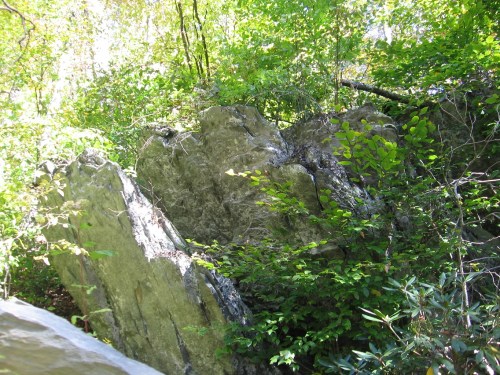
I’m calling these 3 rocks projecting from the leaf covered ground here Tie Rocks, not because they wear ties, har, but because these are what I tied the upper end of my string to, and so also marking this as the probable, upper reach of Bee Line itself. Might also be called “End Rocks”, then.

Another picture of that mysterious, rock covered mound just on the opposite side of Bee Line from these rocks.
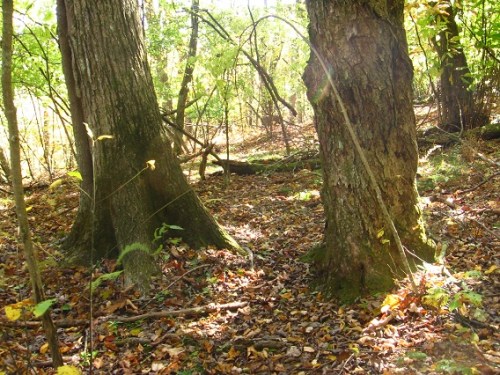
So back to the 2 maple trees where the glass shards came from, here we have pictured the considerably smaller of the two, called Tiny Tree for now. Contrast this to the description of Poe’s skull bedecked, very tall tulip tree in “The Gold Bug”, already discussed in this earlier post. Since writing that text, I’ve also noticed that the Bee Line runs right through the two maple trees in question, basically bisecting an imaginary line running between them. I believe Tiny Tree relates directly to Poe’s aforementioned, huge tulip tree, then (inversion or reversal), and is doubled by the larger maple right on the opposite side of Bee Line.
Another very interesting thing to mention is that Tiny Tree’s bark has been worn off toward its base, as seen below. Have deer been rubbing against it? Or is this possibly additional handiwork by humans from previous times? It seems like more the actions of a knife did this. Could be wrong, but that makes for a lot of rubbing if not.

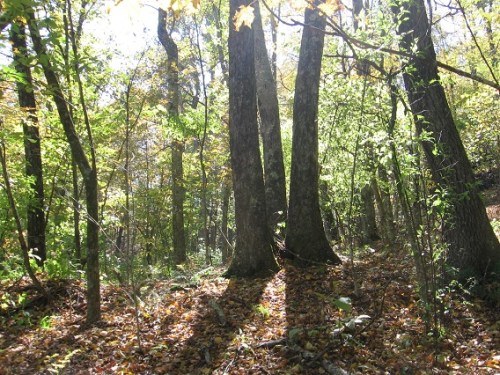
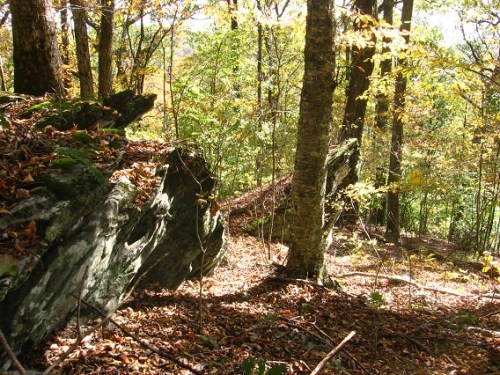
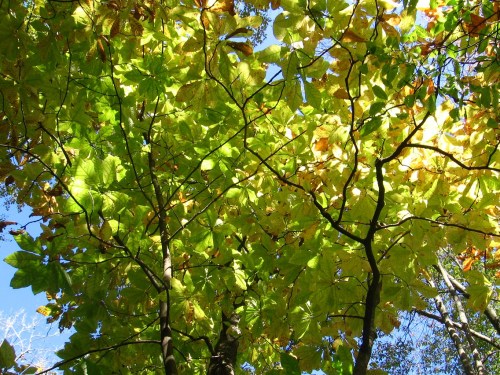
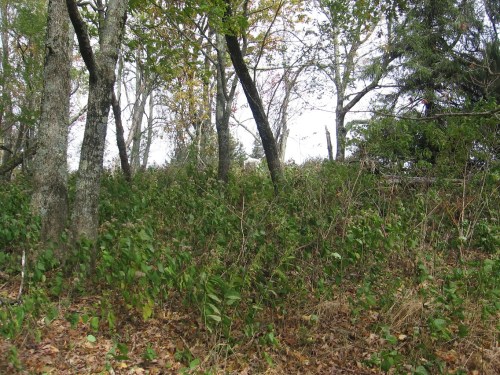
2 tall beech trees, which bend toward each other at their tops to intertwine in the leafy parts, seem to dramatically mark the lower end of Bee Line, which might start in the gap between them or in the immediate vicinity. The higher merger of the trees way up in the air here seems to mirror the unifying energy of the Bee Line between them on the ground. Yes, seems significant.


Lastly and probably not leastly we have the presence of an actual skull in Kentucky, of unknown animal origin. This comes from the southeast corner of the platform region. Is it a fox, perhaps? Doesn’t look like a calf’s but could be wrong, once more. Also significant is that only one of the two eyes sockets remain on the skull (the right one), and Poe’s “Gold Bug” story prominently features eyes of a skull. Specifically, Legrand’s servant Jupiter had to drop the gold bug and attached line through the *left* eye of the skull, and not the right eye. Only the left eye drop of the bug determines the correct position of the treasure subsequently uncovered, although the right eye was mistakenly tried first because of Jupiter’s inability to tell his left from his right.
Maybe the skull is that of a domestic dog instead?? (at least it’s not human!)
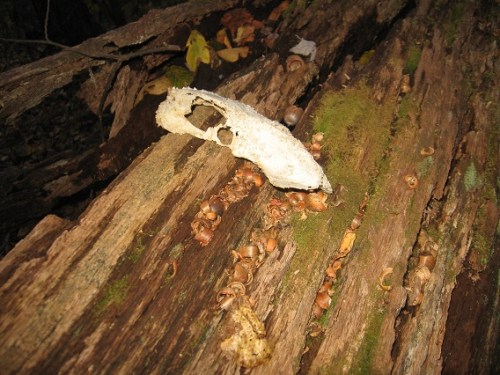

fox skull



















 Sunklands