Category Archives: Texas

More Whitehead related maps 01

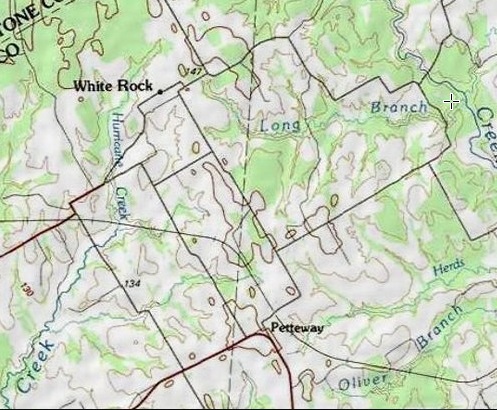
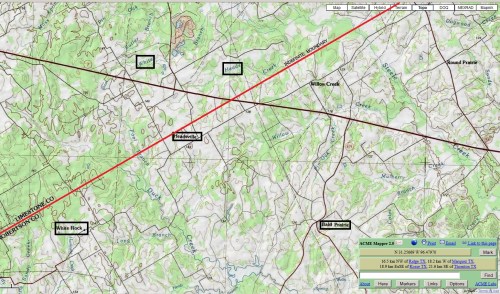
Conjunction of Headsville with Bald Prarie in Robertson County, Texas indicates “bald head”. Nearby is White Creek and Heads Creek, just over line to north in Limestone County, but name conj. on map originally made me think this was a White Heads Creek. White Rock is below Headsville.
robertsontexas

https://bakerbloch.wordpress.com/2013/04/05/whitehead-x-ing-02/

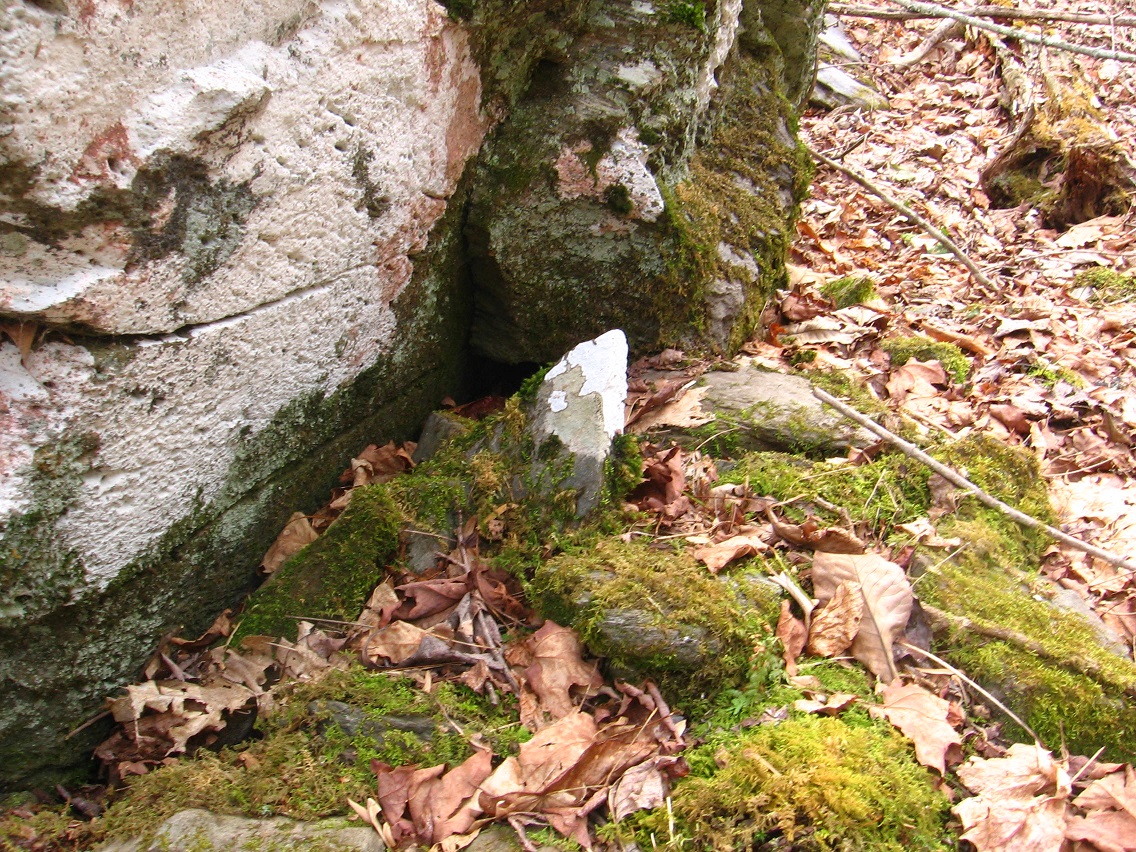
I believe it relates to the first 2 rocks of the above, recent blog post here. The first picture is of a rock with a bald spot upon it. I think I’ll call this Head Rock now. Headville? The next picture is of a white rock, which I’ll call White Rock, which is near Headsville (and Bald Prarie) in Robertson County, Texas. These rocks of course come from the Whitehead Crossing region.

There is no article in the Texas Alamac for White Rock, Robertson County, unlike for nearby Headsville and Bald Prarie. However, this comprehensive almanac has a listing for a White Rock in Fannin County, which happens to be near a Petty according to the below stats, as White Rock in Robertson County is very near a Petteway (Pett—y + ewa in effect).

whiterocksintexas
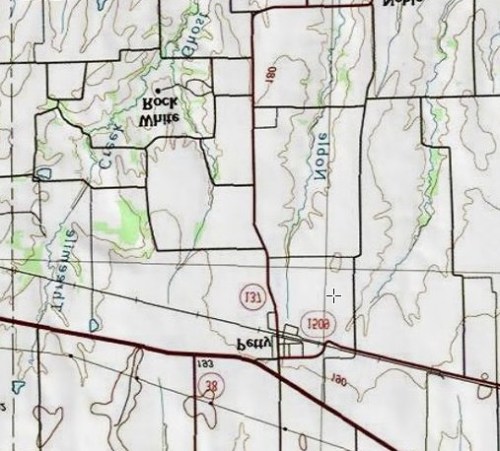
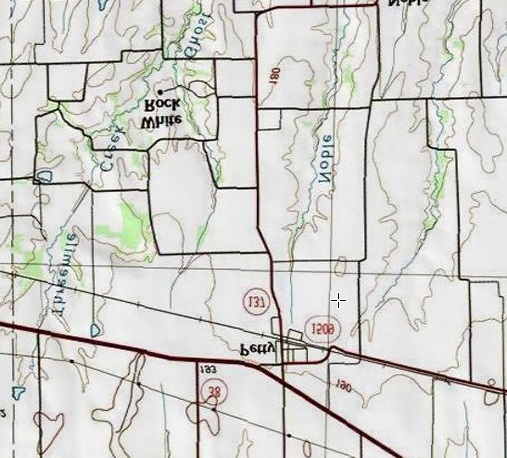
White Rock population places in Texas. Notice that White Rock, Robertson County is on a Petteway topo map and White Rock, Fannin County is on a Petty map. This clued me in to their possible association.

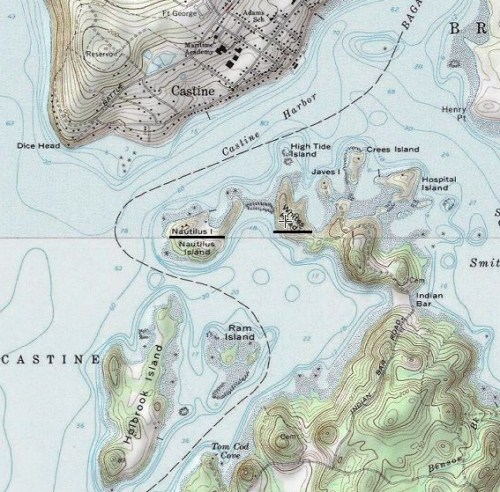
Originally *here*, in this Maine location, I thought Whites Head (reverse of “White Heads”, Texas just discussed) was actually *one* word, Whiteshead, only corrected in my mind when I just checked in the GNIS database. There is a causeway of sorts, it seems, between this Whites Head, then, and Nautilus Island, which has come to symbolize Second Life’s Nautilus Island and probably Second Life itself.
monhegan04

4/11/13:

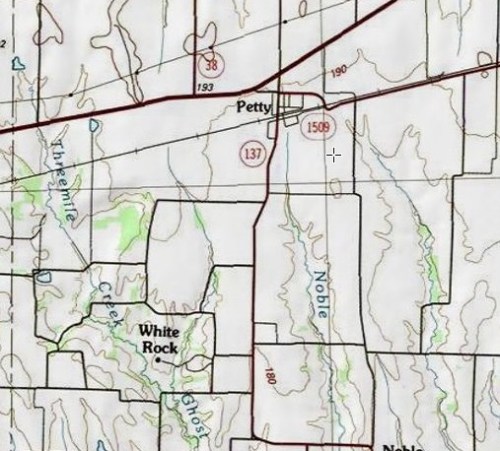
But getting back to the White Rocks of Texas, I noticed that the above mentioned White Rock near Petty is actually not in Fannin County but just over the east line in neighboring Lamar, about a mile and a 1/2 from Fannin County. So the GNIS database got this wrong, harkening back to the Herbert error discussed several months ago on this blog. But then in looking at that listing again, it’s interesting to note that a White Rock lies on a Whitewright topo map, and this particular White Rock is just beyond the *west* Fannin County line, in Grayson County in this case, about 4-5 miles in. Besides Whitewright we also have a White Mound near this White Rock, making a type of White Rock – Whitewright – White Mound triangle, with two more interestingly named population places within this established triangle, or Tom Bean and Kentucky Town.

Another perhaps odd thing here: White Rock in Lamar County, unlike the great majority of population places on the topo map involved, is marked with a black dot. So is White Rock in Robertson County. If we make White Rock, Lamar County the retrograde inversion of White Rock, Robertson County merging these two black dots, we find that each lies about 2 1/2 miles from their Petty (Lamar County) and Petteway (Robertson County) and in the same direction.

whiterocktexas02b

whiterocktexas01b

whiterocktexas01c
Retrograde Inversion of White Rock-Petty, Lamar County. You can kind of make an animation by toggling this with this.

There is one other Petty in Texas, in Lynn County on a topo map named New Home. This is also the only other Petty in the US as a whole according to the GNIS database.

petty01

From this map of part of Lynn County (lower right corner), we can see that Petty is (or was) near a place called Dune. Grassland exists to the east of Dune in this county still.

HockleyCountyTexas1940

The planet Dune became the New Home of Paul Atreides in Frank Herbert’s famous novel Dune, already discussed in connection with another map anomaly involving the name Hebert itself. Should White Rock-Petty be fitted into this overall mythology, still developing then? Or is this, ahem, a petty matter to contemplate.

175px-Lynn_County,_TX,_sign_IMG_1492

White Rock in Whitehead Crossing *points*. What is it indicating, if anything?

604ec08fdc1a4f153cf39bba8243a7e6
Ahem.

6 Comments

Filed under Frank Park, MAPS, Texas, Whitehead Crossing

Tidbits.

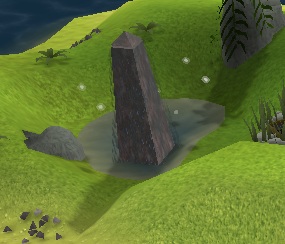
Water obelisk from Runescape:

http://misc.thefullwiki.org/Water_Obelisk

http://runescape.wikia.com/wiki/Water_Obelisk_Island

Compare:

—–

Looking up other Pietmond related names in atlases and came across SoSo Springs in Brewster County, Texas, more commonly known as Pena Blanco Springs. This appears to be the only significant place named Soso outside those directly connected with the Soso, Mississippi village. Quite amazing: a swimming pool formed from the spring waters was the landing spot of a 150+ lb. meteorite in 1946. Article here:

http://www.minsocam.org/ammin/AM32/AM32_354.pdf

INrnooucrtoN
As far as known, man has never constructed a device in which to trap
a meteorite falling to the earth. Had he done so, possibly he could not
have improved upon the swimming pool at the headquarters of the Gage
ranch about 9.5 miles southeast of Marathon in Brewster County, Texas.
This swimming pool received the Pefla Blanca Spring meteorite with a
violent splash at about 1:20 p.u. on August 2, 1946. The meteorite is
named from the spring which forms the swimming pool and which is
an historic landmark in the region. The exact location is longitude
103″7.l’ west longitude 3007.5′ north latitude. The unusual location of
the fall, the fact that the meteorite fell within a few hundred feet of
twenty-four people, and its unusual petrographic character appear to
warrant a fairly complete account….

http://www.encyclopedia-of-meteorites.com/meteorite.aspx?id=18786

—–

Hmmm, well we can go several directions in Pietmond storytelling with this one. First off, Obelisk Pond is the site of a *meteor or meteorite fall*, and the obelisk represents the meteor itself, or marks the location of the fall. Perhaps the falls behind the pond represent the fall of the meteorite. Like the Pena Blanco Springs meteor, our Pietmond meteor, perhaps nicknamed SoSo, fell into this body of water on the western edge of the village. Perhaps it created the pool in the first place. Or it could have been so large that the obelisk was made from it, or at least the obelisk *contains* the meteor or meteorite in some way. I also think back to a realtor I was renting from in Aotearoa who jokingly said to me that all these sinks in the area, including the Aoteaora Sink we were jointly staring into at the time, were perhaps created by meteors. Did the SoSo Meteor create the Pietmond sinkhole itself?? A possibility (!)

http://www.meteorite.com/meteorite-gallery/meteorite-pages/Pena_Blanca_Spring.htm

Might even have some kind of SoSo Meteor gallery based on the pictures in that page linked to above.

—–

http://en.wikipedia.org/wiki/The_Paradise_Syndrome

Meanwhile, over the two-month journey back to the planet, Spock works on the translation of the obelisk’s symbols. He theorizes the obelisk may have been placed on the planet as an “asteroid deflector” built by the ancient Preservers who are believed to have seeded the galaxy with humans, particularly groups that may have been in danger of dying out thousands of years ago. The asteroid deflector was designed to protect them in a high-risk star system. Spock concludes that the device has ceased to work properly. Spock determines that the only hope of saving the planet is to somehow activate the deflector. He eventually realizes that the symbols aren’t words but musical notes; a possible activation code of some kind.

So with this new tie-in, perhaps the obelisk of Pietmond likewise deflects asteroids, perhaps put in place after the original asteriods created the Sunklands sink. Or it may be a model of an original, larger meteor-deflecting obelisk. Words as musical notes…. interesting.

Also interesting is this conjunction of names in Washington state:

http://bakerblinker.wordpress.com/?s=stranger

1 Comment

Filed under **VIRTUAL SL, Jeogeot, MAPS, Pietmond-, Sunklands, Texas, Washington