Some thoughts while I have them in my head upon rereading old blog entries about this most central of all Frank Park locations, it seems.
Hucka D.:
I am here to help. You have Grey Rock, you have Seal Stone. You have No Title Spring. You have the yellow brick road leading to the 50 bottles region no more [“Goodbye”]. You have The Rocky Trail, which goes into and beyond Grey Rock. You have Rock the Rocket Man, who crash landed next to Green Stream and took The Rocky Trail to Green Turtle. Green Turtle was also known as Green Parrot. On this same finger of land is found Edward Stone, a bleedthrough of Edwardston, which also happens to be near a Green Turtle[ in Mythos].
bb:
Which of the stones is Seal Stone, Hucka D.?
Hucka D.:
A choice. Some people go both ways — and so forth.
bb:
I think I see. ‘Course the names could have shifted around. What about the Orange Hill?
Hucka D.:
Castle Dundee. Home of Mr. and Mrs. Dundee. Who owned the dingo.
bb:
Is there, then, a Line of Dundee?
Hucka D.:
Might be.
bb:
High Octave Castle, then.
—–
dingo rise/fox fall
—–
bb:
And then just a little more — I think Rock would have found The Grave and thought it to be Whitehead’s, the originator.
Hucka D.:
Marble City. Marble Falls.
bb:
Whitehead X-ing is such a complex area!
Hucka D.:
You build on Fantasia Brick Road and take it to the next level. Also: Fairy House. Like Elton John is a famous fairy, in a positive way.
bb:
The [diamond patched] tail wags the dog.
Hucka D. (correcting back):
God.
http://davewainscott.blogspot.com/2011/01/peter-gabriels-mercurial-disruptive.html
—–
4/23/13:
“The evergreen grass atop the finger of land between Little Whitehead and Whitehead Brook, Hucka…”

The same post talks about Rock’s grave, which is not his grave in the production shots of “Fade to Moss”. Wonder where Gene Fade is on that?
Rock’s grave, however, obviously strongly resonates with the tiny Dogpatch Cemetery only found very recently. Rock, I believe, would have stumbled upon it — could have stumbled upon it — in his explorations of the area.
When does Rock created his twisty turny tale, where he’s a bad guy instead of a good one? It’s to disguise his whereabouts and doings. He thinks like a syncher.
Do the yellow bricks hidden at Tinsity come originally from Whitehead X-ing?
I believe that Herman Park’s Billfork originates in Whitehead. Mossmen used the Spoon Fork portal system to reach Green Stream and the Korean Channel. At the upper end of the Korean Channel is Whitehead X-ing; Jeogeorock, which is Grey Rock. Had the Mossmen already found other jeogeorocks? Possibility. They traditionally come from Moss Most, an original settlement far up Spoon Fork from Frank Park, just at the edge of where it knives toward Frank Park and the portal system. Then they reached another historical node at Mocksity, downstream, then also Notherton across The Way. This is where knife truly acts as a medium between formerly cross Spoon and Fork. Perhaps The Way had not even been created (until then?) — makes sense. Gene Fade, eventual actor in all those Salad Bar Jack adventure movies, born at Jupiter Rock above Nothernton, on what is called simply Gene Fade’s Mountain in this here blog. Some say the red spot on the rock is a jewel, perhaps a ruby. But related to this one found in Second Life on the yin-yang style Bracket Islands of the Corsica continent [LINK]. Gene Fade used [My Second Lyfe] avatar Karoz Blogger to create the ruby or jewel (or a virtual rendition of such?), with, again traditionally, 32 prims or 32 facets. This is the Korean Channel. Gene Fade must have learned about the fabled Korean Channel while growing up in this Jupiter Rock/Notherton area. It was an ultimate destination, like Utah or Deseret was for the Mormons. Gene Fade desired greatly to go to this Korean Channel with its Green Stream (full of emeralds and rubies and diamonds?).
News came from afar that the Korean Channel had been sealed up for the spring/summer months. Mossmen settled in Red Head beyond the upper end of the channel, but still on Green Stream. They hid… their avatar bodies able to move through the thick rhododendron, but allowing no human humans access (like me!). Mossmen first made friends with The Bees (like Hucka Doobee) at neighboring Greenhead, strongly resonating with the honeybee name origin of Deseret in fact. There was a confusion about colors… with Red Head at the head of Green Stream and Greenhead at the head of Red(stream) [LINK: MISSISSIPPI]. Another essential energy was added to the mix with the crash landing of Rock’s Rocket at the upper end of the Korean Channel, or at the lower end of Whitehead X-ing — what would become this city. He used The Rocky Trail to move into Whitehead Crossing proper (all the imp. rocks along this path have become legendary) and settle not in the modern version of the city but at the old Green Turtle/Edward Stone region between Whitehead and Little Whitehead. The crash would open up a portal to Maine as well, allowing a single fairy to escape from Monhegan Island there (through the overlapping Little Whiteheads). This fairy, larger than any of the rest on that island, was a psychic double to Rock, and created his home in the fairy meadow on the east side of Green Stream from the crash site. Rock’s crash also highlighted the importance of Grey Rock and its accompanying Seal Stone.
But since Rock created a twisty-turny tale, disguising his actual story, the fairy could have also been Rock himself instead of his double.
Continuing this Maine-Whitehead X-ing parallel, we have the Maine Trail, a play on words of Main Trail, which would be the main trail of the area, to the west of Whitehead X-ing and connecting Jacob I. Road with the now paved or asphalted Twisty-Turny Road (just coined!).
Before I forget, there’s also probably a Crocodile Rock in Whitehead X-ing — maybe it is the same as the Green Turtle/Green Parrot, or yet another variant name of this formation.
The could have even been a battle or a war over what the name was for this particular formation (Green Turtle vs. Green Parrot).
Back to Rock… he would have passed Grey Rock with its Seal Stone on the way to Little Whitehead. He would have crossed Little Whitehead and entered Edward Stone proper (or whatever the town was named then — perhaps Green Turtle?) on the old fairy bridge (made by fairies but apparently the smaller or more traditional type). The fairies were hired from Monhegan Island (by whom?) So this “fairy bridge” becomes legendary and attached to Rock’s legacy as well. Another tradition says that he crossed into Edward Stone from the larger bridge at the present source of Little Whitehead, and over which you can clearly see the green turtle formation.
Revision: If the village is named Edwards Stone, then I think this means the Green Turtle oriented people won the war over the Green Parrot favoring tribe, who instead maybe moved upstream on Whitehead Brook to Rock’s Meadows and Rock’s Rocks, the upper limit of Whitehead X-ing. Rock would eventually make this his people instead of those at Edward Stone favoring the Green Turtle treatment of the formation. This is also like the Green Parrot province of Mythos upsteam on Edward Creek from Green Turtle and Edwardston. Green parrot would have been the shape of the formation for, say, a *normal sized human like Whitehead.*
Some variations of the story have The Rocky Trail paved with yellow or gold bricks, but this is false most likely — road too small or narrow? Instead the gold brick road was the old entrance into Whitehead X-ing, when Old Whitehead actually lived there. *Is* Old Whitehead buried at tiny Dogpatch Cemetery? But the story is certainly similar to Dorothy’s entrance into Oz — the crashed farmhouse is Rock’s crashed spaceship; the Rocky Trail is at least symbolically the Yellow Brick Road, and Seal Stone is the Scarecrow, who doesn’t know which rock is named such (some people go both ways, etc.). If there are parallels to Munchkins, they would be the meadow fairies. Back to Grey Rock and Seal Stone: the phrase “rocks for brains” also could be pertinent. Then Edward Stone is the Emerald City, complete with skyscrapers at the time. In fact, it had an unusually *high* proportion of skyscrapers to regular buildings. The population was about 20. The population use to be 40, but was cut in half during the Green Turtle-Green Parrot battle/war, which ended in a draw. Therefore the population simply refers to it as part of the larger Edward Stone, and the city changed its name accordingly. Another mysterious part is the Orange Hill or Orange Cliffs, on which the Dundee Castle is perched, where Mr. and Mrs. Dundee lived. Their dingo use to be sighted as descending the cliffs, only to come back up as a fox. Or visa versa. The legend is in many art pictures of the period.

Dingos descending represents the passage of life into death. Foxes ascending (to the Plane of Dundee) is death into life. They are Newborn on the Plane. They die at the bottom of the cliff where it meets Whitehead Brook. All this could be seen from Knobby Log, which was also inhabited. Knobs were homes — wood fairies once more?
Then it would be sacrilege to give No Title Spring a name, according to the fairies (?).
What did Rock find in Edward Stone? He found a population struggling to recover from the Green Turtle/Green Parrot wars. He made his home high above the town, but was able to see its skyscrapers still, so high they were. One skyscraper held the Art 10×10 (Wheeler-Jasper series). More fox-dingo images were within.

“Cliffs of Dundee” (Waverly Knapp, c1812)
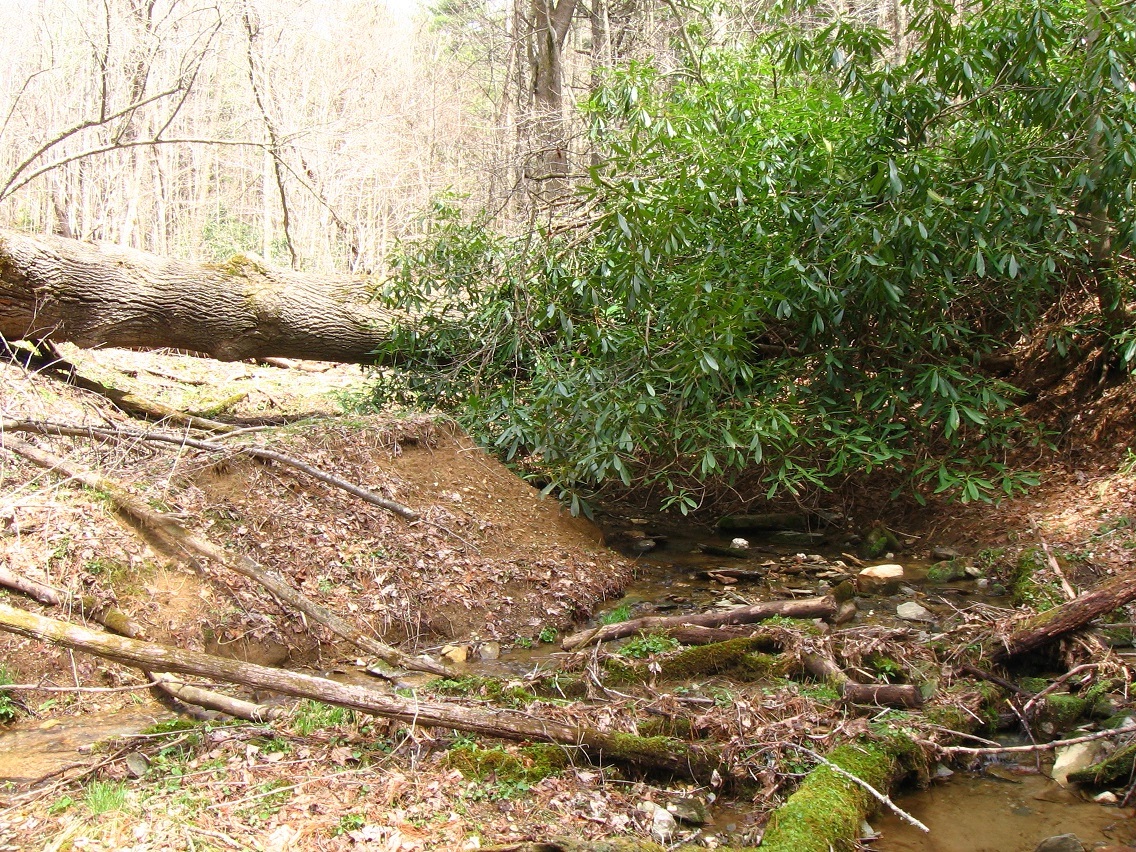
actual cliffs — not so high
Hucka D.:
There was an alignment of art galleries. And perhaps labyrinths at the same time. The Line of Art it was called. 39 people use to live in Edward Stone, and also 0.1 of a person known as [delete name].
“The Fairy?” I proffered.
Hucka D. (continuing):
The range was 38.9 to 39.3.
bb:
39 point 3 point what?
Hucka D. (ignoring the silly baker):
The line ran across the Castle Dundee to Edward Stone, atop the Knobby Log. Because it was on the line, Castle Dundee was required to become an art gallery in due time. It resisted.
bb:
Why?
Hucka D.:
There was a famous painting of the Panama Canal by Waverly Knapp (c1812), but was defaced by Rocket Man and his Rocket with “Sirius or Bust” scrawled upon its side. Mr. Dundee did not understand that this was part of the art, and painted over it.
bb:
Crocodile Dundee!
Hucka D.:
Correct. Of “Crocodile Rock” fame. Dundee and Alligator on opposite sides of a county.
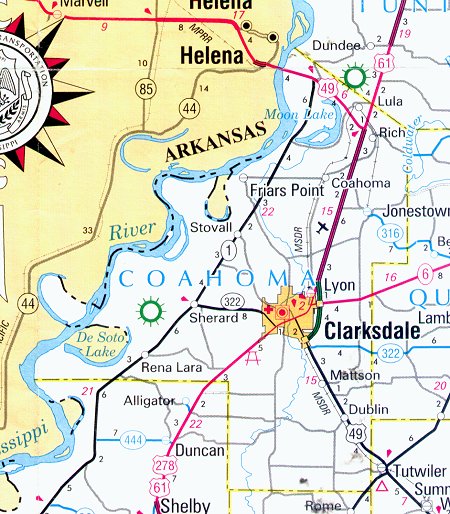
Ocahoma: 61×49!
—–
One important collage of the Art 10×10 was stolen from baker b., in turn, by a former art school acquaintance named Waverly Knapp (c1812). baker b. himself stole part of this painting-disguised-as-a-collage for his Gilatona-Lis series (c1812). Mouse Island was seen as the destination of death, where the fox descended down to from the Plane of Dundee and its Dundee Castle. This is also the Promised Land (of Gill’s Pier). To keep from entering the promised land too soon, baker b. avatar must move the Pier’s Gill wagon atop the Cliffs of Dundee, a difficult task in the painting but easier in actual life (cliffs not nearly as high as in the painting). Important also is the triangle of elements in the painting “Cliffs of Dundee”. Critics knew that the green mouse of the painting was R. Booger Hayes’ Mouse Island, and the Promised Land where the true nature of the island is allowed to “play out” (like the green mouse plays the guitar in the painting). The children around him are [white-ish] rocks — Rocks Von Trapp. The Green Mouse is also known as Captain or Capitan. He earns this title in the Promised Land.
Hucka D.:
Also obviously important are the images of Green Turtle in painting. Oil painting was seen as highest art, like the high castle of Dundee atop the cliffs. Mr. Dundee, the person of High Octave (Art), made sure this was understood. So the collage formerly known as Jasper 04 became the oil painting known as the “Cliffs of Dundee”. In this way it is much like Max Ernst’s Elephant of Celebes, an oil painting also based on collage principles, and perhaps also indistinguishable from a collage from afar.
bb:
Check this out, Hucka D.:

 Sunklands