Category Archives: Gene Fade’s Mtn.

Supersity 02

(continued from Supersity 01)

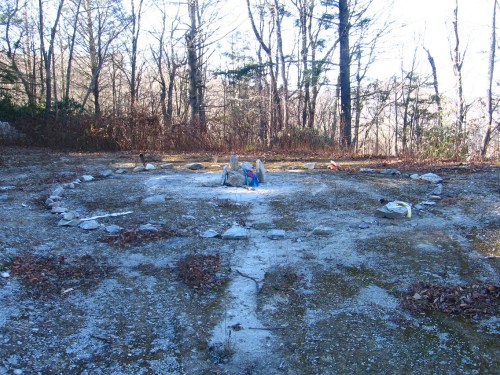
The medicine wheel/sacred hoop located just above the Supersity rocks at the end of a dead end dirt road contains two main parts: a circumference marked by 51 “ground” rocks (some with additional rocks on top) and a central configuration (cairn) containing about 10 more rocks. I prefer the term sacred hoop for this set-up, as there are no “spokes” of sorts connecting inner and outer rocks. The crystalinks article on the Indian medicine wheel has this to say:

Medicine wheels were constructed by laying stones in a particular pattern on the ground. Most medicine wheels follow the basic pattern of having a center cairn of stones, and surrounding that would be an outer ring of stones, then there would be “spokes”, or lines of rocks, coming out the cairn.

Almost all medicine wheels would have at least two of the three elements mentioned above (the center cairn, the outer ring, and the spokes), but beyond that there were many variations on this basic design, and every wheel found has been unique and has had its own style and eccentricities.

In the case of our Supersity medicine wheel or sacred hoop, we also have each of the 4 cardinal directions on the outer circle — east, west, north and south — delinated or accented by rocks on top of rocks, ribbons, or, as in the case below, by a bird feather, perhaps an eagle’s feather.

Here we have the central cairn of stones containing a number of interesting items, including 3 conjoined ribbons colored red, green and blue — actually more of a magenta, cyan, and indigo respectively in looking at the picture again (hard to tell the exact hue because of the shadows, though). These are the same type of ribbons that we find amongst the outer rocks.
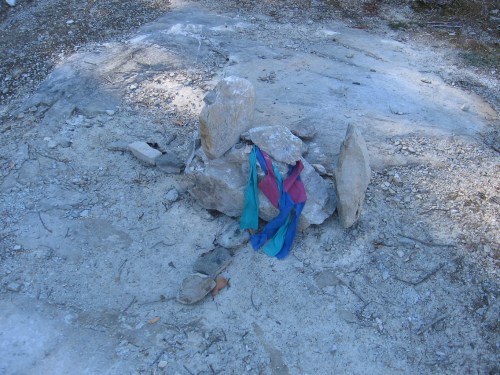
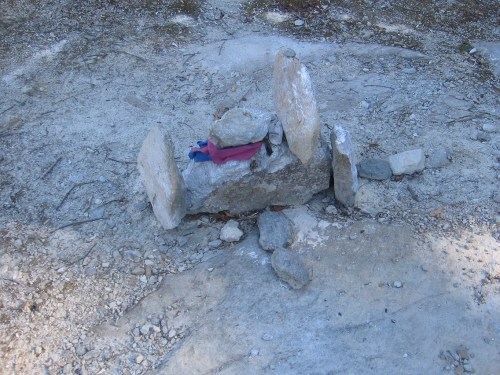
Zooming into the cairn reveals a niche next to the pinned ribbons harboring a US quarter with a Hawaiian seal on the reverse side (reverse side up), a pink cluster of crystals, exact nature unknown for now, and some partially burned plant incense, also of unknown type. It almost appears to be fungii (?)

Let’s move back to the circumference of rocks and the 4 marked directions. I don’t carry a compass while hiking, so I’m not sure what each direction would be — if they are aligned in this way. But we can certainly guess that these 4 cardinal directions are implied, for the markings follow the traditional coloring for medicine wheels, or white…

… red…

… and then this feather already pictured above substituting for a black ribbon, which we’ll talk about more below. And when I returned the following week, there was a yellow ribbon pinned by rocks marking the last cardinal direction, although I didn’t take a picture of it during this particular visit. It would lie on the far side of the circle in the picture below, or opposite the feather in the foreground pictured at the first of this post.

So compare here for the markings of a traditional medicine wheel.

The above picture of the Supersity sacred hoop would then correspond directly with the following arrangement of colors (which, although usually red, yellow, black and white, varied in exact placement in respect to each other):

medicinewheel425c

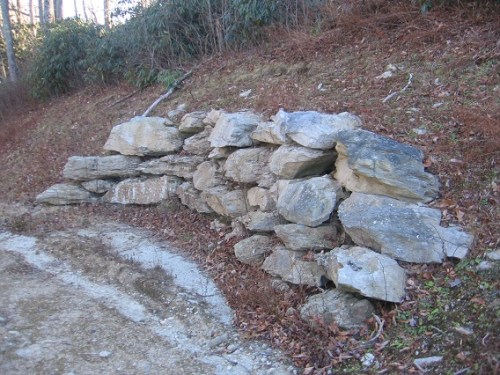
Below we have some details of other rocks in the same area as the Supersity sacred hoop but not a part of the hoop itself.
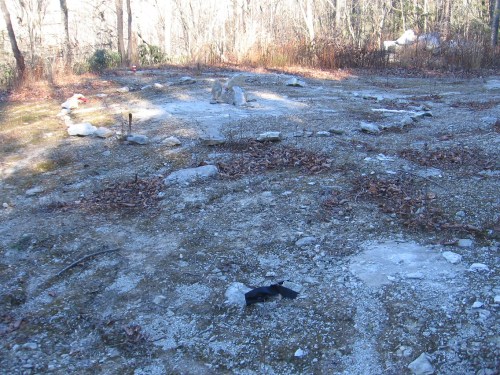
And now we return to the black ribbon, which as you can see by the picture below has either been placed outside the circumference of rocks for some purpose by its makers, or dislodged from an original placement within these rocks, which would logically be where the feather is on the near side of the circle (see 1st picture in this post). Interesting questions arise either way.

I would return to the Supersity Sacred Hoop both days of the following weekend so I’ll save more speculation of that amazing find for future posts (!).
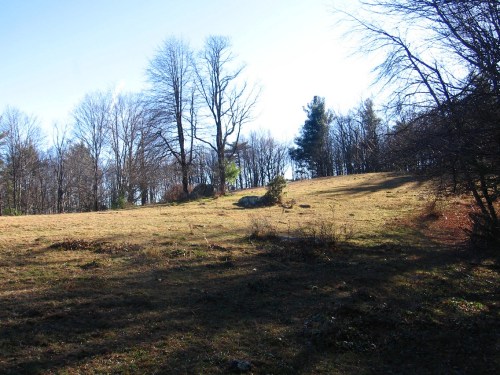
It was a chilly but sunny day for Frank Park exploring.
1 Comment

Filed under Frank Park, Gene Fade's Mtn., Sacred Hoops

Supersity 01

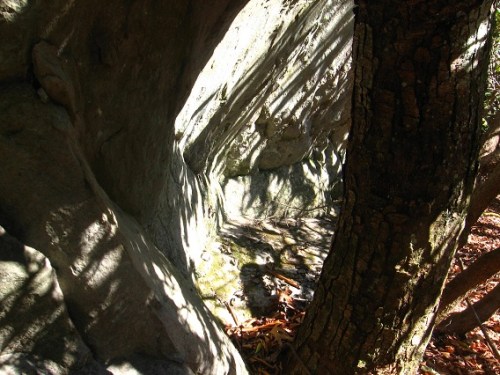
“What a find!” I thought at the time. A Supersity indeed. It was rather large rocks below another (flat) platform area on a ridge I am fond of focusing on during my trips around Frank and Herman Parks this Fall. But just later on, I realized this was a “mere” substitute for what the Mossmen planned as an actual “super city”, building up from the location of a nearby old fort.

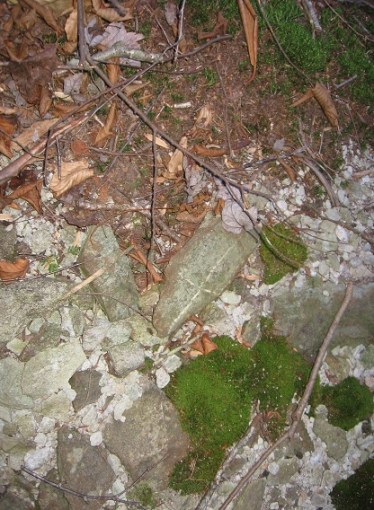
A gathering of white-ish rocks from the platform area mentioned above. I suppose you could classify this as another small rock art event, or part of one.

Hard to see from this photo, but the rocks pictured at the beginning of this post are dead center, and seemed to be aligned (yet more alignments!) with a type of path leading toward them starting from an opposite ridge.

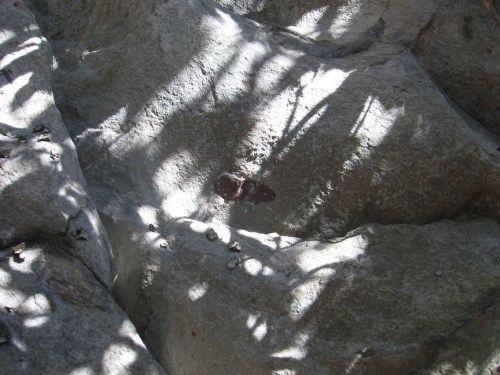
But now we move into several photos from the *real* location of Supersity in all likelihood, and I promise to go back asap for more snapshots this weekend. This “X” marked on a rock drew my attention and I decided to chronicle its seeming oddity, which appears to be man-made. X marks the spot, after all..

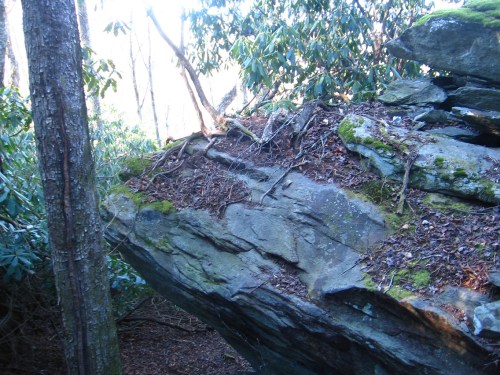
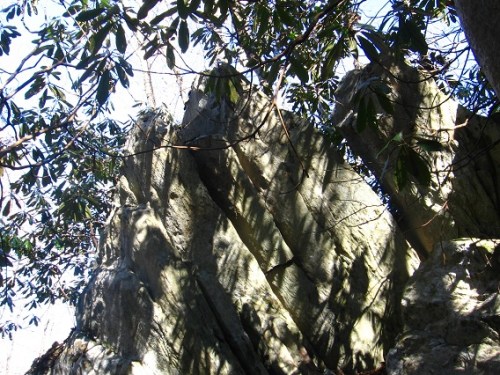
There are two main groups of rocks in Supersity, the above shot coming from the higher of the two and the below picture that of a prominent jutting rock in the lower group. Supersity itself lies just beyond the northern boundary of Frank Park, and thus in unprotected regions, susceptible to future development. In several ways this reminds me of Mocksity from the Baker Blinker Blog, similarly in a rock cluster and lying just beyond the harboring areas of Frank Park, again to the north. And it’s rumoured that famed mossman Gene Fade was a resident of *both* burgs, which seems super important, blog-wise. Fade dwelt more in the lower part of Supersity, or in the cultural zone existing atop an extensive (to the toy avatars) fissure cave system. By this point in his life, Fade was a rather full blown artist, and here met fellow artisan Karoz Blogger, a faceter and also polisher of gems.

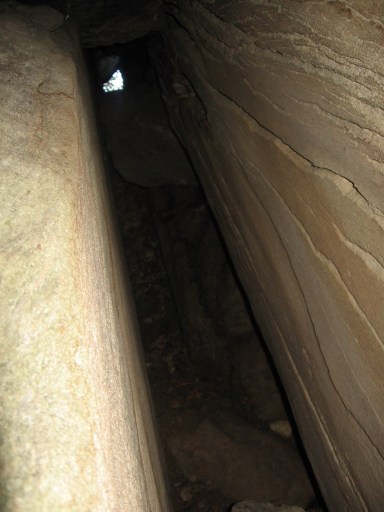
This is a Supersity fissure cave, but from the upper group of rocks, more a militant enclave. The rock this fissure is found is called Protector Rock by the people of Supersity, perhaps in step with the militia type it helps to shelter. Again, I’ll get more pictures asap.

Little people certainly existed in this long passageway at some point, but my feeling is that they are toy avatars themselves, probably mossmen. So what that implies is there were 2 groups of mossmen forming Supersity as a whole, the artist types and the military or more rules governed types, the latter a carryover from the old fort days. But that’s not to say the upper rocks lacked culture; it’s just that wasn’t the primary focus, unlike the lower rock dwellers (like Karoz and Gene Fade).

And now we move to *Future City*. When I returned home, I discovered that what I shockingly found at the end of a dead end dirt road just above the Supersity rocks is called a sacred hoop, a variation of an Indian medicine wheel. Details of what this is can be found through links I’ve already provided in this post below.

We’ll take a look at the details of this particular sacred hoop in Supersity 02

1 Comment

Filed under Frank Park, Gene Fade's Mtn., Mossmen, Sacred Hoops, Toy Avatars

Sacred Hoop/Mending


http://www.crystalinks.com/medicinewheel.html

http://www.arthuryoung.com/hummox.html

http://www.sun-wheel-magick.com/Hopi-myth.html

1 Comment

Filed under Frank Park, Gene Fade's Mtn., Sacred Hoops

Some of Edna’s Frank Park Shots…

I don’t generally like pictures of myself, but I thought this one was pretty cool. It’s me just beyond Lion’s Roar on Byng Creek, staring up into the wilderness.

It’s not Wiltshire County or the Lake District in England, but the rocks in the distance make it seem related. Although I know I’ve walked this public path a number of times, I just have no memory of this rock outcropping on top of the far hill here. I told Edna (who didn’t remember it either) that perhaps as we grow older our perception of what is and isn’t important and significant in our lives changes, and that this hill contains more meaning to us now.

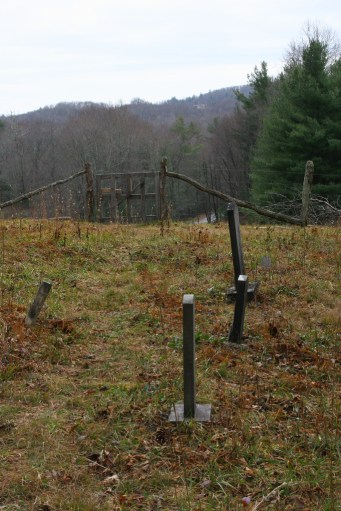
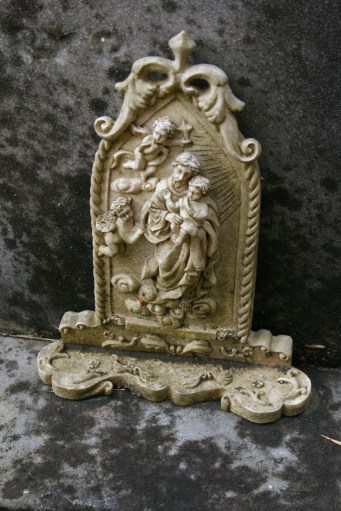
Earlier in our lives we also missed this too cool cemetery, not marked on any topographic maps despite containing about 15 graves. The second picture below is a figurine of an angel on a unicorn that I had to dig up out of the dirt in front of one of the tombstones. Only an angel’s wing was visible at first.

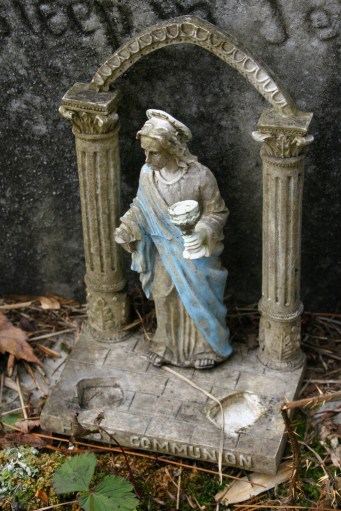
Some more figurines from the cemetery…

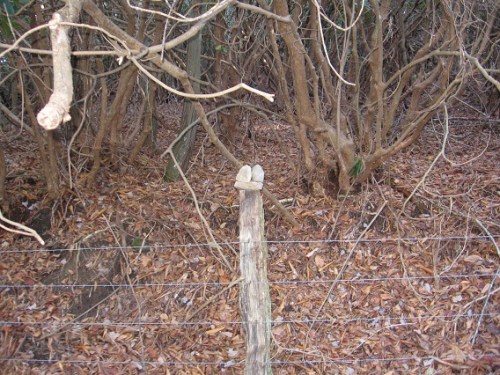
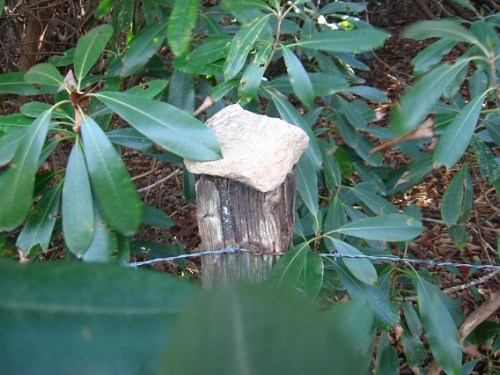
But the main reason I took Edna to this part of Frank Park was to show her the running fence art project I’ve already blogged about in several posts of Frank and Herman Einstein! I found her more detailed photo of the rock atop post 1 very interesting — what is that white-ish speck at the center of it?

Leave a comment

Filed under Frank Park, Gene Fade's Mtn.

Return to Gene Fade’s Mtn. 02

So following up on last week’s visit to Gene Fade’s Mtn., I returned again this past Saturday for more hiking and pictures and overall fun. Below is a pipe tunnel under an exit ramp from The Way, at the edge of a tiny memorial park where I parked my car.

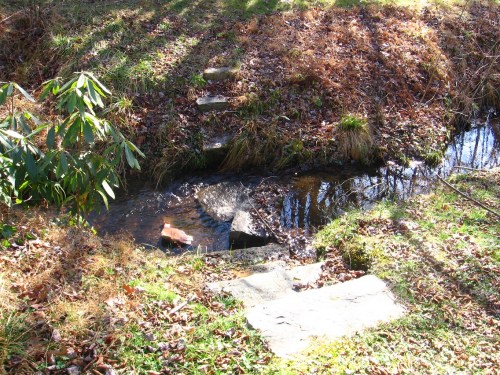
Within the same tiny park: some rock stairs on either side of a creek running laterally through it, as yet unnamed by me.

Just up a ridge on the other side of the road from here exists the birthplace of famed mossman actor Gene Fade, known for being a 2nd wheel in all those Salad Bar Jack action adventure flicks to Salad Bar himself (played by Grassy Knoll of course). The village is called Jupiter’s Rock or Jupiter Rock or just Jupiter, I suppose, with a central or “downtown” area probably existing on or next to this rock shelf.

And here’s the red mark on the Jupiter Rock itself just around the corner, which reminded pioneer mossman settlers of Jupiter’s red spot that they could actually see with their powerful, naked eye vision. So the legend goes.

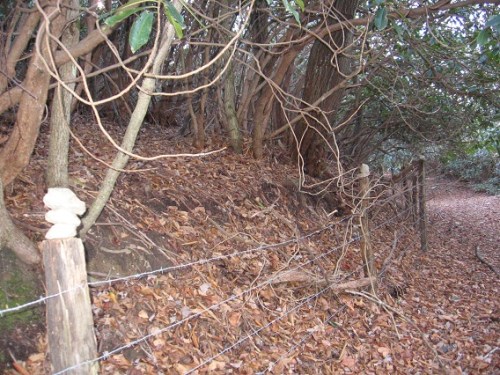
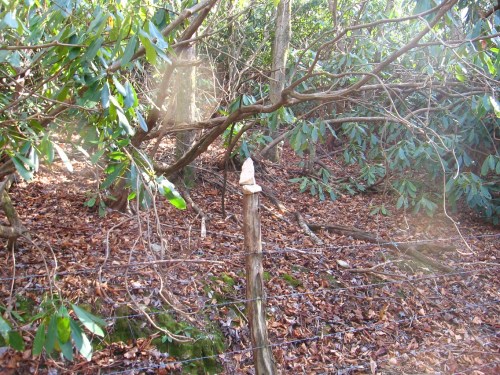
On the next ridge south and then uphill exists the Weaving Place that I visited last week as well. This time I brought the fabled Bee’s Line itself, originally laid out in Kentucky in the 4 Valley Regions of neighboring Herman Park. My plan was to weave the line between 2 trees here to assess further potential overlaps and meanings of the markings I made previously at Kentucky. Well, the line was incredibly easy to tangle, and although I managed a weave of sort, I didn’t feel that it produced any real meaning this day. Below is a picture of the futile effort; I just decided to slide the string down on the trunks I wrapped it around so that deer wouldn’t trip over it.

From the Weaving Place — which I might rename in light of the inability to actually weave the Bee Line here in any successful way — it was a fairly sharp descent through the open woods to the trail on the northern side of the mountain, also traversed this past weekend. Having failed with my weaving project just up the hill, my fantasy inclined attention instead focused on the queer rock art found all along about 800 feet of this trail, or what I now consider to be a true outsider art piece probably on pair with even Dongoba’s profound rock temples discovered in late 2011.

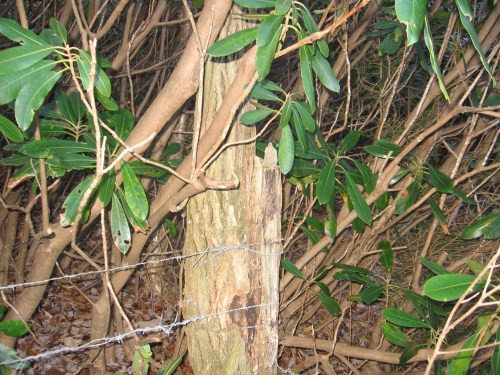
I recounted the involved fence posts today, and found they numbered 80 and not the 81 or 82 I thought the previous weekend. But it was only in the middle of the night after I returned home that Hucka D. helped me understand this: at the time I first came upon this running fence art project of 80 posts the previous Sunday, the Frank and Herman Einstein! Blog also contained exactly 80 posts as well, blog posts in this case. Since the fence was so strongly highlighted by topping rock or rocks (about 60 of the 80 posts had such rocks), I knew the blog and this art piece made a one-to-one fusion of some psychic kind. As I wrote a syncher friend soon after this discovery, my short and crazy conclusion was that as the blog was about highlighing Frank Park, now Frank Park was highlighting the blog back in its own way (!!) Bizarre.

Post #1 of 80 is pictured below.

More post examples.

Looking the other way from the fence toward a stupid development diseasing a mountaintop in the distance.

Right to left below, we have posts 61, 62, and 63, with 1, 2, and 3 topping rocks respectively. Overall I feel there is a vague internal match between fence posts and blog posts, but nothing pinpoint synchy as yet. Still examining… and this 1-2-3 surface resonance could be a gateway into deeper connections, for example.

The 80th and final post.

I also couldn’t help but notice that the 5 lines made by the fence wires going across the posts echo the look of the Bee’s Line weaving I attempted at the Weaving Place just above this, especially before I lowered the involved string to the ground.

3 Comments

Filed under Frank Park, Gene Fade's Mtn., Mossmen, Toy Avatars

Gene Fade’s Mountain

I should have had at least 1 blog entry for this mountain in the Baker Blinker Blog but, as I remember, upon my last visit to this small mtn. almost a year ago now, I forgot to bring my camera. Didn’t forget today, but still not a whole bunch of pictures snapped, at least until I found another extended rock art piece (!). Don’t think this is the creation of noted rock artist Michael Too, as I call him on this blog and also the BB Blog, but very interesting nonetheless, and seemingly meaningful. But I’ll get to that in a minute-o.

Parked my car on a dirt road just off The Way, and hiked up some kind of old road to reach the site of the first picture below. Actually, just before this I examined a place on the other side of the road that *does* have an entry for it on my previous blog, a place I called Notherton there, and where mossman Gene Fade supposedly lived and worked at one time. Nothing new found there this fine, blue day, so I decided to focus on the mtn. across the road, which I’m temporarily calling Gene Fade’s Mtn. until I get a better name. For on the slopes of this mtn. is where Gene Fade was actually born, in a small village called Jupiter Rock. The below picture comes just uphill from this rock, but I was unable to reach Fade’s fabled birthplace this day because of blocking rhododendron. I’ll have to attempt another day, and believe me if I was off today and it was sunny instead of drizzly, I’d be wandering on Fade’s mtn. again for this and other reasons. As it is I’ll have to wait till at least Friday.

I’ve decided to call the spot on the mtn. below the Weaving Place, and it already has a story, as I pondered about it while walking around and around some of the pictured trees, actually making a circular track. I thought of Gene Fade’s life story, and how, at the end, perhaps he returned here to his homeland to somehow *weave* his life story around these trees in the same manner I was walking around them. I thought of Byng’s Bee Line as well, and how I should return to this ridge and unravel it between two of these trees. And that’s exactly what I might do in the near future (Friday again?). But back to Fade: somehow he wove his life around these trees in the same manner as you would weave a string around them again and again, as I plan to do apparently. This is a way to *record* a life, and my belief is that other mossmen did the same at this spot, hence the common name “The Weaving Place”, with the actual, “recording” event called “The Weaving” itself.

The Weaving Place is not far from the top of GF Mtn. On the opposite side of the peak, and about at the same elevation, comes another interesting, platform area where we have obvious evidence of human intervention in these woods. I don’t think this is a hunting spot, since hunting is illegal in Frank and Herman Parks (thankfully!). Instead, the hammock seems to indicate peaceful, leisure activity, as does a nearby rope with attached swing (not pictured). Did people climb trees here? At any rate, I think it was a camping site for certain.

Now to the rock art. Actually hiked halfway around the mtn. before this to return to the Weaving Place, and then decided to descend on the north side of the mtn. to a trail instead of just simply backtracking to the car from here. The additional effort paid off, as along almost all the trail I had to hike to get back to the car were fence posts with rocks balanced on top of them, sometimes one and often several. As I counted them off, there were about 82 posts, with only 20 without rocks, making a significant run. Of course it’s not on the same scope, but it reminds me of concept artist Christo’s Running Fence project set up in northern California during the mid-70s. But instead of the creation of a fence here, we have the accenting of such (topping rocks). This is another place I definitely plan to return to on my first decent weather day off. More pictures and details to come of this, then — I can’t help but think this is psychically connected to my ponderings about the life of Gene Fade and his “Weaving” on the ridge just above this.

Interesting “spirit” effect going on here. I remember the sun just coming out again as I snapped the picture of this more arrowhead-like topping rock.

Double posts, but only one with rocks on top of it.

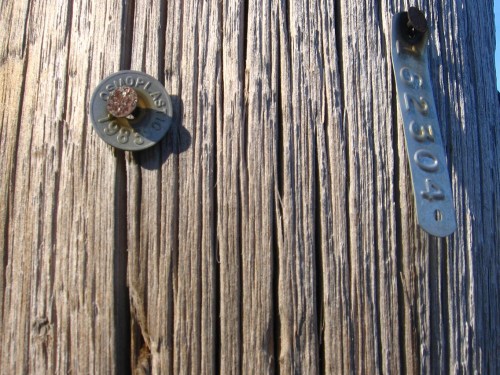
As I returned to the car via a short cut through a meadow, I heard a metallic clicking in the distance. I quickly honed in on the source: this tag on a nearby power line poll with the number 162304 on it. Seemed significant as well, since these are all the numbers between 1 and 6 except 5, and I had just finished counting all the 81-82 posts in the fence art project described above.*

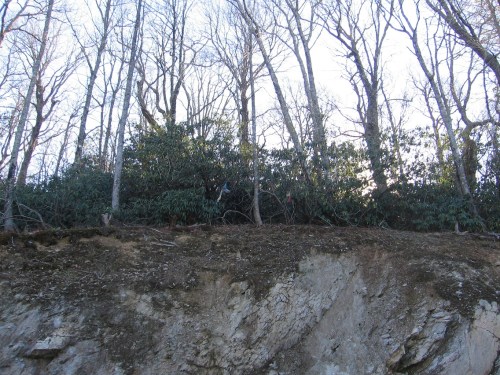
A final place visited before getting back in the car and heading home: perhaps the site of another mossman village atop a bank very near Notherton, and perhaps yet another stop in the life of Gene Fade.

—–

* Note: As mentioned in subsequent entries about this “art project”, the involved posts number 80 instead of 81 or 82.

1 Comment

Filed under Frank Park, Gene Fade's Mtn., Mossmen, Toy Avatars