Category Archives: Haze County

Some of Edna’s Frank Park Shots…

I don’t generally like pictures of myself, but I thought this one was pretty cool. It’s me just beyond Lion’s Roar on Byng Creek, staring up into the wilderness.

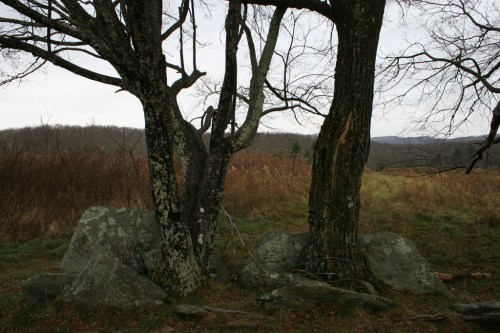
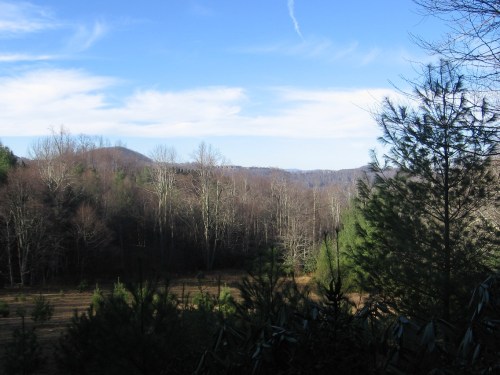
It’s not Wiltshire County or the Lake District in England, but the rocks in the distance make it seem related. Although I know I’ve walked this public path a number of times, I just have no memory of this rock outcropping on top of the far hill here. I told Edna (who didn’t remember it either) that perhaps as we grow older our perception of what is and isn’t important and significant in our lives changes, and that this hill contains more meaning to us now.

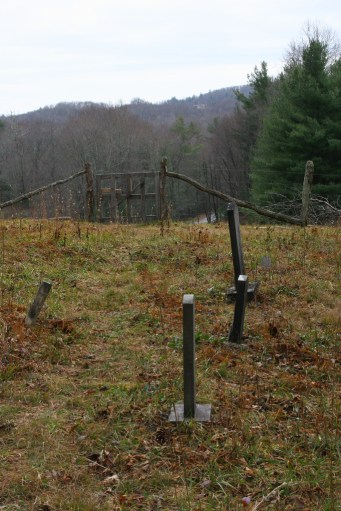
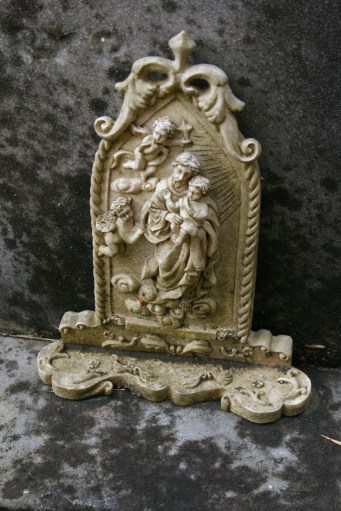
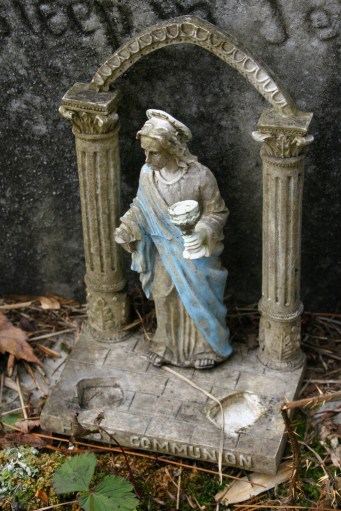
Earlier in our lives we also missed this too cool cemetery, not marked on any topographic maps despite containing about 15 graves. The second picture below is a figurine of an angel on a unicorn that I had to dig up out of the dirt in front of one of the tombstones. Only an angel’s wing was visible at first.

Some more figurines from the cemetery…

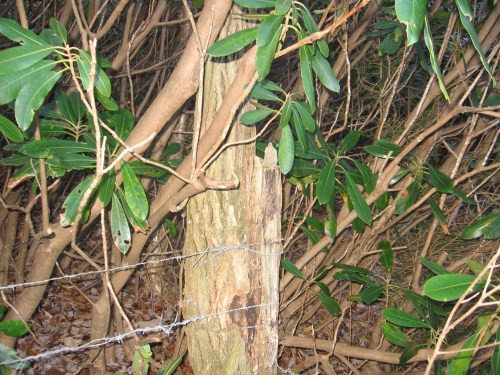
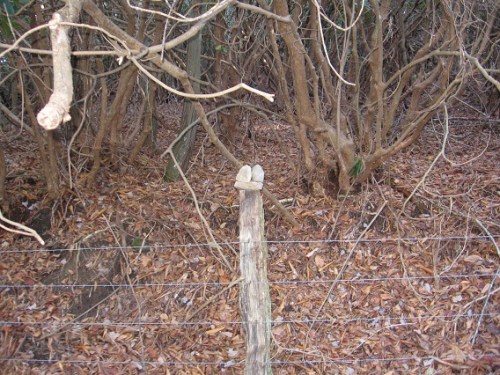
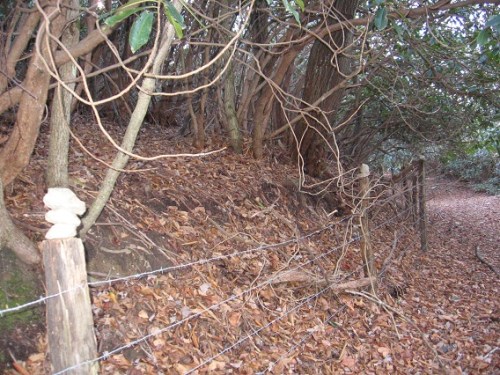
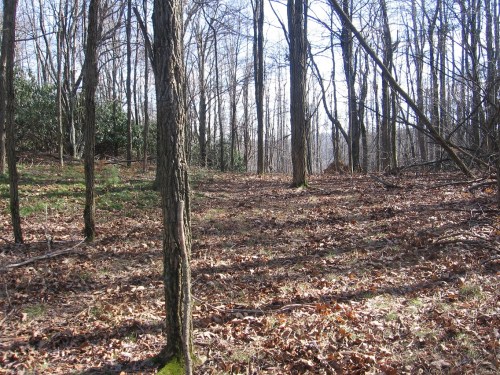
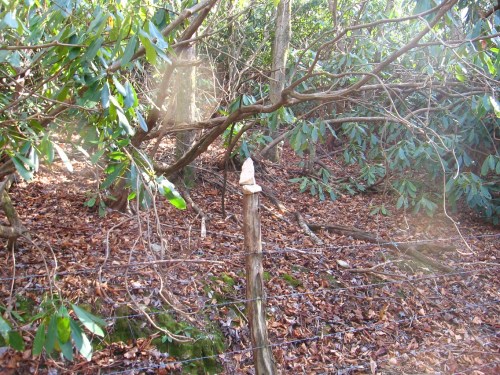
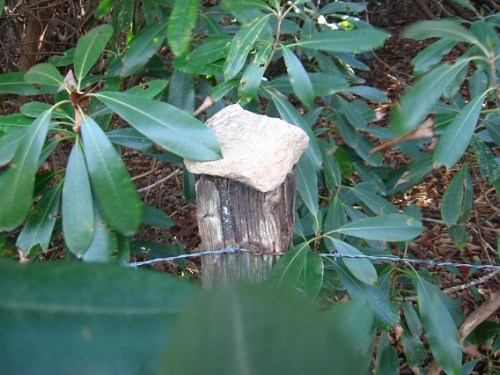
But the main reason I took Edna to this part of Frank Park was to show her the running fence art project I’ve already blogged about in several posts of Frank and Herman Einstein! I found her more detailed photo of the rock atop post 1 very interesting — what is that white-ish speck at the center of it?

Leave a comment

Filed under Frank Park, Gene Fade's Mtn.

Return to Gene Fade’s Mtn. 02

So following up on last week’s visit to Gene Fade’s Mtn., I returned again this past Saturday for more hiking and pictures and overall fun. Below is a pipe tunnel under an exit ramp from The Way, at the edge of a tiny memorial park where I parked my car.

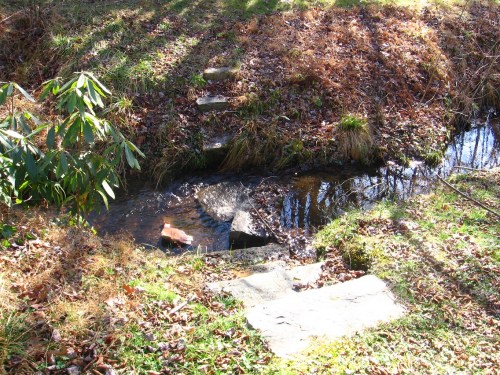
Within the same tiny park: some rock stairs on either side of a creek running laterally through it, as yet unnamed by me.

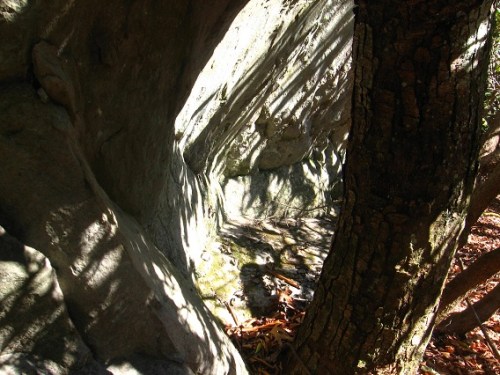
Just up a ridge on the other side of the road from here exists the birthplace of famed mossman actor Gene Fade, known for being a 2nd wheel in all those Salad Bar Jack action adventure flicks to Salad Bar himself (played by Grassy Knoll of course). The village is called Jupiter’s Rock or Jupiter Rock or just Jupiter, I suppose, with a central or “downtown” area probably existing on or next to this rock shelf.

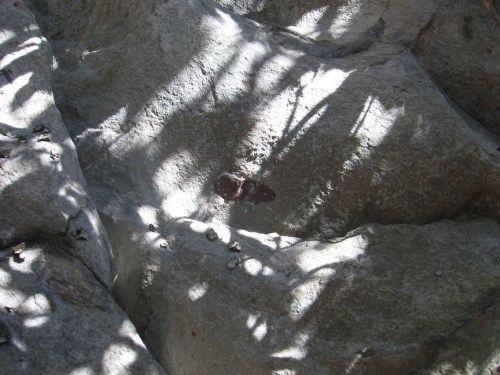
And here’s the red mark on the Jupiter Rock itself just around the corner, which reminded pioneer mossman settlers of Jupiter’s red spot that they could actually see with their powerful, naked eye vision. So the legend goes.

On the next ridge south and then uphill exists the Weaving Place that I visited last week as well. This time I brought the fabled Bee’s Line itself, originally laid out in Kentucky in the 4 Valley Regions of neighboring Herman Park. My plan was to weave the line between 2 trees here to assess further potential overlaps and meanings of the markings I made previously at Kentucky. Well, the line was incredibly easy to tangle, and although I managed a weave of sort, I didn’t feel that it produced any real meaning this day. Below is a picture of the futile effort; I just decided to slide the string down on the trunks I wrapped it around so that deer wouldn’t trip over it.

From the Weaving Place — which I might rename in light of the inability to actually weave the Bee Line here in any successful way — it was a fairly sharp descent through the open woods to the trail on the northern side of the mountain, also traversed this past weekend. Having failed with my weaving project just up the hill, my fantasy inclined attention instead focused on the queer rock art found all along about 800 feet of this trail, or what I now consider to be a true outsider art piece probably on pair with even Dongoba’s profound rock temples discovered in late 2011.

I recounted the involved fence posts today, and found they numbered 80 and not the 81 or 82 I thought the previous weekend. But it was only in the middle of the night after I returned home that Hucka D. helped me understand this: at the time I first came upon this running fence art project of 80 posts the previous Sunday, the Frank and Herman Einstein! Blog also contained exactly 80 posts as well, blog posts in this case. Since the fence was so strongly highlighted by topping rock or rocks (about 60 of the 80 posts had such rocks), I knew the blog and this art piece made a one-to-one fusion of some psychic kind. As I wrote a syncher friend soon after this discovery, my short and crazy conclusion was that as the blog was about highlighing Frank Park, now Frank Park was highlighting the blog back in its own way (!!) Bizarre.

Post #1 of 80 is pictured below.

More post examples.

Looking the other way from the fence toward a stupid development diseasing a mountaintop in the distance.

Right to left below, we have posts 61, 62, and 63, with 1, 2, and 3 topping rocks respectively. Overall I feel there is a vague internal match between fence posts and blog posts, but nothing pinpoint synchy as yet. Still examining… and this 1-2-3 surface resonance could be a gateway into deeper connections, for example.

The 80th and final post.

I also couldn’t help but notice that the 5 lines made by the fence wires going across the posts echo the look of the Bee’s Line weaving I attempted at the Weaving Place just above this, especially before I lowered the involved string to the ground.

3 Comments

Filed under Frank Park, Gene Fade's Mtn., Mossmen, Toy Avatars

Return to Gene Fade’s Mtn.

I’ll have pictures soon from my return trip to Gene Fade’s Mtn., following up on the first from this year occurring last Sunday and described in this recent post. Preliminary thoughts: There are 2 prominent flats or gaps on the east side of the mtn., similar enough in visual qualities to cause confusion during Gene Fade’s stay there, as he recalls. I believe I’ll call them Logap and Higap for now, for Higap indeed is about 100 feet higher than Logap at least, and maybe up to about 150 feet higher. Jupiter Rock, where Gene Fade was raised, exists on the ridge extended from Logap to the east, creating its own miniature peak. In my hike from last week, I entirely missed Logap, and also Jupiter Rock.

Today at *Higap* I also attempted to unwind the *Bee Line* created in Byng’s Kentucky during October. Well… interesting experiment but really no clear success gained except for a learning lesson. The approx. 65 yard string was extremely easy to tangle up, and that composed the bulk of the problem. I simply left the string up there, and will attempt to make a fresh one in Kentucky probably this coming spring.

Having “failed” at this task, my attention instead focused on the running fence art project also discovered this past Sunday, made up of 80 posts (# I checked today) running through a more forested part of a popular trail on the north side of Gene Fade’s Mtn. There is a very good chance this art piece, as I’m inclined to call it, relays more about the mossmen culture that use to inhabit the area (still does?) and perhaps the life of mossman Gene Fade in particular. Is *this* instead the true Bee Line (Gene Fade’s life thread), or a substitution thereof? I have a feeling it is related but not exactly the same. Wonder if Hucka D. has any thoughts about this?

Hucka D.:

My cue, eh?

bb:

Hi Hucka D. Thanks for showing up tonight.

Hucka D.:

Your time is limited[ at your computer]. I’m here to help. What was the question?

bb:

I was wondering about the running fence project at Gene Fade’s Mtn.

Hucka D.:

Oh *that*. Yes, that was a mossman project. A coded message for ya. Have you figured it out yet? Have you counted the posts yet?

bb:

Yes. There are 80.

Hucka D.:

How many posts are there in the Frank Herman Einstein blog now?

bb:

Lemme check (pause to check). Looks like there are 84, Hucka D.

Hucka D.:

So this one we’re speaking in is 84. Where’s 80? Hard for me to crane my neck that far, hehe.

bb:

Let’s see… the 80th post would be the one just before the original post on Gene Fade’s Mtn. from last Sunday, Hucka D. Then the 80th post of the running fence project is actually displayed in the 81st post of this blog.

Hucka D.:

But at the time you thought it *was* the 81st post, because you counted wrong. So the 81st and last post, or what you thought was the 81st and last post of this running fence project as you call it, was displayed in the 81st post of this blog, the last one at the time as well, since the newest post is always the last. So the running fence project is this blog itself. Simple enough on the surface.

bb:

What would be the reason for this?

Hucka D.:

The woods are telling you that they know about your blog. And approve. Frank and Herman Parks know about Frank and Herman Einstein. (pause) Einstein.

bb:

Maybe. Extraordinary if so.

Hucka D.:

It’s SoSo so.

bb:

If so — SoSo so (smiles) — then I wonder if there’s more devil in the detail to this one. What if the rocks on the posts tell a larger story about the blog, relating metadata of some kind?

Hucka D.:

Take a look.

—–

bb:

Hmm, well I’m just going to have to keep that in mind when I return to the fence. I suppose I’ll go back this Sunday, then. Too weird a phenomenon not to (!)

Hucka D.:

Frank Park is talking to ya. Frank Park knows.

—–

bb:

So We Are At Tin… — this is also the 10th post of the F and H E Blog, Hucka D. Hucka? Anyway, I don’t think I did that on purpose. 11 posts in September, the blog’s first month. And this is 10th of 11. And *that* post talks of the last post of the Baker Blinker Blog, which is the 2233rd, also making a synchronicity with what Jamie and I were talking about then and he/she mentioning a 2233 composition of lion roar starts for the 4 Dark Side of the Rainbows. Er, but I think that’s involved. Traditionally Dark Side of the Rainbow involves 10 tracks of Dark Side of the Moon, and the 11th lies beyond. The 11th is the song about Tin S. Man, his theme track. 11 beyond 10.
Leave a comment

Filed under Mossmen, Toy Avatars

Gene Fade’s Mountain

I should have had at least 1 blog entry for this mountain in the Baker Blinker Blog but, as I remember, upon my last visit to this small mtn. almost a year ago now, I forgot to bring my camera. Didn’t forget today, but still not a whole bunch of pictures snapped, at least until I found another extended rock art piece (!). Don’t think this is the creation of noted rock artist Michael Too, as I call him on this blog and also the BB Blog, but very interesting nonetheless, and seemingly meaningful. But I’ll get to that in a minute-o.
Parked my car on a dirt road just off The Way, and hiked up some kind of old road to reach the site of the first picture below. Actually, just before this I examined a place on the other side of the road that *does* have an entry for it on my previous blog, a place I called Notherton there, and where mossman Gene Fade supposedly lived and worked at one time. Nothing new found there this fine, blue day, so I decided to focus on the mtn. across the road, which I’m temporarily calling Gene Fade’s Mtn. until I get a better name. For on the slopes of this mtn. is where Gene Fade was actually born, in a small village called Jupiter Rock. The below picture comes just uphill from this rock, but I was unable to reach Fade’s fabled birthplace this day because of blocking rhododendron. I’ll have to attempt another day, and believe me if I was off today and it was sunny instead of drizzly, I’d be wandering on Fade’s mtn. again for this and other reasons. As it is I’ll have to wait till at least Friday.

I’ve decided to call the spot on the mtn. below the Weaving Place, and it already has a story, as I pondered about it while walking around and around some of the pictured trees, actually making a circular track. I thought of Gene Fade’s life story, and how, at the end, perhaps he returned here to his homeland to somehow *weave* his life story around these trees in the same manner I was walking around them. I thought of Byng’s Bee Line as well, and how I should return to this ridge and unravel it between two of these trees. And that’s exactly what I might do in the near future (Friday again?). But back to Fade: somehow he wove his life around these trees in the same manner as you would weave a string around them again and again, as I plan to do apparently. This is a way to *record* a life, and my belief is that other mossmen did the same at this spot, hence the common name “The Weaving Place”, with the actual, “recording” event called “The Weaving” itself.

The Weaving Place is not far from the top of GF Mtn. On the opposite side of the peak, and about at the same elevation, comes another interesting, platform area where we have obvious evidence of human intervention in these woods. I don’t think this is a hunting spot, since hunting is illegal in Frank and Herman Parks (thankfully!). Instead, the hammock seems to indicate peaceful, leisure activity, as does a nearby rope with attached swing (not pictured). Did people climb trees here? At any rate, I think it was a camping site for certain.

Now to the rock art. Actually hiked halfway around the mtn. before this to return to the Weaving Place, and then decided to descend on the north side of the mtn. to a trail instead of just simply backtracking to the car from here. The additional effort paid off, as along almost all the trail I had to hike to get back to the car were fence posts with rocks balanced on top of them, sometimes one and often several. As I counted them off, there were about 82 posts, with only 20 without rocks, making a significant run. Of course it’s not on the same scope, but it reminds me of concept artist Christo’s Running Fence project set up in northern California during the mid-70s. But instead of the creation of a fence here, we have the accenting of such (topping rocks). This is another place I definitely plan to return to on my first decent weather day off. More pictures and details to come of this, then — I can’t help but think this is psychically connected to my ponderings about the life of Gene Fade and his “Weaving” on the ridge just above this.

Interesting “spirit” effect going on here. I remember the sun just coming out again as I snapped the picture of this more arrowhead-like topping rock.

Double posts, but only one with rocks on top of it.

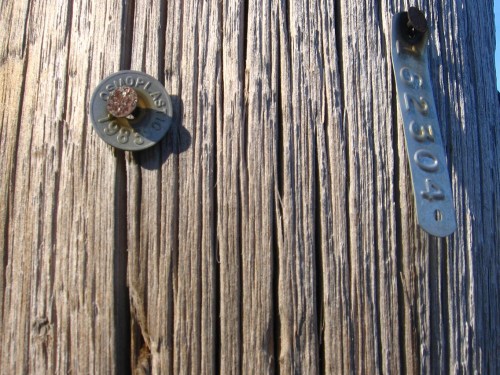
As I returned to the car via a short cut through a meadow, I heard a metallic clicking in the distance. I quickly honed in on the source: this tag on a nearby power line poll with the number 162304 on it. Seemed significant as well, since these are all the numbers between 1 and 6 except 5, and I had just finished counting all the 81-82 posts in the fence art project described above.*

A final place visited before getting back in the car and heading home: perhaps the site of another mossman village atop a bank very near Notherton, and perhaps yet another stop in the life of Gene Fade.

—–

* Note: As mentioned in subsequent entries about this “art project”, the involved posts number 80 instead of 81 or 82.

1 Comment

Filed under Frank Park, Gene Fade's Mtn., Mossmen, Toy Avatars

Wild Wonderful Frank Park 02

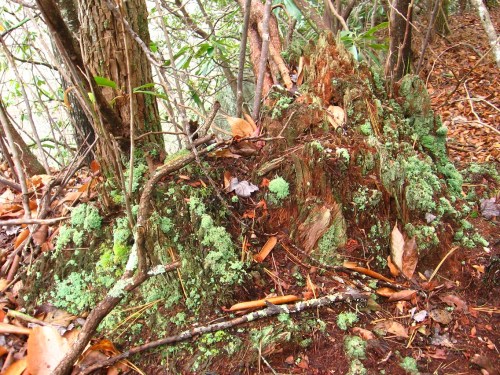
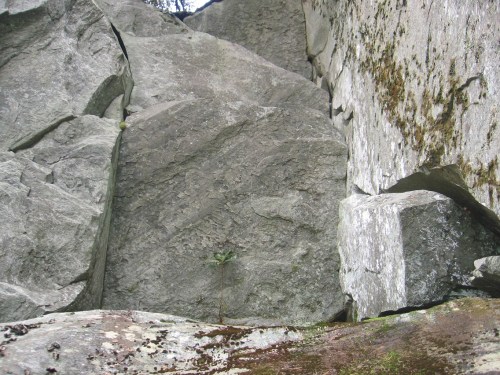
We’re still on top of Crack Rock mentioned at the end of Wild Wonderful Frank Park 01, taking pictures of interesting vegetation like this lichen covered reddish stump.

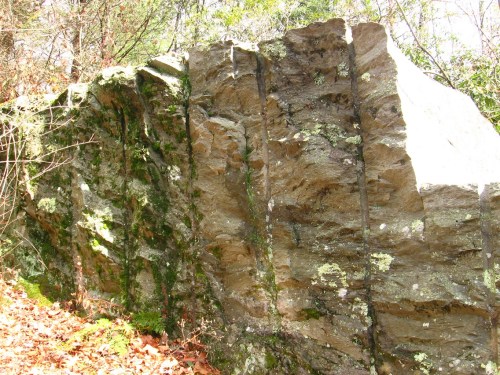
Then in heading back down to the Loop Trail, took more pictures of the side of Crack Rock…

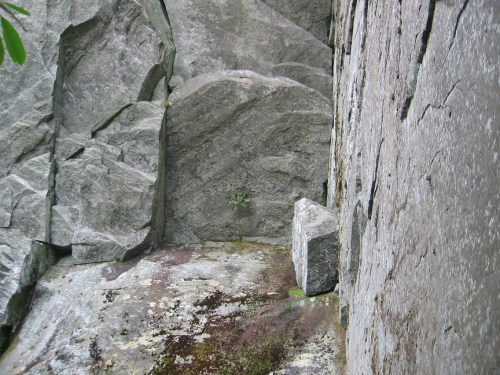
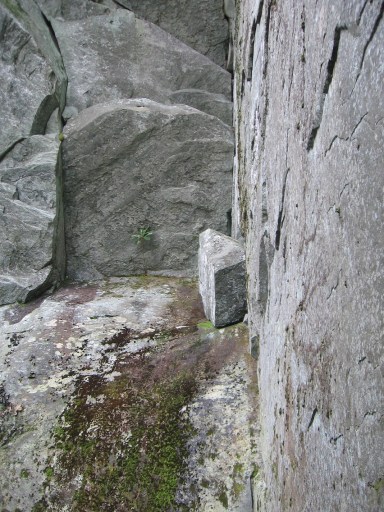
… including several of this especially picturesque setting on the rock wall perpendicular to the one with the crack, and right beside the crack as well. Seems to mean something in a larger way; I’ll let the photos do the talking for now.

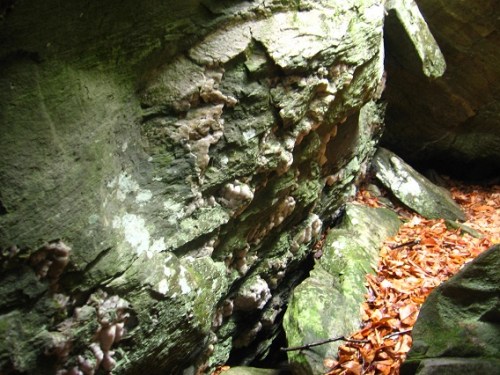
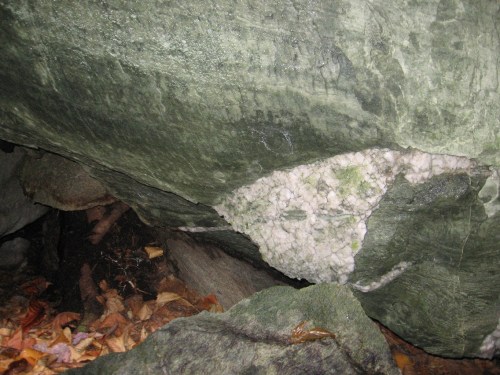
Just on the other side of the trail from here we have a small fissure cave with quite interesting quartz patternings going on.

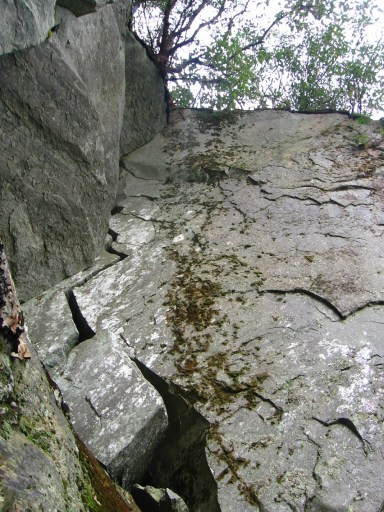
Cracked Rock and its lightning bolt shaped fracture as seen over top of a trail ladder, the only one encountered on the loop and probably the only ladder on Frank or Herman Park trails as a whole.

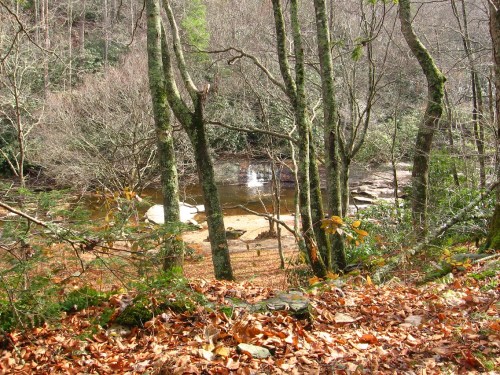
Continuing to roughly parallel Spoon Fork as we head upstream, more vistas of cascades are found on Loop Trail, although the drops tend to be smaller and less roaring as the stream begins to flatten out.

Evidence of past rock shaping. This is near the 2nd Spoon Fork portal featured, for example, in this Baker Blinker Blog post from way back in 2008.

Then to end my series of photos this fine day of hiking, I present to you what I later learned was commonly called a horsehair worm, but which appeared to me at the time (within Spoon Fork) as a sentient *string*. Never seen such a creature before, or even known of their existence. Frank and Herman Parks are teaching me in ways I couldn’t expect.

2 Comments

Filed under Frank Park, Spoon Fork

Wild Wonderful Frank Park 01

This is actually a snapshot taken the day before all the rest of this post and the next, but still in the same meadow as the second photo below, or on the Frank Park Trail Loop, the longest trail in Frank Park at approx. 5 miles.

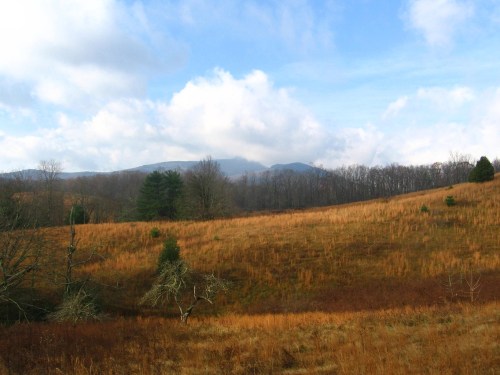
View of Granddaddy Mtn. from the meadow, important in Mossman mythology as the source of their fabled Rock Gods.

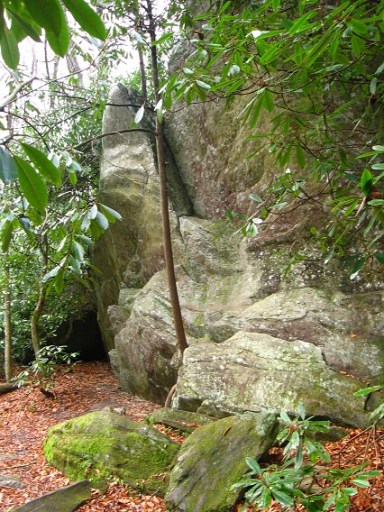
Then in continuing on the loop, we descend into the rhododendon forest and follow Bee Line Creek for about a mile to a mile and a 1/2. The trail runs by 3 larger rocks after the rather steep descent from the meadow, leveling off in the process as it begins to parallel the creek.

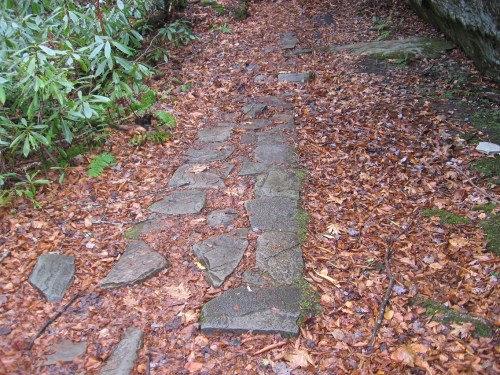
At the last of these rocks, the trail turns into a type of stone sidewalk for a brief spell before reverting back to dirt.

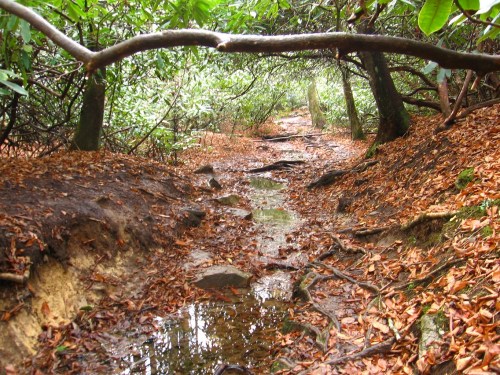
But before long, there’s another much more substantial stretch of the Loop Trail that turns into another element besides dirt, this time *water*. Yeah, that’s a stream actually running through the trail, and this continues for about a football field in length probably but which seems *much* longer. Not recommended for kids or novice hikers looking for a relaxing day out in the woods. Didn’t bother me much, though, since I had more involved reasons for being here (blog mythologies).

Even taking away that tough stretch where it turns to water, the Loop Trail seemed considerably longer than what I remember, with many rocks and places along the way seeming new to me. Is it possible for a trail to actually grow over time psychologically and perhaps even physically? I’m sure Hucka D. would give a resounding “yes” to this. He’s most likely right. I should add that I haven’t walked this loop in its entirety for a number of years, although I frequently hike various fragments of it. Loop Trail circumnavigates what in essence is the wild, beating heart of Frank Park, and helps the hiker grasp and absorb its raw, powerful nature better than any other park trail.

An example would be frequent vistas along its northern side of roaring Spoon Fork rapids and cascades such as those pictured below. Spoon Fork is the largest stream by far in either Frank or Herman Parks, and could be classified as an actual river. It is mentioned in the Baker Blinker Blog most prominently through the Portal System supposedly uncovered by Mossmen as they continued to settle the area of Frank Park. They did not create it however, making the system of unknown, ancient origin. Was it designed by those Rock Gods we mentioned before? I’ll hafta talk with Hucka D. about that whole, large subject soon.

Then we come to Crack Rock, which is, no, not an entrance to a den of illegal substance iniquity but a simple lightning strike shaped crack running perhaps 30 feet up one side a large rock. We’re still on the northern side of Frank Park and fairly high above Spook Fork after just accomplishing a steep ascent. We’re also heading upstream on Spoon Fork after descending along (and even in!) Bee Line Creek up until reaching the northern corner of the park, where Bee Line also empties into Spoon Fork at around the 2 mile point in our loop.

With a bit of effort, I was able to climb to the summit of the rock pictured above, where interesting patches of vegetation were found.

It was also from this summit that I was able to glimpse more, larger rocks near the top of this ridge, which I decided to name Sunrise Rocks because the sun was rising just above them as I took the below photo. Thick rhododendron, however, lies between me and these rocks higher up on the ridge. I decided a visit would have to wait until another time.

Wild Wonderful Frank Park 02

1 Comment

Filed under Frank Park, Spoon Fork

Return to Cache Creek

http://bakerblinker.wordpress.com/category/hermanfrank-parks-rl-parks/cache-creek/

Today I returned to Cache Creek in Frank Park. I first uncovered this stream last December, and was amazed at the magic (white rocks, cascades). The return trip proved to be less inspiring, and I think it was all the newly fallen leaves covering up a lot of the creek bottom and sides that were to “blame”. The rhododendron around the creek seemed harder to get through this time, and I also got the dreaded “wet foot” when I slipped at one point a bit. Still I was pleased to find the open space next to the largest cascady area (most easily accessed, perhaps, at the top of the horseshoe bend of the creek coming before this) still pertinent seeming, and maybe the site of a future toy happening or future camping spot. I didn’t take any significant pictures this day.

Leave a comment

Filed under Cache Creek, Frank Park

“Don’t…

… you think Yards Mtn. was created first, Hucka D.?” (pause) “Hucka D.?”

Looks like I’m on my own tonight, maybe. Well, that’s my theory now — that Yards Mtn. came first and Wealthy Mtn. second. *Health* lake was the last lake added to the Herman Park quad sqaud, after Heart, Head, and Hands. Heart (and then Head) may have been first, but corrupted (by plastic people?). Health Lake across the Way from all the rest was last, and also Wealthy Mtn. formed after the rest of the area of Herman Park. It was furthest away from the town of Boulder. But what of Frank Park? Was Frank Park already there before Herman Park? Or was Frank Park created from Herman Park in some fashion. We know that Herman Park is priceless and Frank Park has a very very high price but a price nonetheless. We know the priceless aspect of Herman Park is through TILE Creek, or the existence of such. This is the “1” that makes 6 into 7, or equates it spacially with Frank Park.

So the order of lake creation seems to be: Heart, Head, Hands, and then Health. Health Lake may have originally — briefly — been named Hustle Lake per the 4H history of the slogan. Also might be significant that health rhymes with wealth, and part of Benj. Franklin’s “Early to Bed” quote (Early to bed and early to rise makes a man healthy wealthy and wise). According to the 4H history article linked below, O. H. Benson came up with the 3 leaf clover emblem of 4H in 1907 or 1908 (with the H’s standing for Heart, Head, Hands), then changed to a 4 leaf clover in 1912 when “Hustle” was added. But the article also mentions that another man, O. B. Martin, suggested changing Hustle to Health soon afterwards. So the emblem is really the work of two men, perhaps just like the arrangement of Herman Park lakes is the work of two. Maybe Wealthy Mtn. has a different patron, so to speak, than Yards Mtn.?

Interesting also that the name “Wright” is removed when 3 leaves change to 4. Reminds me of 2/3 rights don’t make a left quote as well, with the “left” being the 4th, “Health”.

Hucka D.:

The 3rd is Hands, but the 4th was created to act as a backup to the 3rd, in case a further corruption was enacted. The 3rd is the son accepting the energy of the father. Winesap.

—–

Oh, and the 4 Valleys region next to Health Lake may have something to do with this differently “spinning” energy of the 4th as well.

1 Comment

Filed under Frank Park, Herman Park, Wealthy Mountain, Yards Mountain

Brown/White

Resonances:

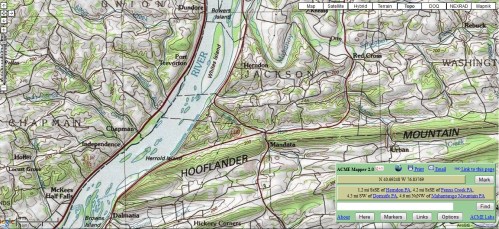
Whites Island and Browns Island:

Little Brown and Little White bottles of Lion’s Roar, just laid down on the ground in prep for Sandy, perhaps not to be set up again until the spring or later.

Bowers Island and Browns Island:

Also important, and points to Zircon (formerly Confederation), the central province of Wazob, which is also traditionally assoc. with the color brown as a whole; contains Brown and Bowers territories. I thought of Zircon when writing the little tale of Knock picking up Little Brown and becoming gigantic in the process (*Chuck* Laser is biggest basketball star of the Zircon Zappers). Like my “High Octave Story” set in Zircon. Charlie Brown is nicknamed Chuck in Peanuts.

Notice also these can translate to possessive words, like Brown’s, Bowers’, White’s. Means bottles own the islands?? Is this a message from the prostrated bottles themselves? Do they think they’re dead now?

But I found all this in looking at the area surrounding the only US Pallas (extreme left on map), which Poe’s Raven perched on all during his poem of the same name. Pallas=wisdom.

Also perhaps notable from map: Red Cross village found at mouth of a Mouse Creek, which also contains Urban upsteam. Also compared Lion’s Roar to cardboard city of 12 Oz Mouse just recently, and also Dead End Street unites the two (with a Little Green bottle at the end of it according to Knock, which actually doesn’t exist in Lion’s Roar, although you have a larger green bottle that he may actually have been referring to).

More:

Yards Mtn. as a whole as Pennsylvania, the location of the map containing the islands and Pallas above. Pennsylvania has also been strongly related to Herman’s Grave, similarly on Yards Mtn. and at the edge of a meadow. Specifically, the sw corner county of Greene.

1 Comment

Filed under Byng, Herman Park, MAPS, Pennsylvania, Toy Avatars, Wazob, Yards Mountain

Heart O’ Herman Park

Since I’ve gotten around to writing the text for this post, the appellations for the lakes pictured below have changed. Head Lake in the map has “reverted” back to Heart Lake, and the actual Head Lake appears to instead be the larger body of water at the bottom of the map, here called Heart Lake. So the two names have been reversed in the meantime. Drink Lake, to the left, will probably be still known as this in future posts, although it is understood that behind-the-scenes planning had it at some point as Hand or Hands Lake. Instead, at some stage in the development, the “Hands” part was moved to the opposite side of the stream in effect, or made the *source* of the stream, hence Hand Spring, which begins with “hands” as well (upper center of map). The implications for this move are quite enormous for the Frank Herman Einstein blog.

And now Bass Ackwards Lake (map’s left) is now called or implied to be Health Lake, completing the 4H analogy. And all this is now directly assoc. with the state of Arkansas through its own, strong 4H resonance, including containing the only US Heath and Heart population centers. Health Lake also could be different from the other 3 named Herman Park lakes in that it might be spinning in an opposite direction from the others, whatever that means. One clue to this is the removal of “Wright” from old 3 leaf clover emblems of the 4H club when a 4th “H” is added, which might mean that the one *left*, the 4th (Health), is spinning in the opposite direction (or opposite of (W)right). But what is this spinning if so? Could it be the direction of time itself?

Leave a comment

Filed under Billfork, Byng, Drink Lake, Fork Creek, Great Meadow, Green Oz Creek, Hand Spring, Herman Park, Hermania, Jonesborough, Tile Creek, Wealthy Mountain, Wedge, The, Yards Creek, Yards Mountain