Category Archives: collages 2d

Boos Interpretation 21

(continued from)

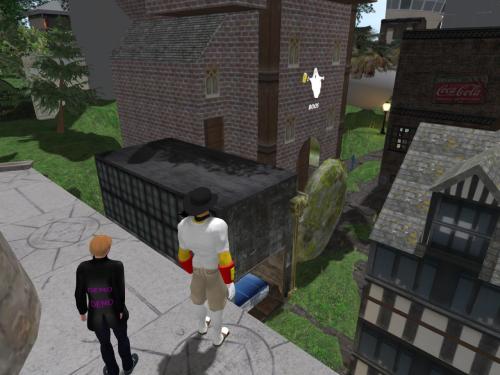
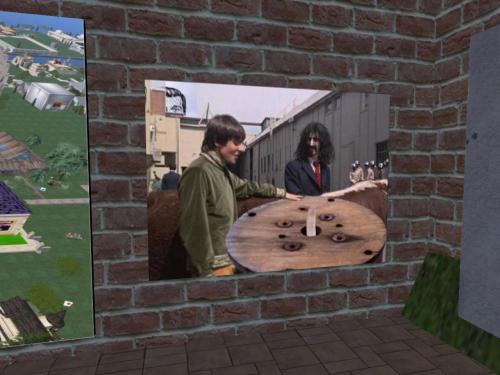
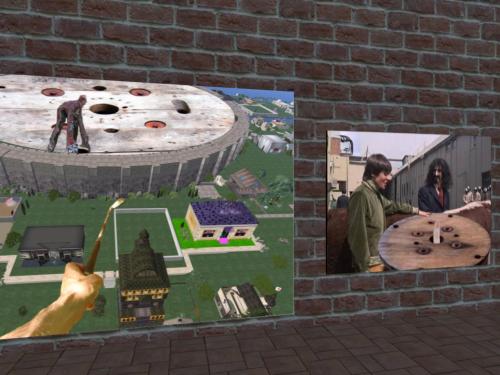
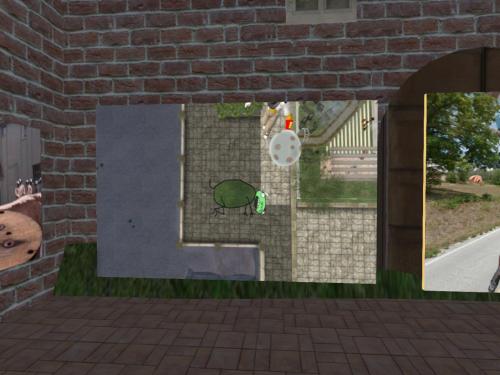
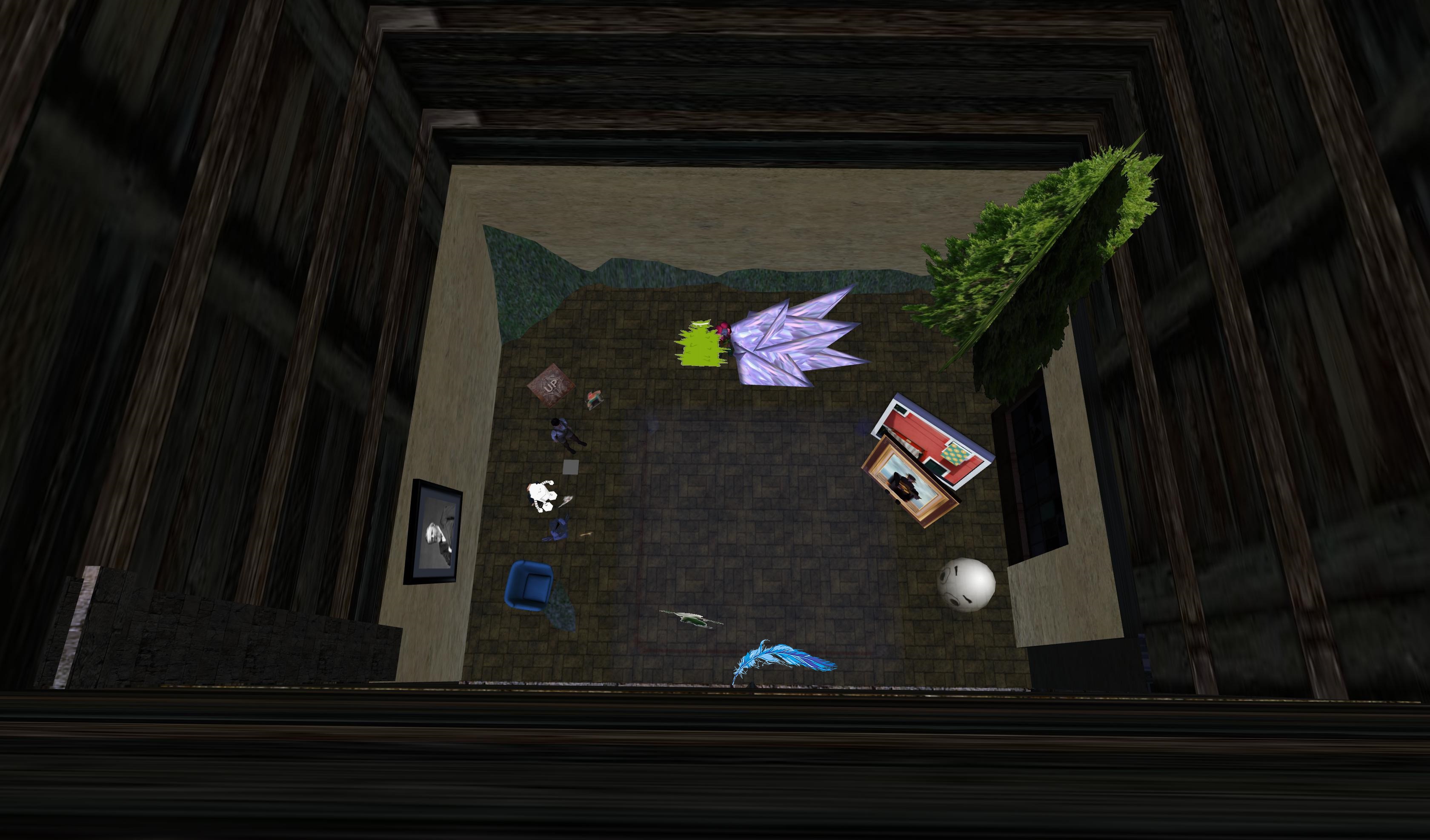
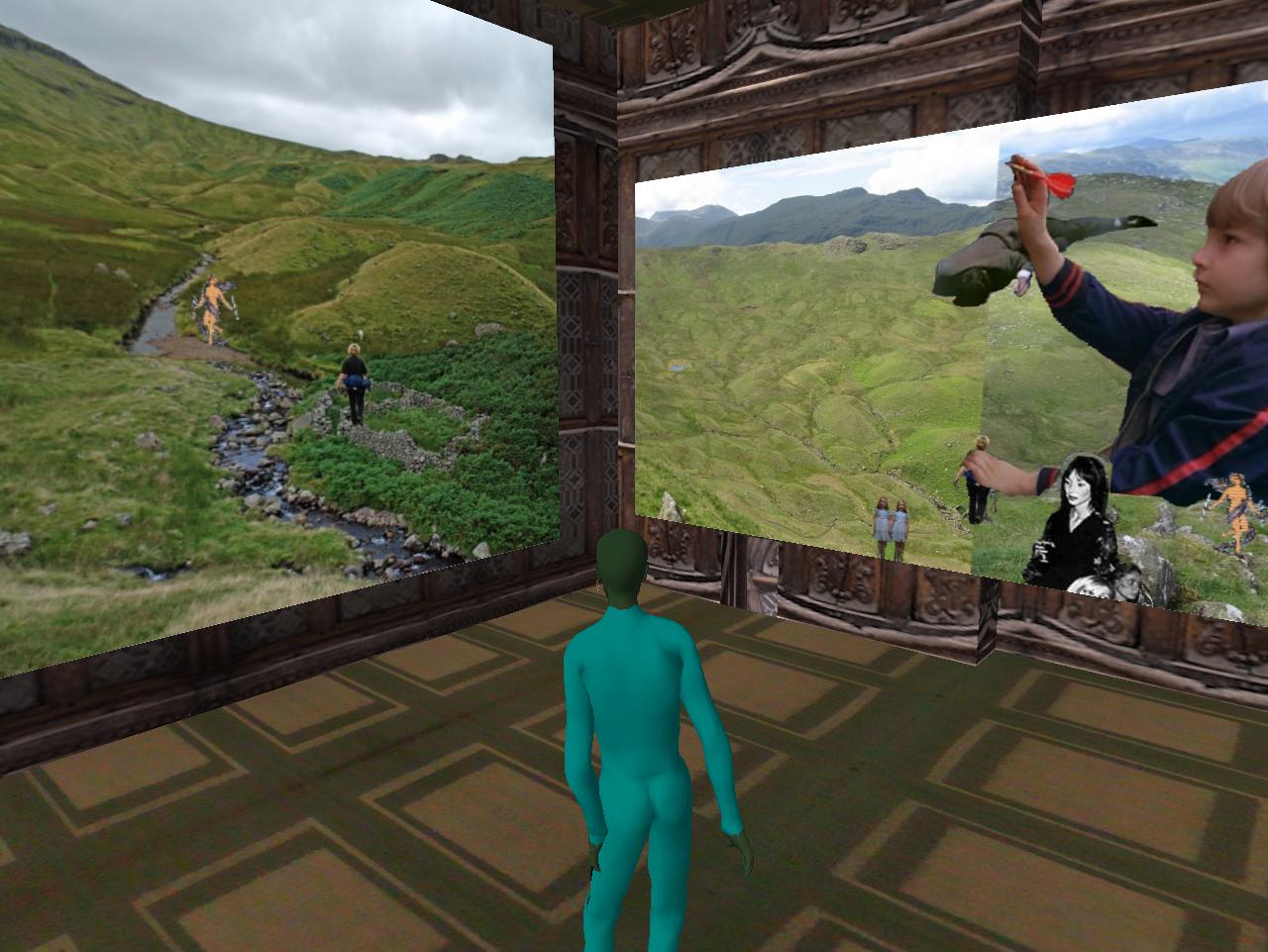
Up we go to the top floor of the Boos Gallery via a teleporter again. In the room’s more confined space, viewers are confronted by what amounts to two diptychs on opposite, long walls, both rather unusual in design in comparison to others of this kind I’ve created. These are the only 2 multi-panel works of the Boos series. On the 2 perpendicular, shorter walls are hung smaller, simpler works both based on more antique Tungaske photos. And the 2nd and last diptych is also based on same.

Let’s start, then, with collages 26 and 27. Here’s how they appear in the gallery…

Snapshot2086_002

The unusual aspect of this “diptych”, collectively called “2 Fer 1”, is that it shows the same 2 older Tungaske buildings, even most of the same collaged-in characters placed around these buildings, but from opposite directions. We’ve seen these similar white clapboard/ green roofed structures before. They appear in the background of “Comparative Heights” two collages back.

collage24test04g

In “2 Fer 1 01”, we’re simply changing angles a bit and zooming into the matching buildings. We have a former school of the town on the right, and a former church to the left. Both stand on the same property, which at present time is up for sale. Like with all the miniatures of the Boos series coming before it, I used photos found on realtor’s sites as a base to build up from. I didn’t alter the dimensions of either of the two selected photos for the collages.

former-church-and-school-in-tugaske-sask_1032334o
“2 Fer 1 01”

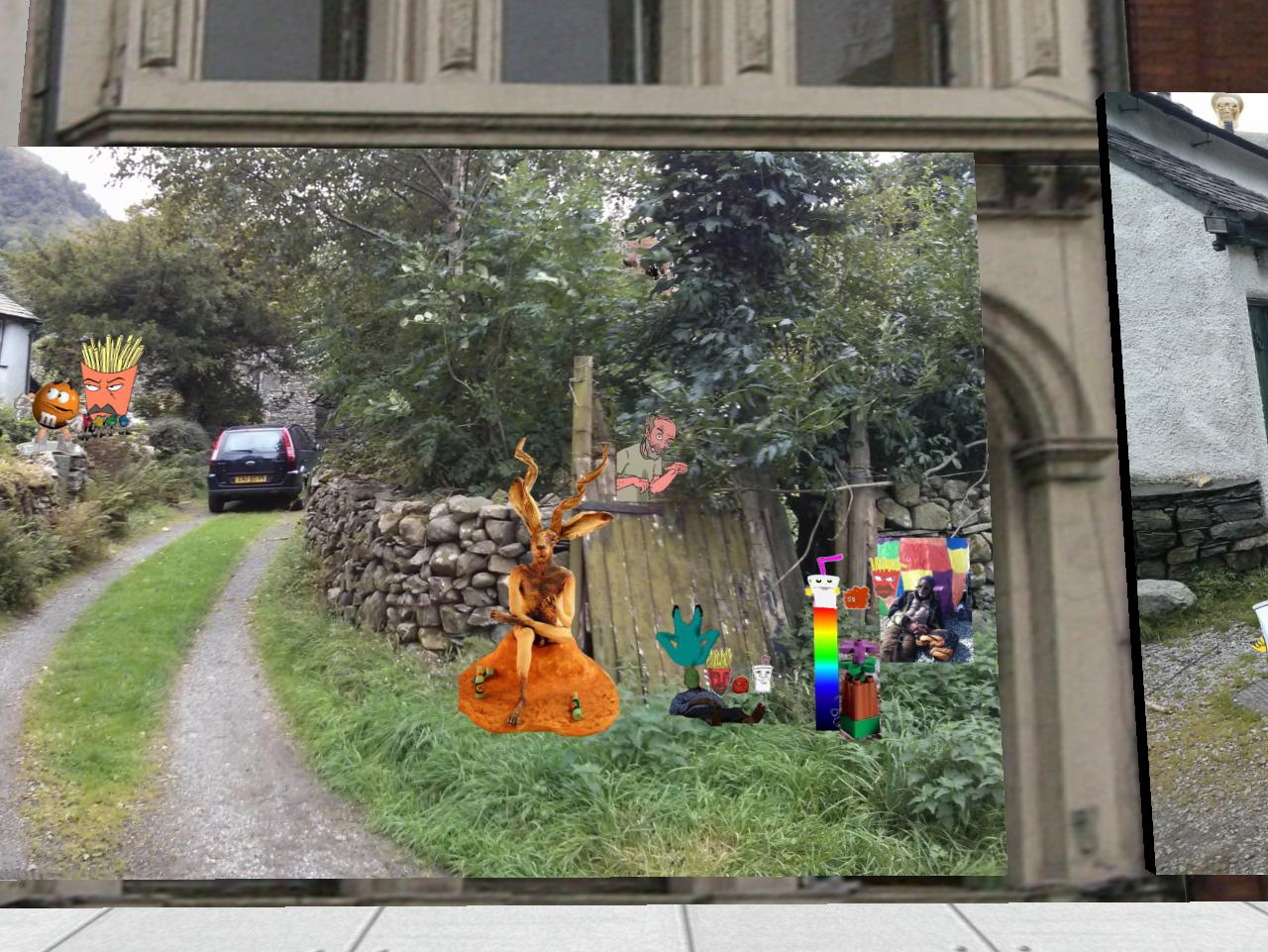
The 2 tall green alien thingies of “Comparative Heights” have now disappeared or either moved off camera to the right. In their stead appear new images. We have, front and center, the head of Marge Simpson — who is, of course, Lisa’s mother in “The Simpsons” show — atop a female human body of taller dimensions, it seems. I believe this represents both Marge the mother and Lisa the daughter in one, perhaps when Lisa is all grown up and a mother herself. Two her left (our right) comes a blue-green 6 legged horse that we’ll also see in the second diptych of this floor. Here it trots on the boundary between shadow and sunlight, but its body remains shaded. Contrast this to sun bathed toy avatar Taum Sauk sitting on a rust colored car to Lisa’s right. Bright vs. shade, then; light against dark. Also in the foreground (far left) is another 12 Oz Mouse character we first saw in Collage 03 (“The Rock”), who again appears in female form here but is actually half man, half woman, harking back to Lisa’s androgynous state. She appears to be in lit the sun as well. And then two more collage-in images appear in the background of “2 Fer 1 01”, which we’ll see better in the second part of the dipytch. These are Baker Bloch himself, alongside a reclining Chef Dick Halloran culled from the epicenter of The Shining movie.

In “2 Fer 1 02”, we’ve merely swiveled our viewing angle basically 180 degrees and moved it to the edge of the woods just behind Baker Bloch. From this adjusted angle toward the old school and church we see most of the same objects from “2 Fer 1 01” but also a couple of new ones. There’s of course Baker Bloch and Dick Halloran again in the foreground, then we can spy the blue-green horse in the background, which appears to be in the same position as in “2 Fer 1 01”. Then Marge headed woman stands beside it still, but with her blue hair queerly merged with the long snout of the blue-green horse. Both she and Halloran still face the camera, as if they’ve swiveled around in position with us. Then absent from “2 Fer 1 02” is Taum Sauk and 12 Oz Mouse’s Man/Woman character with the red ball, apparently hidden from sight now by the rust colored car and white clapboard schoolhouse respectively.

school_in_tugaske_sask_188119o
“2 Fer 1 02”

The new characters of the second part of “2 Fer 1” are Mr. Bean, positioned near the center of the collage, and then former PGA golfer Tom Kite in the right foreground, wielding yet another golf iron of the Boos series. In fact, Mr. Kite is famous for his iron game, which I only learned about after creating the collage.

https://en.wikipedia.org/wiki/Tom_Kite

In his prime Kite had few peers with the short irons. In 1993, Johnny Miller referred to Kite as “the greatest short-iron player the game has seen.

800px-TomKite

(to be continued)

Leave a comment

Filed under Canada/Tungaska, collages 2d

Boos Interpretation 20

Let’s temporarily skip further discussion of “Comparative Heights” to move to the 25th Boos collage, called “Bitter Rivals”. To me this seems to be an even simpler work, not far in spirit from the miniature but larger in overall scale. The scene is clear. We have an old Tungaske baseball team returning to the right, although I’m not sure we have the same people represented. To the left we have the same picture of the team blotted out by red-violet flowers that appear to be pansies. These are the “bitter rivals” of the title, fronting a beautiful Tungaske sunset seen from approximately the same location as that of collage 14 (“The Unloading of Bigfoot”), or on the western edge of the town very near the artist’s house depicted in collage 11 as well. I believe those are even some of the same trees represented.

collage27test08

We’ve already associated this artist with Lisa Simpson or “Lisa the Vegetarian” through evidence gleaned in collages 19 through 23. Appropriately, we have the return of Lisa Simpson for the present collage, appearing in outline form between the two “rivals”. But, importantly, the outlined is doubled through inversion. Lisa cannot side with either team but, like the setting sun behind her, has to remain neutral. As Lisa has also been directly associated with a setting (or rising) sun in collage 22, we must assume the same here. What are the rivals? Since the flowers are culled from an advertisement for the Tungaske cemetery, they represent the dead of the town. And since all the players to the right are in all likelihood deceased now, the collage weaves a tale of past (living) colliding with present (dead). Tungaske is a dying town in that the population slowly seems to be trickling away. Again, the dead threaten to rule, vanquishing or “blotting out” a modern rival, perhaps perceived as johnnies-come-lately. The fight is between past and present, with Lisa standing between the two.

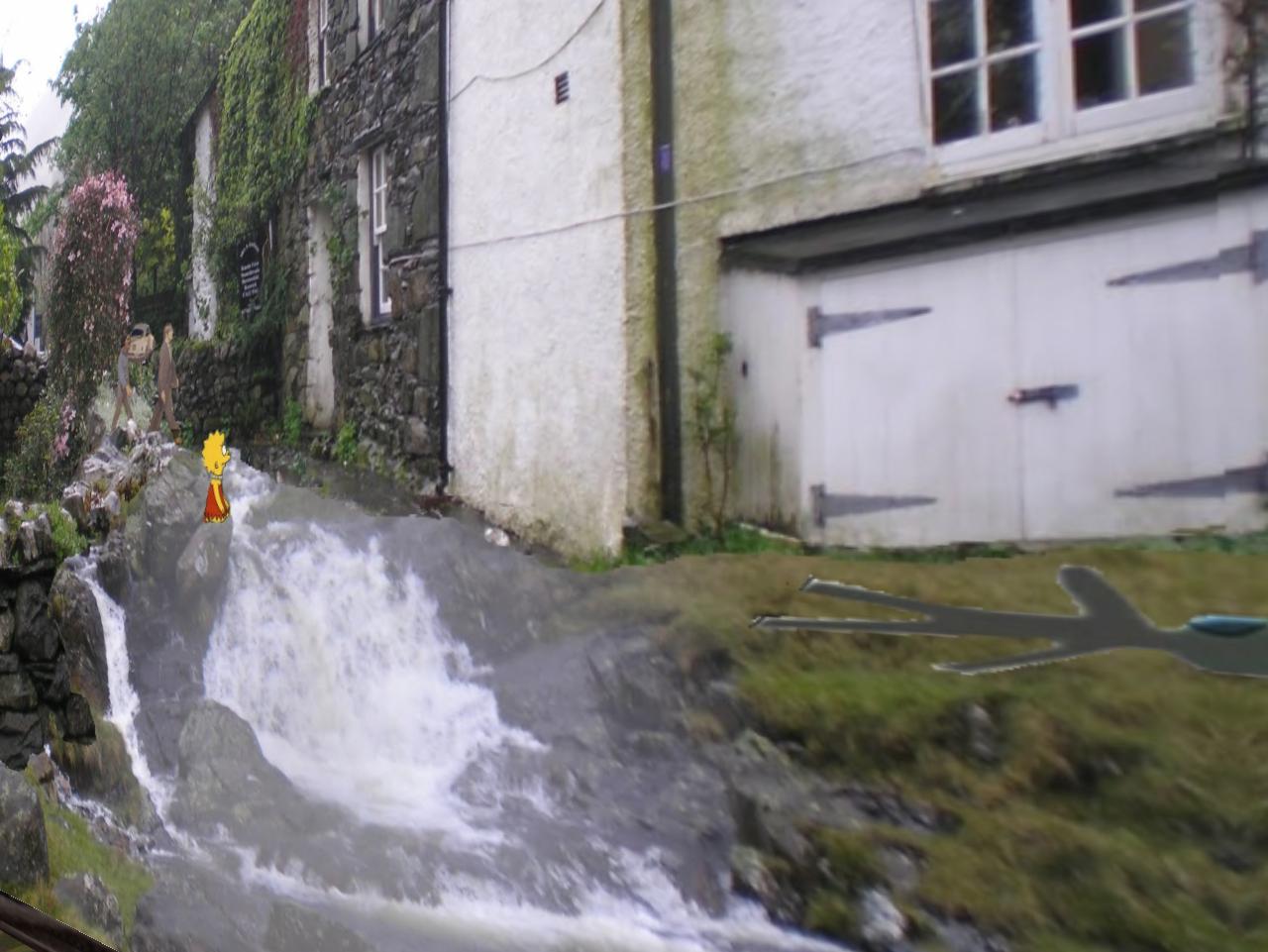
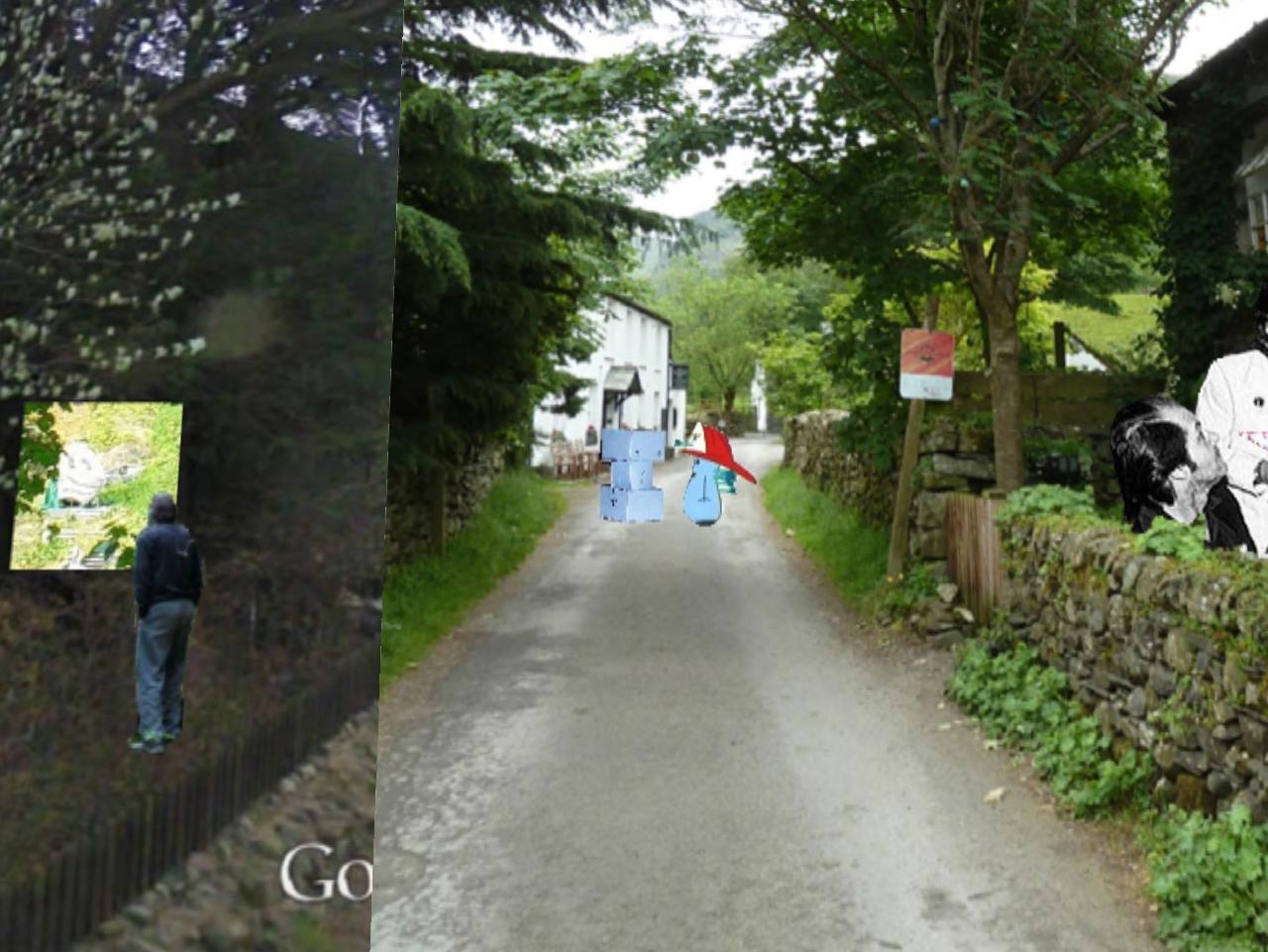
The heroine of our story does not appear in “Comparative Heights”, but her image is the last I edited out of a final draft for that collage. I decided to include an excerpt from this penultimate version as collage 25.5 of the Boos series which I call “Q Girl”, bringing Lisa to the forefront at last and not hidden. Her signature lemon tags along.

collage25test02

Per the title, she stands in the “Q” of the delineated “Q Street” from Google Maps’ Streetview. Given that Dorothy’s upraised arm in the overall collage points directly at mystery writing in the sky that seems to spell out a more derogatory word for “queer”, we can also assume that “Q” stands for the same. This may be a kind of coming out moment for the girl, or a realization at least of her gay or, more likely, bisexual nature. This has antecedents in “The Simpsons” show, where several times it is hinted that Lisa is a lesbian.

http://simpsons.wikia.com/wiki/LGBT_characters

In the episode “Holidays of Future Passed”, a montage of photos were featured to show a glimpse of whats to come for the Simpsons family. Lisa is shown intimately holding hands with two women in one photo, then with a different woman in another photo.

I’m also reminded that the flowers in “Bitter Rivals” are pansies, which is another slang word for “gays”.

Drawing further back, Lisa Simpson represents the androgyny or two headed rebis:

In alchemy, androgyny is a symbol of immortality, transcendence and totality. It is the triumph over the deceptive duality resulting from the creation of the universe. It also stands for the merging of the selves, the triumph over mind and ego, and the accord between sameness and diversity, particularly duality.

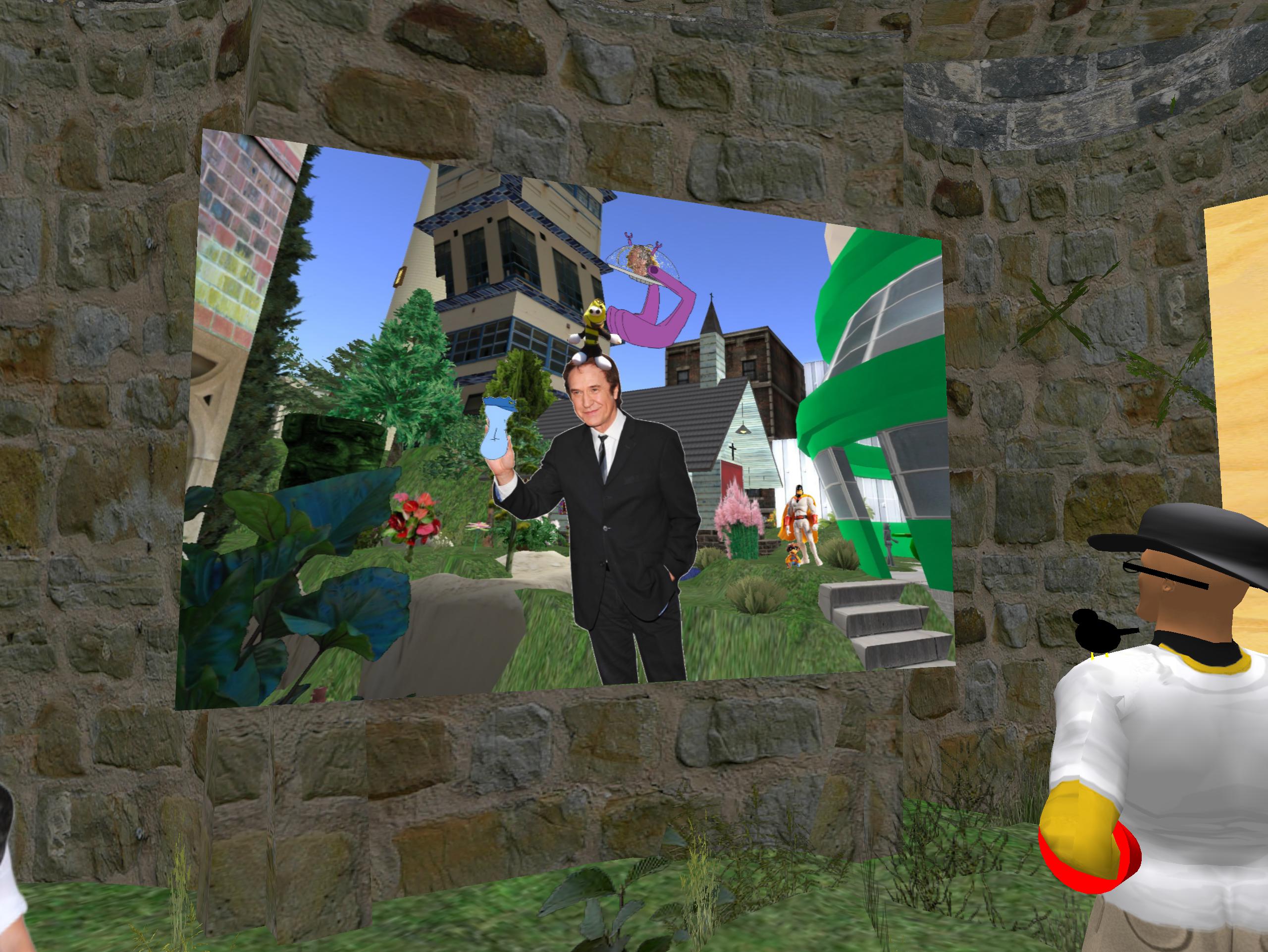
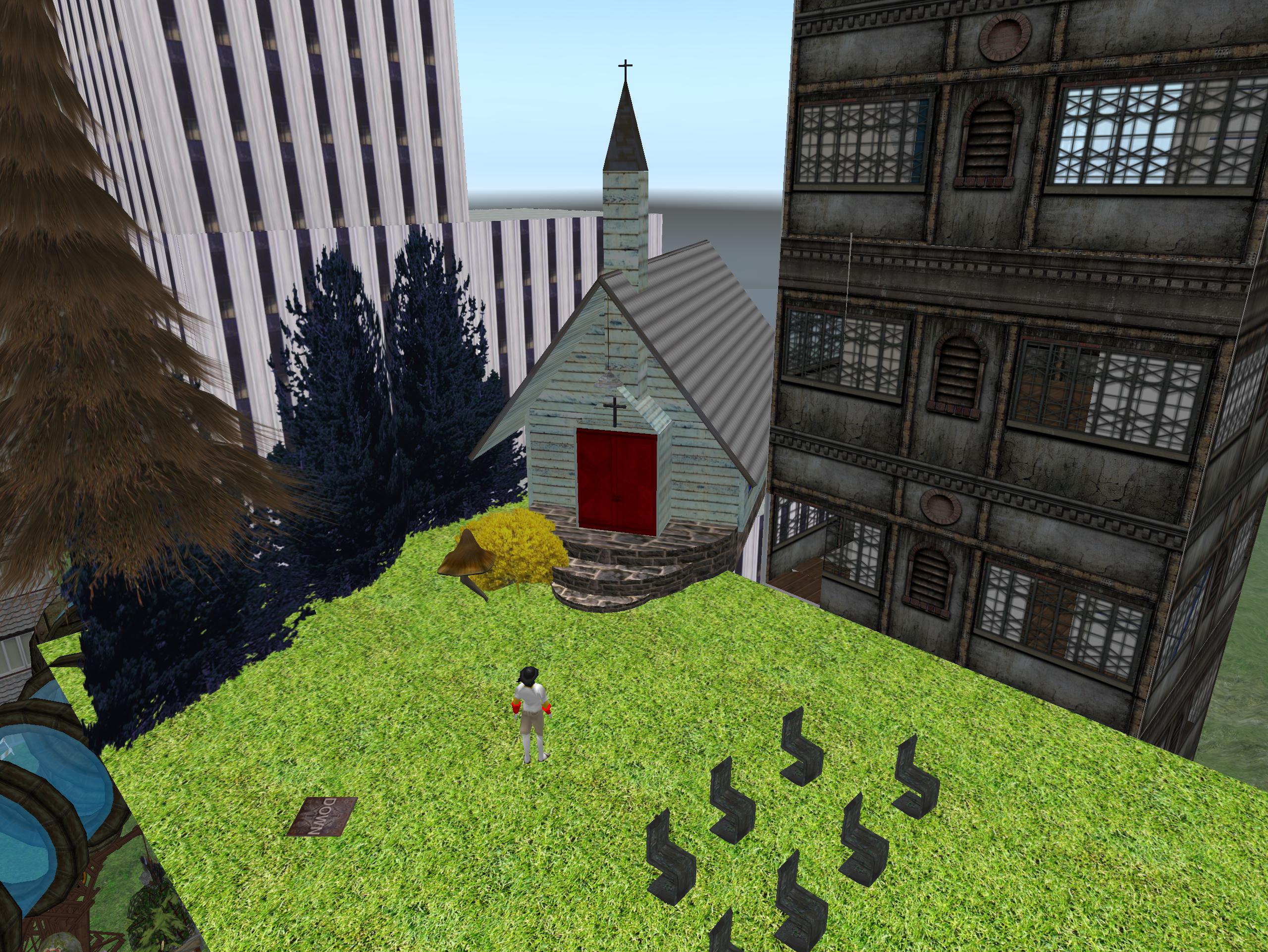
“Q Girl” provides a summary point for the floor 3 collages of the virtual Boos gallery in Collagesity now, a period to their sentence. But we still have one more, smaller floor to examine. Lisa leads us upwards.

Snapshot1120_011
Nautilus City

Snapshot2086_001
Collagesity

(to be continued)

Leave a comment

Filed under Canada/Tungaska, collages 2d

Boos Interpretation 19

(continued from)

We come to “Comparative Heights” now, number 24 in the Boos series. Just in terms of pure aesthetics, I believe this is one of the more successful Boos works, although I don’t think it’s quite as deep as the previous, “uglier” collage (“Goodwater Goodland 03”). Let’s dive into an interpretation and we’ll see.

collage24test04g

At the center of the work is Waving Truman again, having appeared in a Boos miniature already. Here he stands at the end of a row of historic Tungaske baseball players, 12 in number and lined up in terms of relative heights. Truman is at the high end, and the only one that can be said to actually stand the road itself (Tungaske’s Q Street) and not in the grass off the road. He is the 13th, relating him to the Christ figure. On the opposite end from him appears the smallest and darkest of the figures, perhaps in shadow. He could be Judas Iscariot, betrayer of Jesus, in this scenario. In reality, he was probably the baseball team’s manager or coach. Waving Truman is also set apart from the others because he appears in his true colors, the rest being sepia toned. In the road to his right is a miniature version of the likewise sepia colored Fal Mouth Moon Gallery, not in correct proportion at all relative to him, in seeming opposition to the collage’s title. Above him is another sepia character, and also one we’ve seen before in a Boos miniature: “Falling Dorothy” from an early Kansas scene in “The Wizard of Oz”. Here she points to mysterious smoke or cloud writing in the sky that appears to spell out the word “fag” in capital letters, at least according to blog spirit Hucka D.

And speaking of Hucka, we also find him in the present collage beside Truman in his true Second Life form (“Hucka Doobie”), and not as a doll as we’ve seen before in Boos collages 11 and 19. We are moving into something truer — Truman. And in the background, standing in the grounds of the old Tungaske church and school we’ll see more of in coming collages, are two giant green, alien type figures both removing their heads. Hucka Doobie appears to be staring toward them. We know from the Falmouth series that these are 2 “Beemen” who show up in a Whitehead related collage here:

collage87test09

More bee imagery, then. The mirroring “fat” and “thin” figures also hark back to the 2 Roger Pine Ridges of Sam Parr 03 that also reappear in the final Falmouth work. LINK

So to an interpretation: The setting is Tungaske’s Q Street, right beyond where it meets the top end of Atlantic Avenue coming from the south. Maybe the north-south line of baseballs players relates to this avenue, then, and by association Pacific Avenue running parallel to it. I’m remembering that Waving Truman appears in a miniature featuring a Pacific Avenue location. And Hucka Doobie below him is a miniature himself in comparison to other imagery in “Comparative Heights”.

Check this out:

COMPARATIVE HEIGHTS
COLLAGESITY HEIGHTS

“Comparative” contains the same number of letters as “Collagesity”, or 11. 18 total, then, for both “Comparative Heights” and “Collagesity Heights”. We may return to that.

(to bee continued?)

Leave a comment

Filed under Canada/Tungaska, collages 2d, Frank Park, Whitehead Crossing

Collagesity 12/14/15

I’ve moved Tower Central slightly to the north to make room for…

Snapshot2080_022

… The Grove.

Snapshot2080_007

Grave of the Unregistered Voter on the edge of The Grove.

Snapshot2080_011

Awaiting a speaker. Lord Mayor, Lord Mayor!

Snapshot2080_012

The Bakers assemble.

Snapshot2080_013b

Also I’ve decided to reinsert the World of Collages building in the northwest corner of the village. This replaces the Small Castle and a residential house. Shame, but there’s only so much room here. I haven’t finished the interior.

Snapshot2080_019

And I don’t think I’ve said that the Toxic Art Gallery with its 80 of the 100 “Art 10×10” collages has also returned. And that’s Baker Bloch’s House Orange below it, which appears to be his new home.

Snapshot2080_020

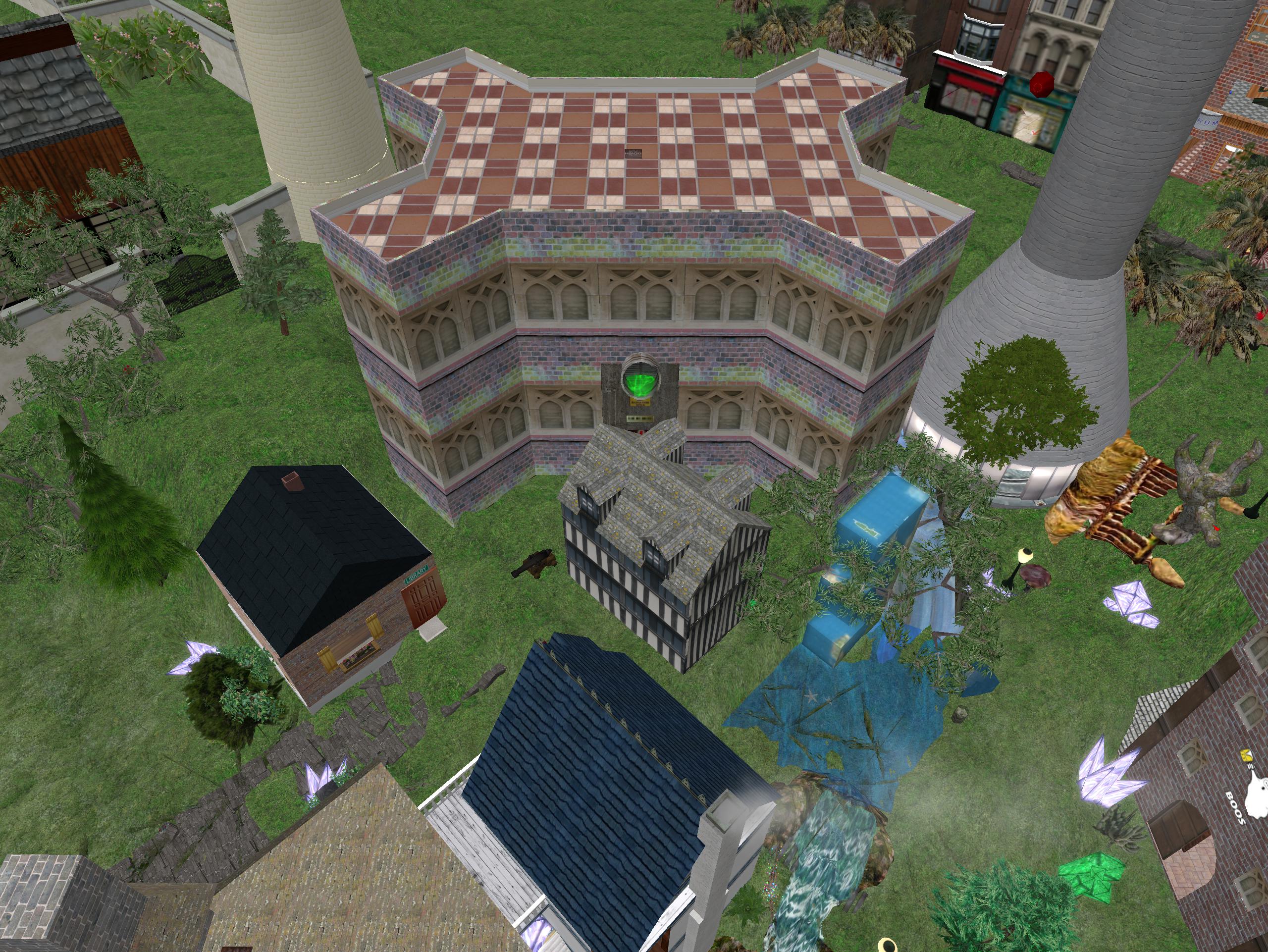
And then, moving across the stream, Collagesity’s Boos Gallery is essentially done (!)

Snapshot2080_021

I’ll create a new map of the town asap. I’m about at my limit with the prims.

Almost forgot to mention the library.

Snapshot2080_025

Snapshot2080_027

And I believe the former House of Truth might become the town museum.

Snapshot2080_028

Leave a comment

Filed under **VIRTUAL SL, collages 2d, Heterocera, Rubi

Boos Interpretation 18

(continued from)

What’s outside the rectangles with the green entities, then? First, let me emphasis or reiterate that the reasons behind The Flintstone’s Great Gazoo being brought into the present collage are not just because he’s green like Ray Walston’s similarly green clad Martian character or actually green like the Incredible Hulk, although that’s obviously the main surface tie-in between the 3 framed images. No, this is more Tungaske magic in action here, explained in a post from about a month ago called “Town Oddities”. I won’t repeat the information except to state that the Tungaske woman in the photo is also green clad, has the implications of worm *helmet* — accidental in the photo, it seems — and that she shares other characteristics with the live action Gazoo character. It was very natural, given this background, for me as a collagist to transpose the large silver fish from “gloved green helmeted short plump smiling fisher-woman” to “gloved green helmeted short plump smiling Gazoo” and go from there.

collage23test06

Looking at stuff outside the inserted rectangles now, we have the return of 12 Oz Mouse’s Fitz in the center of “Goodwater Goodland 03”, drinking his beer once more. He’s always got at least one or two stashed away somewhere on or around his body in the series, it seems, and can whip it out at any time. Witness this:

Fitz obviously is associated with the other green beings in the collage, starting with the Great Gazoo as explained before in “Boos Interpretation 17” and working out from there. Gazoo’s silver fish can also be seen as booze — two imbibers, then. As far as the Martian and Ray Walston go, we must keep in mind that Tungaske inexplicably has a large Martian crater named after it. And for (Bill) Bixby and The Hulk we must remember that Iron County Missouri, which contains both a Bixby and a Banner (about 15 miles apart), also has an even closer Goodwater and Goodland between them. Bill *Bixby* starred as David “Bruce” *Banner* in The Incredible Hulk show to follow up on his co-starring role in the earlier “My Favorite Martian”. The proximity of Goodwater to Goodland here (also framed by the north and south county lines of Iron) led me directly to Tungaske and this landmark, 611 page history book on the community…

goodlandgoodwater06

We have a complex interweave of collaged associations building upon clues from maps, TV and film sources, books, photos, Second Life, and more — leading up to “Goodwater Goodland 03”. And we have these actual names culled from an Iron County map in the present collage (bordering the “My Favorite Martian” insert), just like in the former two collages of the set.

Back to Fitz and the center of the collage: Behind the green mouse is the composite Tungaske and Tungaske Cemetery signs we’ve seen in “I Must Be Going. Hello!”, which stand for a town in danger of dying out, leaving only the dead to rule. Behind it is what appears to be a sunset or sunrise, but is actually the top of Lisa Simpson’s cartoon sun-like head. If it is sunset, this could be despair. If it is sunrise: hope. We are going to assume this is a hopeful situation for Tungaske, and that the town and its cemetery will not become “as one” here, since Lisa Simpson keeps appearing in Boos collages to come. She is the ordained savior artist.
(to be continued)

Leave a comment

Filed under Canada/Tungaska, collages 2d

Boos Interpretation 17

(continued from)

martian08

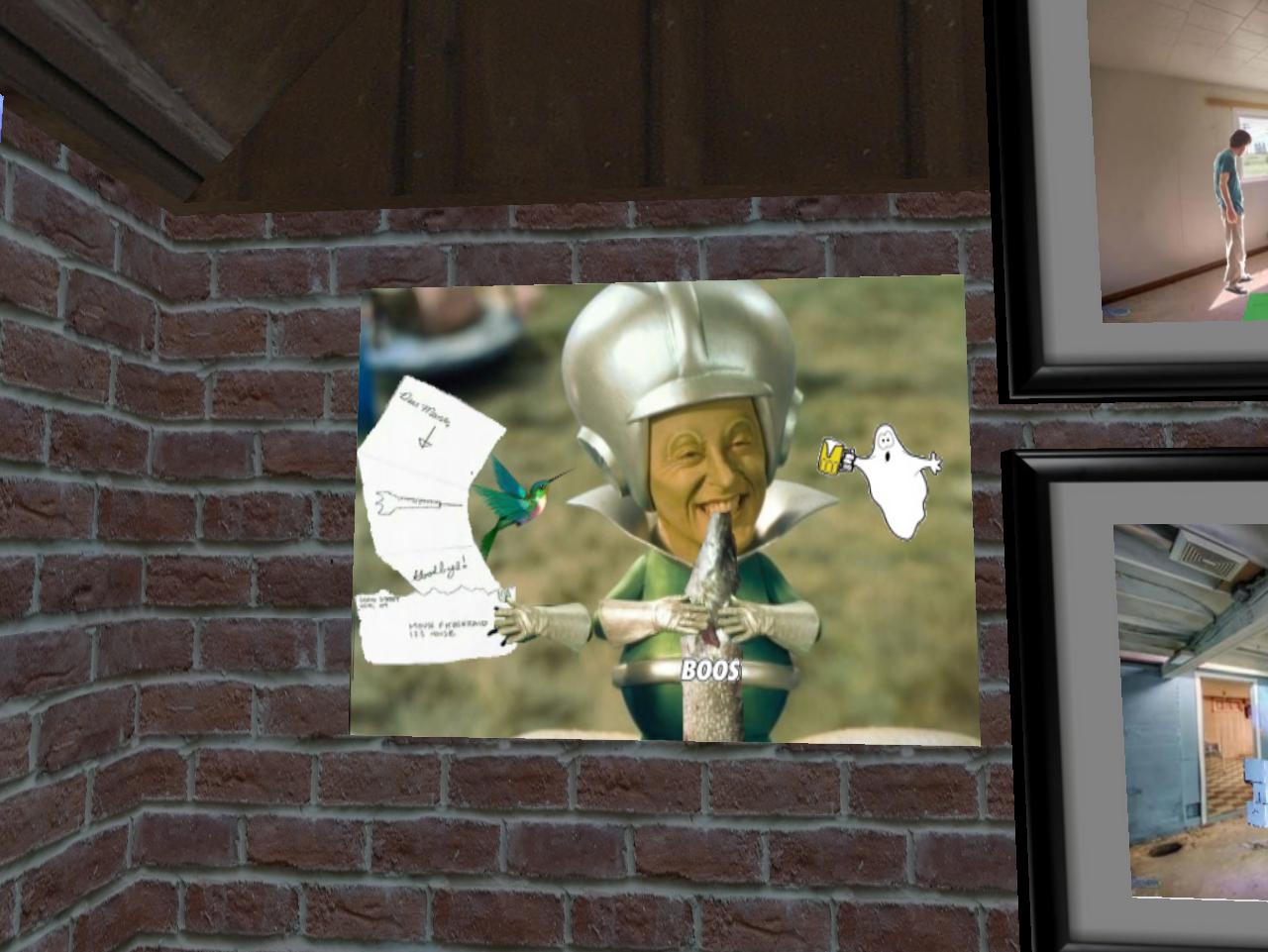
The central figure of “Booses” is the Great Gazoo from the popular 1960s animation show, The Flintstones. But here he’s seen in his live-action version from the 2000 movie “The Flintstones in Viva Rock Vegas.” More on the Great Gazoo here:

The Great Gazoo is a tiny, green, floating alien who was exiled to Earth from his home planet Zetox as punishment for having invented a doomsday machine, a weapon of immense destructive power. His invention was a button which if pressed would destroy the universe in an explosive “ZAM,” though he insists he made it on a whim (“I wanted to be the first on my block to have one!”) with no intent of using it. Gazoo was discovered by Fred and Barney when his flying saucer crashed; Gazoo recognizes Fred’s and Barney’s world as prehistoric Earth, implying Zetox banished him through time as well as space.

Gazoo refers to Fred and Barney as “dum-dums” and constantly causes problems for them. He can materialize and dematerialize objects, teleport, freeze time, travel through time, and perform other remarkable feats, but when he attempts to help out Fred and Barney, he usually ends up causing even more trouble. Although his powers are frequently described as “magic,” they are more likely based on incredibly advanced science, in accordance with the third of Clarke’s three laws. The only people who are able to see Gazoo are Fred, Barney, and the children, because they believe in him; animals also can see him. A running gag is that Fred argues with Gazoo while Wilma believes that he is talking to himself. When their daughter, Pebbles, says “Gazoo,” Wilma thinks Pebbles is sneezing.
And a funny addition here:

The Great Gazoo is also referenced in The Simpsons episode “The Simpsons Spin-Off Showcase”, a metafictional episode looking at alleged future developments in the series that would never come to pass, which include Ozmodiar, a floating green alien that only Homer could see. Ozmodiar eventually appeared (twice) in The Simpsons episode “HOMR”.

Metafiction rocks! Back to “Booses”: The Great Gazoo holds a silver fish in his hands, and seems to be eating it. A small white cartoon ghost hovers to his left, holding a mug of booze or beer. Ironic juxtaposition. The fish also has the word “BOOS” across it, acting as a kind of forward projected buckle for the Gazoo’s belt. This seems to imply that the fish also represents booze, and that the Gazoo is imbibing too, just like the little ghost.

Notice the very similar color of the animated Gazoo and 12 Oz Mouse’s Fitz in these images; I just happened to save them in the same folder on my computer:

The_Great_Gazoo

0

Fitz is also an imbiber of alcohol. In fact, he’s always at least a little drunk in the show. So I think it’s safe to say that Gazoo and Fitz the Mouse are supposed to be overlapped in this collage, given that a duplicate of Gazoo’s right arm holds Fitz’s letter to the left. The green-blue hummingbird is a dart. Gazoo’s helmet even has the shape of a inverted hummingbird feeder of sorts. But what of the fish? I guess this is as good a place as any to remark that in collage 3, another green being (Hulk) — seen through the doorway of the Boss, MO rock house also appearing in collages 1 and 2 — has the head of not a fish but a bird between its teeth…

collage03redone04f

… and I was conscious of the association at the time, since collage 3 was actually finalized after collage 22 here. Bird and fish are suppose to be tied together, leading in from the “Can You Be More Pacific?” miniature, or collage 21b as it were.

collage23test06

Collage 23, “Goodwater Goodland 03”, contains the same image of the Gazoo, so we can just continue our analysis by examining that work. The collage is unusual in several aspects. One is that it shares the same name with two earlier, proximate collages of the Boos series, or “Goodwater Goodland 01” (collage 09) and “Goodwater Goodland 02” (collage 10). The unusual part here is it comes a full 13 collages after the latter of that set. Why the reappearance of an already dispensed name? It’s because we have much of the same pictorial framework in place for the present one: we have the return of the mural picture from collage 10 in particular, with rectangles removed that depict smaller representations of the same mural seen from different angles found in collage 09. In Boos Interpretation 07, I describe how this flipping of background and foreground stands for a tajitu situation, where yang and yin energies have interchanged.

collage12test02
“Goodwater Goodland 02”

Instead of the rust colored funerary book appearing “behind” the rectangle areas removed from the Tungaske mural, we now have 3 separate pictures of *green entities*.

collage23test06

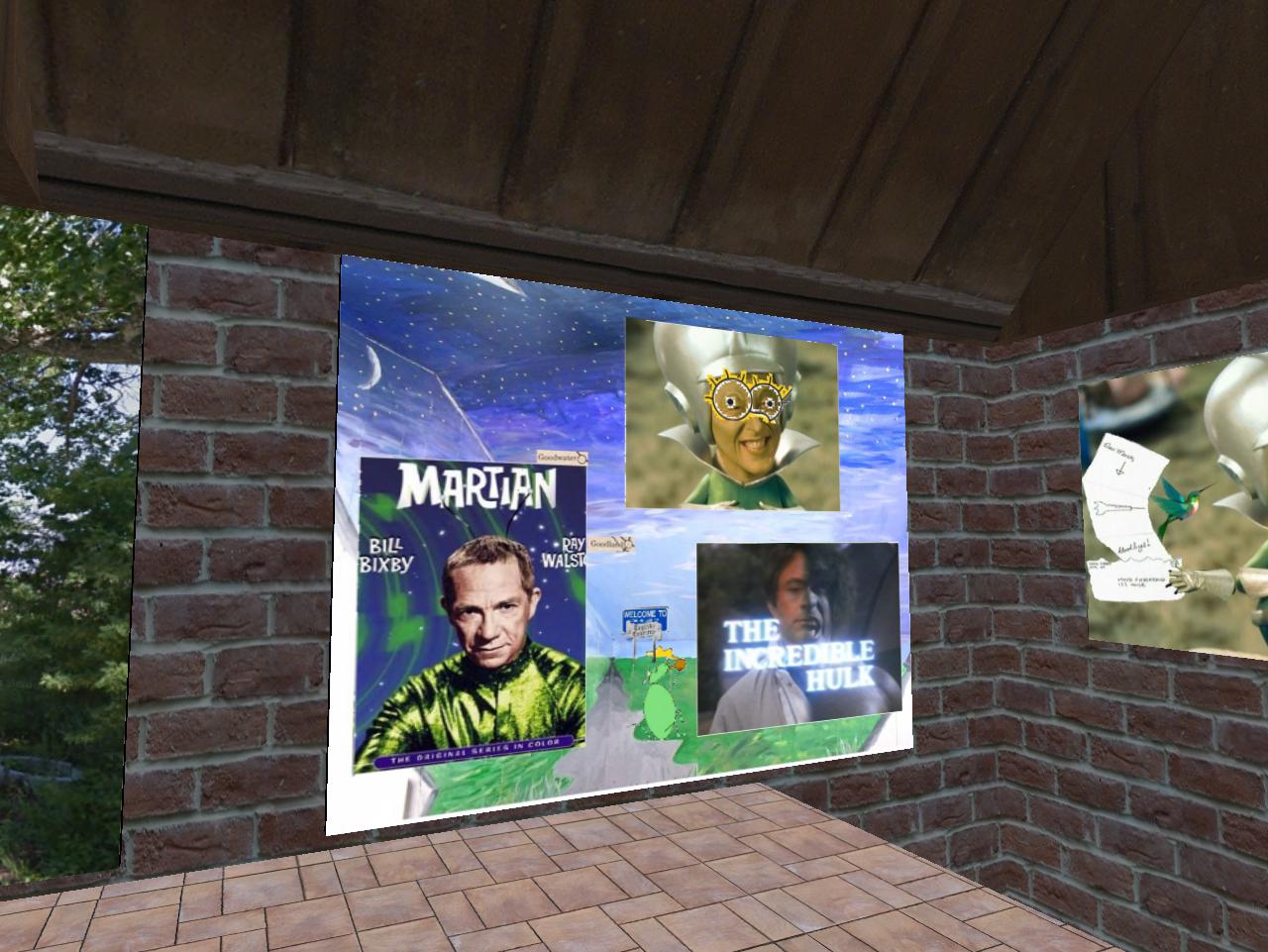
Of course there’s Gazoo again at the top (sans fish this time), then part of a DVD cover for the show “My Favorite Martian” to the left, another 60s TV staple like The Flintstones, and then the return of Bixby and his Incredible Hulk character in the last rectangle to the right. Bixby just happened to be the co-star of the earlier “My Favorite Martian”, alongside star Ray Walston (who played the Martian of the title), and I included his full name in the culled image to make the Martian-Hulk association more open. The Great Gazoo, although not technically Martian (although sharing the same general color, shape, and *helmet* as a true Martian from another cartoon classic)*, certainly fits in as another related, green alien. To complete what we see in the rectangles, Gazoo also has “Lisa Simpson eyes”.

(to be continued)

—–

* Interesting (The Great Gazoo vs. Marvin The Martian):

http://dev.xversusy.com/challenges/Marvin_the_Martian_vs_The_Great_Gazoo

Leave a comment

Filed under Canada/Tungaska, collages 2d

Boos Interpretation 16

(continued from)

martian08
“Booses”

Collage 22 directly extends and enlarges some of the pictorial elements found in “Can You Be More Pacific?” coming before it. This mainly involves the transposition of the silver fish and hummingbird hovering directly above it there, but also bear in mind that the dart in the letter to the left is suppose to be the same as the several darts stuck in Peanut’s body in that earlier work. And the darts are the same color as the green-blue hummingbird with dart-like beak in the present collage.

pacific04bbb

This is all more “12 Oz Mouse” imagery, with the letter opened by Fitz near the beginning of an early episode called “Rooster” and where the whacked out plot line of the show really begins to kick in. As soon as Fitz reads it, he’s hit by a dart, as if his mind manifests the events of the show. And it kind of does (!), since 12 Oz Mouse creator Matt Maiellaro provided the voice of Fitz and begins to “ensoul” the character at this point. Maiellaro, probably best known as the co-creator of cult hit “Aqua Teen Hunger Force” (also frequently mentioned on this blog), illuminates more details of his growing involvement with this newer and even stranger follow-up show here:

http://www.shriekingtree.com/12_oz_Mouse/index.html

[“12 Oz Mouse”] actually started out as a disjointed humor-fest, but maybe only to me. I thought the show might stand alone in episodes, like “Aqua Teen.” As I was finishing the pilot and starting the second episode, I snapped into the serial thing. It somehow made sense that if what we saw didn’t make sense, there should be some sense to it. If I introduce this new character at the end of [episode] one that we know nothing about, then we need to explore who this character is and what he wants [in the next episode]. It was by the end of [episode] two that I started mapping out this grid of characters and figuring out who was bad, who was good, and who might have been bad once but is now still in the middle. Then, even from there, I didn’t quite know where the show was going, but I knew how it was supposed to ultimately end – which is not how we ended it with episode 20.
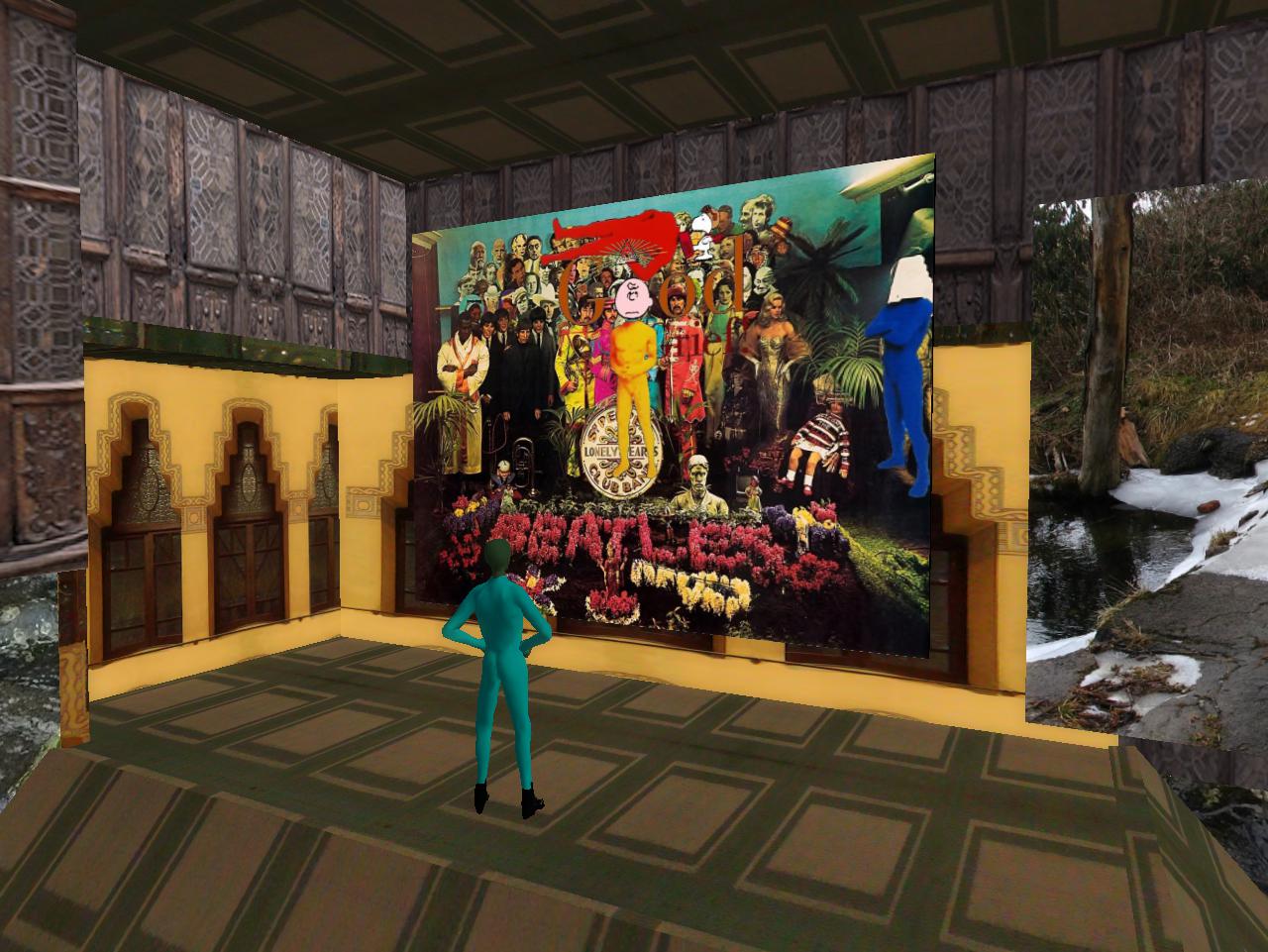
So “Rooster” is the first episode of “12 Oz Mouse” where Maiellaro has this “grid of characters” mapped out to aid him. An elaborate mystery begins to unfurl, but we also known from his quote above that it will not tie up the way he originally envisioned. More on this “unfinished” aspect of the show later, perhaps. Seemingly at the center is Q109, possibly a federal agency that Fitz and also the episode’s namesake character Roostre were a part of at one time.

I don’t want to go into great detail about what happens in “Rooster” except to mention that a stray, sentient *corndog* originally leads Fitz to Roostre. And I’ll just briefly mention that this connection is shown in Carrcass-1 too. In the troughs of developing that particular audiovisual synchronicity back in 2008, I associate Fitz hit by a dart in “Rooster” with president Rutherford B. Hayes’ grandson driving boats named darts into Mouse Island on the Baker Blinker Blog, a Lake Erie island which the Hayes family still owned into the 20th Century.

http://ohiosyesterdays.blogspot.com/2008/09/on-august-23rd-toledo-antique-and.html

DARTBOATHayes
One of Admiral Webb C. Hayes’ sons off Lake Erie’s Mouse Island in a Dart Boat, ca. 1929
(Hayes Family Album)

And besides being a green oval like both the torso and head of Fitz’s body, doesn’t Mouse Island also look like a *corndog*? I thought so at the time…

mouseisland

But the clincher is that Roostre later states to a character called Spider that he knows “Booger Hayes” during one of the funniest moments of the whole series. “B. Hayes”, just like Rutherford B. Hayes. The plot thickens.

(to be continued)

1 Comment

Filed under Canada/Tungaska, collages 2d

Boos Interpretation 14

(continued from)

We draw back out to see the whole of Tungaske in “Neither Atlantic Nor Pacific”, the 20th collage of the Boos series. The title refers to the town’s 2 avenues featured in the miniatures of “Atlantic” and “Pacific” — 2 apiece. And we will return to the same Pacific Avenue house currently for sale in the next set of miniatures coming up. In “Neither Atlantic Nor Pacific”, we continue to evolve the various stories building up in the village. An image of Ohio’s former Great Black Swamp has been inserted in its center, roughly situated between the two avenues in question. Boxy Brown with see-through hair is positioned on its upper end from the picture’s perspective, opposite fellow Aqua Teen Hunger Force character Master Shake, also appearing as partially transparent.

collage19test07

This is yet another yin-yang reference, since Shake is very white and Boxy Brown is an abstract representation of an African-American (“black”) man. We’ve seen these same two characters placed on opposite sides of another body of water in the Stonethrow collage “Animation Station”, the first part of the ending tetraptych of that May 2015 series.

collage08btest25

Also returning from the May collage is homeless man, already used in collage 09 of the present series (“Goodwater Goodland 01”). Here he is detached from Boxy Brown’s hair and appears below him instead. The sewer top he holds down with one hand now marks the exact spot of a Tungaske labyrinth also referred to in “Wrong Way Whales”, and likewise circular in form. Then opposite homeless man in the the upper left corner is flying Superman from “Superman III” holding Richard Prior in his arms. And then the last collaged-in element to the aerial photo of Tungaske in “Neither Atlantic Nor Pacific” is a central slice of the book cover for “The Ordained”, a mystery novel by Terence Faherty. It appears nearer homeless man in the lower right corner, and in the exact spot of the house featured in “Hucka Homebee”, collage 11 of the Boos series.

The image of the Great Black Swamp is also featured in another Stonethrow collage called “Beware (The) Healers” that we’ve already examined in reference to collage 12. This swamp use to exist just beyond the western edge of Lake Erie. In connection with the present collage’s title, this is then neither Atlantic nor Pacific but more toward the center of America, in the Great Lakes region.

A description of “The Ordained” from Terence Faherty’s site:

The residents of the isolated town of Rapture, founded by an Adventist sect, the Ordained of God, are disappearing one by one. The Ordained believed that the world would end in 1844 and that they would be taken bodily into heaven. Now, one hundred and fifty years after their rapture failed to occur, something very similar is happening to their descendants.

Another small town, another one that’s “losing” people. Only Owen Keane, the book’s protagonist and an ordained minister himself, can save the town by solving its central mystery. I think this ties into art being able to save Tungaske. The fellow “junk” artist who lives in the house of collage 11 becomes the savior archetype, and in synch with fellow deity Lisa “The Vegetarian” Simpson. The overlaid swamp symbolizes the morass, the abyss, a kind of mass grave like a cemetery but also a stand-in for hell, perhaps. Door to The Abyss, then. Richard Prior is black like the swamp, but also he is a “prior”, or one who is stuck in time. Rescue by Superman represents ascent to heaven, or perhaps rapture. The swamp is no longer a threat. All these pictorial elements tie together to present a scene of hope beyond despair, eternity beyond earthly bondage. The town can be saved. The world can be saved. Like the labyrinth, a satisfying mystery novel directs a plot line into and out of a core dilemma.

(to be continued)

Leave a comment

Filed under Canada/Tungaska, collages 2d

Boos Interpretation 13

collage17test26

Well, what we can see immediately is the bookend type framework provided by normally colored Fitz on the left side, and inverse colored Fitz — or at least his torso and his beer — on the right side. This reminds us of the pillars Boaz and Jachin guarding the entrance to the Temple of Solomon in Biblical times.

RWS_Tarot_02_High_Priestess

And, of course, this ties into the yin-yang symbols again. But the inverted Fitz to the right is partially replaced, like a bionic entity, by parts of a normally colored Lisa Simpson or Lisa The Vegetarian as I call her here more commonly, mainly most of her head a little bit of her body. This exchange seems important, since Lisa, when taking a foothold in the Boos series with this collage in her true cartoon form, sticks around to appear in many of the remaining works that wrap it up. We’ve seen Fitz before, starting in collage 06 — in Nautilus City with a meteor flying toward his head — and continuing in collage 14 — head pulverized by meteor in Tungaske. Here he is sans meteor, and leans over to stare at a hole in the ground. This particular image involving Fitz the Mouse was used in several other pre-Boos collages of mine, including the fully animated tetraptych that ended the last series in May (Stonethrow). In fact, the hole appears at the very center of this large collage, perhaps the most complicated I have created so far.

Snapshot2035_006

So the hole, and Fitz along with it, represents *center*. But in “I Must Be Going. Hello!” the hole is pushed to one side as far as you can get. Here the leaning-in motion of examining Fitz is emphasized by the position of characters to his right (Peanut and Insanoflex). What is in the hole? We know it is yet another paradox, which sometimes goes by the name of Greenup/yellow down.

bb:

The bug goes down as Don tries to piss (down). *Freeze* the (12 Oz Mouse) DVD, then unpause as the green liquid erupts *up* from the ground as the narrator for Don Aman says “it finally came” — the yellow piss erupts *down*. This the concept of Greenup/Yellow Down, Hucka D.

Hucka D.:

Indeed it is. Or was.

In looking at it closer, I think the relationship of the 2 Fitz’s and Lisa represents another flipping, like we had between collages 9 and 10 but in one picture this time. The Boos collage series is staking another claim to its own identity, building upon a base resonance of Tungaske. Greenup/Yellow Down is a concept that is moved into the past and away from the present center, and, in resonance with collage 11, little front-and-center Hucka D. seems to be putting his stamp of approval on this idea. Boos is setting itself apart from previous series like Stonethwaite, like Falmouth and all the others. And it is doing so through Lisa. Let’s see where this takes us…

*And* I’ve just redesigned this collage by moving the right side directly against Fitz’s bottle, which makes Fitz a true framer for the Hucka D. doll now at the actual epicenter of all this. I rest my case.

collage19revised01

(to be continued)

1 Comment

Filed under Canada/Tungaska, collages 2d

Boos Interpretation 11

(continued from)

Snapshot1114_006

With collages 16 & 17 of the Boos series, we now move into the realm of the true miniatures, which I suppose make their first appearance here in my digital collage series, or at least as far as I can recall. This is by necessity more than design: I seemed to be running out of online Tungaske photos to use as collage bases and “resorted” to several realty company’s low rez pictures from houses for sale in the village. The two places that kept appearing in searches happened to be on Atlantic and Pacific avenues, parallel to Sask Avenue just seen in collage 15, as already stated (the latter street also previously viewed in the foreground of collage 11, “Hucka Homebee”). I liked the way the names indicated an oceanic frame, as for the continental US as a whole — or Canada as a whole as I’m thinking through it again.

I’m not sure how much there is to scrutinize about these mini-collages, 4 in number. But let’s see what happens. Here’s the two from “Atlantic” to begin, which I jointly assigned to collage 16:

atlantic04c
“Atlantic 01”

bakertruman05
“Atlantic 02”

I was also digging back into early collages series for images by this point, and came up with a juxtaposition of “Falling Dorothy 01” and “Mr. Bean with turkey on head” for “Atlantic 01”, and then “Waving Truman” and “Crouching Baker B.” for “Atlantic 02”. The first presents a tableau of imbalance, hosted by a many angled, upstairs room. The colors of the images match those of the room. Is this truly a “Matrix”? Is it a turkey of a house (sorry)? The second begs perhaps a couple more questions. What is Crouching Baker examining to the left with his magnifying glass? Is he checking the wiring, the plumbing? Truman waves howdy, ready to move in at a moment’s notice. As soon as Baker finishes inspecting whatever he’s inspecting (told you there may not be much to examine).

The two mini-collages of “Pacific” are slightly more complex. In “Pacific Won”, we have handless, lego-ish dude seen in past collages attending to a prostrate Mr. Bean with an image of Nauvoo Illinois’ Lake Horton emerging from his back. A little bit more meat to this won one; something we can perhaps gnaw on.

gallerynasfnawetbbb
“Pacific Won”

Lake Horton can be seen as a *terminal* image for the huge Falmouth series in an excised remake of its collage 43, a two part animation entitled “Cover Up”.

“Cover Up 02”

I won’t show the remake because it’s the same combination of images now seen in “Pacific Won” here: Lake Horton emerging from the back of the identical prone image of Mr. Bean. Has Mr. Bean actually drowned in this earlier collage instead of merely drinking water from the tarn? Is this a dark, malevolent spirit departing a dead body? The grey dude who has lost his hands: does this symbolize the inability to grasp physical objects from the afterlife? I believe this is a moment of death, leading from the occluded Mr. Bean in “Atlantic 01”, with senses such as sight and hearing impaired. This is a body on the decline; the headless turkey obscuring the head of a man, also making him headless in turn. You are what you eat, I guess.

And the same handless grey dude appears in the Falmouth collage, more in the foreground now than beside Mr. Bean. But he also lacks a head, or it is covered by an 8 ball. While this dude is without hands, there are *two* other disattached hands in “Cover Up 02” (yes I realize disattached isn’t a word but I still like to use it at times). What are they doing? The larger one in the foreground is covering up two cubic blue objects (Cubic Peanut and Big E). What are they saying to each other, these two cubic beings who may be dual aspects of one entity? Why does it have to be covered up, per the title? Is this also a “living dialog” snuffed out by the fated hand of death?

Let’s just leave it that “Pacific Won” depicts a moment of death where the soul departs the body, but is still trapped, perhaps, in the terrestrial realm like a (hungry?) ghost.

If so, “Pacific Too” may be a resolution of sorts…

pacificmartin03
“Pacific Too”

… Lemony World guided by Lisa the Vegetarian to the rescue. She gobbles no meat and thus no turkey. She becomes not the wildly darting, ever mobile *fowl* but remains plant and mineral, rooted in Earth’s fair soil. She does not appear in “Pacific Too” but is inferred by another Simpsons character Martin Prince, another waver who appears very early in the Greenup series from 2004 — in fact, the very first digital collage I made. He is an original being, then, an Adam for my collages. He might have a love interest for Lisa, although in the Simpsons series this is more commonly assigned to brother Bart’s best bud Milhouse, if I recall correctly. And we also have more lemons in this first collage as well, conscious reference to another Simpsons episode “Lemon of Troy” talked about in other places on this blog. And, oh yeah, Martin also has a magnifying glass, like Crouching Baker. He thus shares elements in common with both the characters in “Atlantic 02”.

168441588_5c92357ab8_o
“Greenup 01: “Lemon Tree and Niche”

And then the third and last element added to the base photo of “Pacific Too” is The Beatles’ yellow submarine, which also makes several appearances in Greenup. Here in its diagonal form I believe it represents *positive* ascension and correct escape from the Earthly plane. And I forgot to mention that there’s a similar third, collaged-in image from “Atlantic 02”, also found in the Greenup series. I’ll just say here that the miniature burning car dropped from Truman’s waving hand is more in line with malevolent, horizontal/vertical forces, and ones that pin the soul to the ground.

Despite being a miniature, I believe that “Pacific Too” is a considerably better collage than “Finding the Niche”. I’ve learned about putting these things together in the meantime. So there’s that element of growth to throw into the interpretation as well. And growth through contraction is sometimes a way to go.

(to be continued)

Leave a comment

Filed under Canada/Tungaska, collages 2d