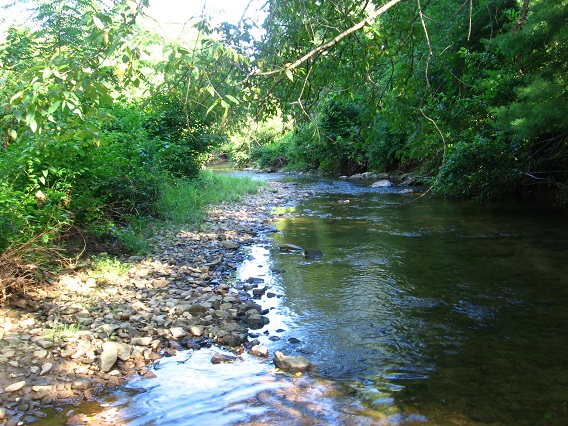
Wading day! Yes, this was the afternoon I literally decided to dive in and complete a project I’d had in mind several weeks: the wading of Leola Creek through a considerable chunk of the Blue Mountain Urban Landscape.
I started at the ALO community garden area where there’s easy access to the creek. My goal was to hike west on the creek toward the town mall. Mission accomplished (!).
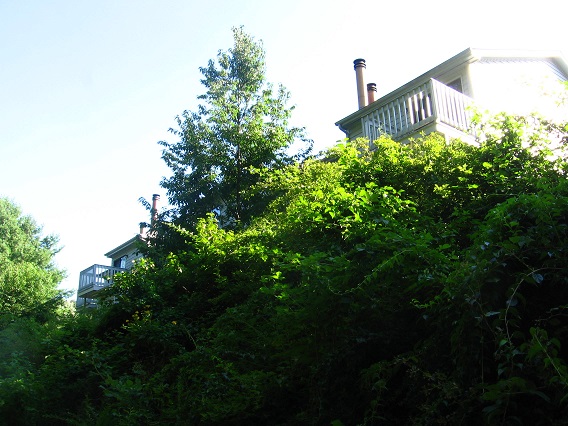
As it turns out, probably the most interesting spot on the creek that I visited this day was fairly close to the start, or just past the central ALO region. Its design is that of a wider strip of land between creek and commercial buildings to the north, enough to generate a type of internal microcosm, let’s say, at least in my eyes.
I don’t have a name yet for this microcosm, but I know it’s owned by what we can call Peanuts. Or perhaps just one particular Peanut pictured here. I won’t divulge the reasons for this association, but it’s a one-to-one matching. Peanut(s) owns this land.*
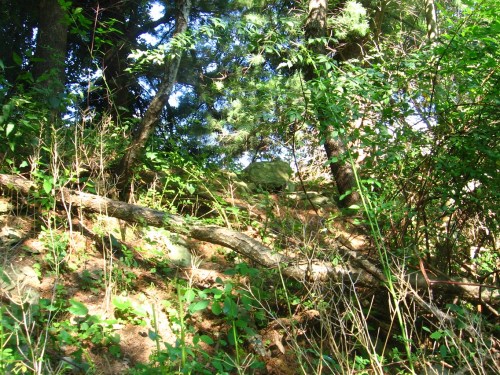
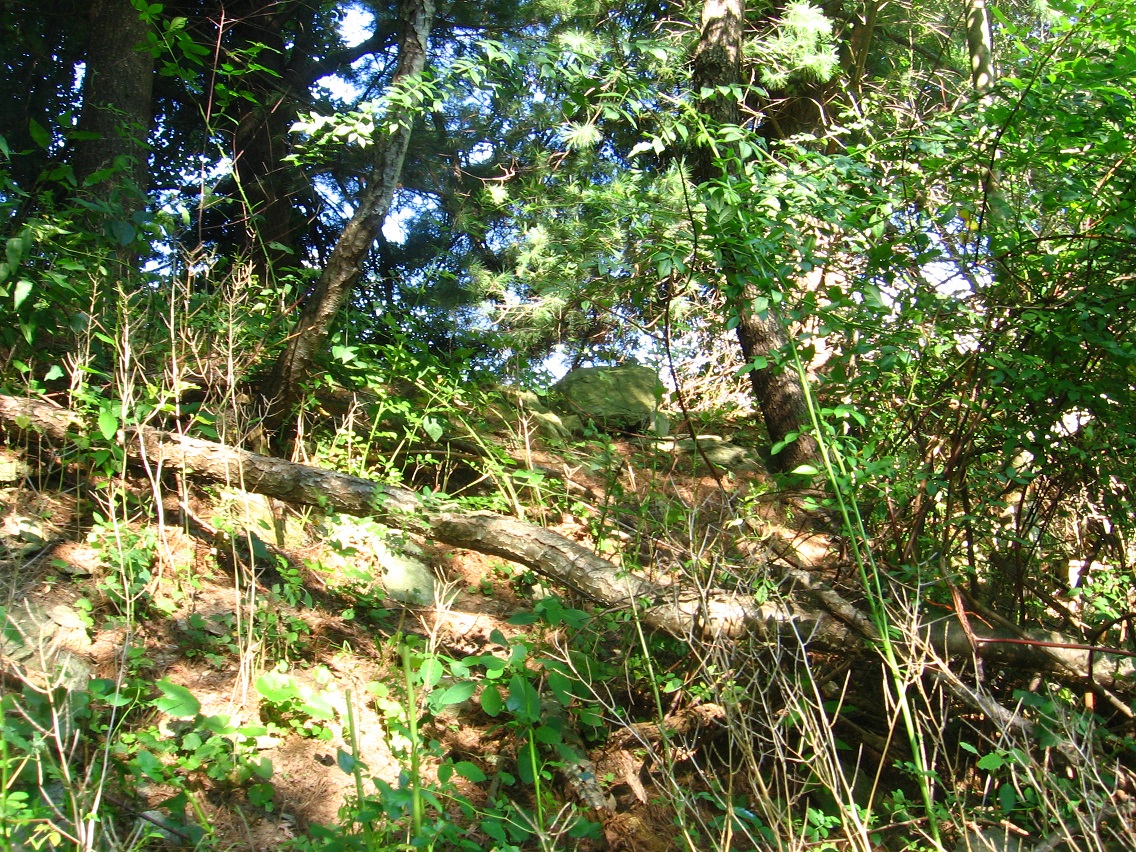
I plan to revisit this place very soon, perhaps using a more direct route from across the creek. I’ll attempt to make a map the next time. But for now, the below, overexposed pictures will have to serve. Certainly one of the more interesting aspects of this area is the higher cliff pictured below, topped with a number of rocks that are unfortunately dotted with poison oak plants. However, that’s about the only poison oak or ivy I saw in the immediate area. Kind of surprising. As I’ve stated before in this blog, such plants are not as common in the Blue Mountain environment as they are in, say, the lower Mythopolis of the piedmont region or even Middletown, another mountain berg but of lower elevation and more southern position. Chalk that advantage up to Blue Mountain over the others, then. And, parallel to this, give Blue Mtn. the advantage for having cooler summer temperatures, which certainly makes it a more pleasant place to live through much of July and August. But again that pendulumic downside: the harsher winters. Yeck!
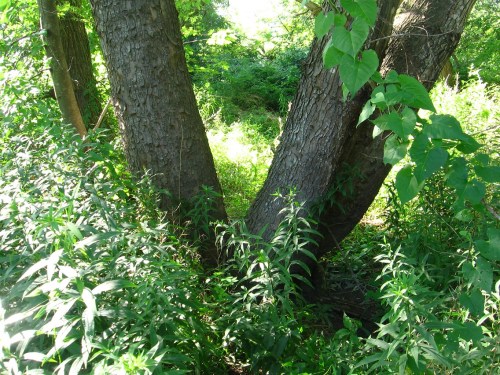
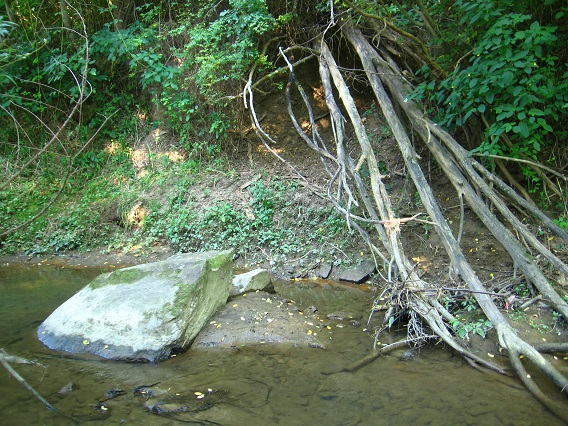
The above cliff top is maybe 30-40 feet above the creek. Between it and Leola Creek is a strip of flat land which contains, among a number of other interesting features, this splayed cluster of large trees. I’ll have to determine a species later on.
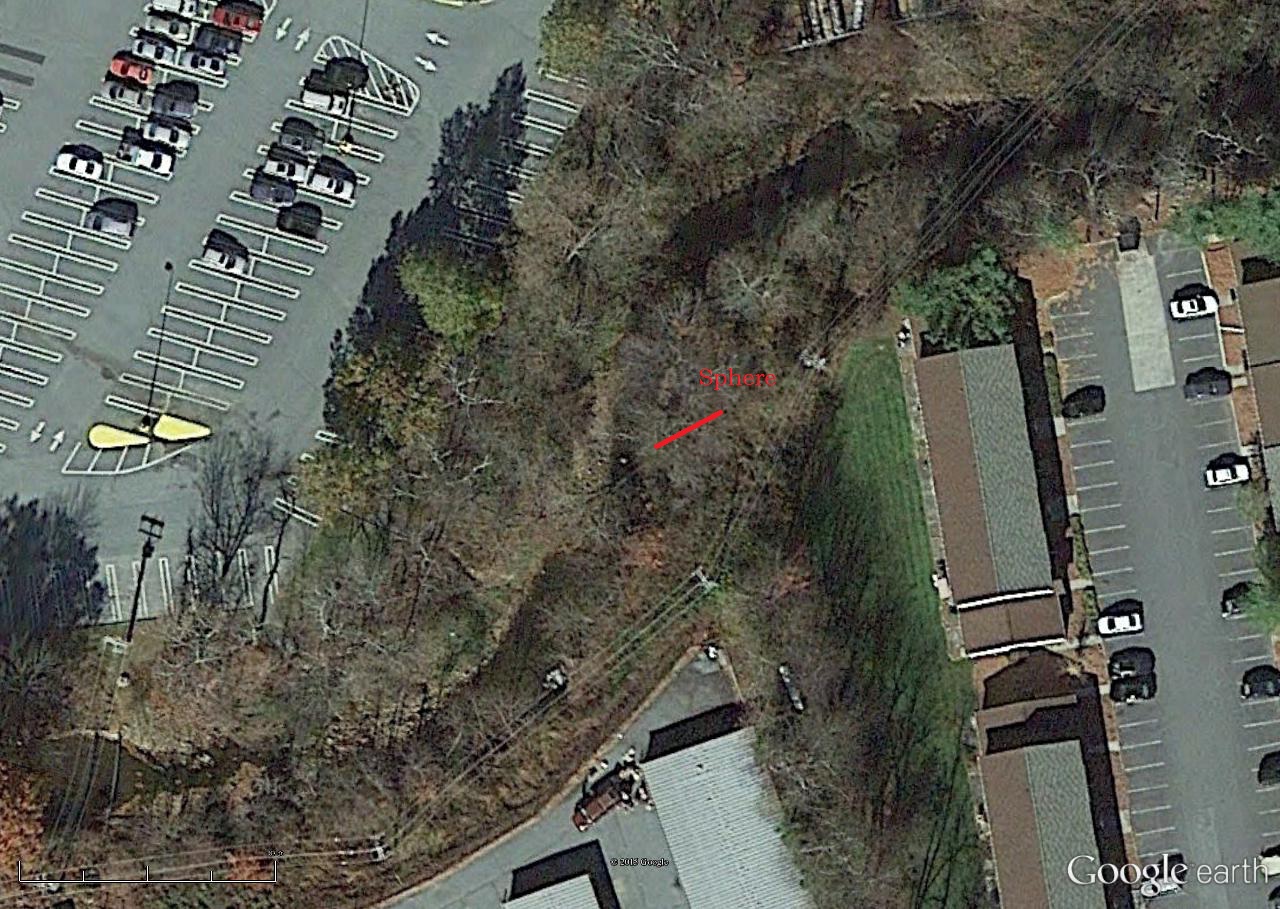
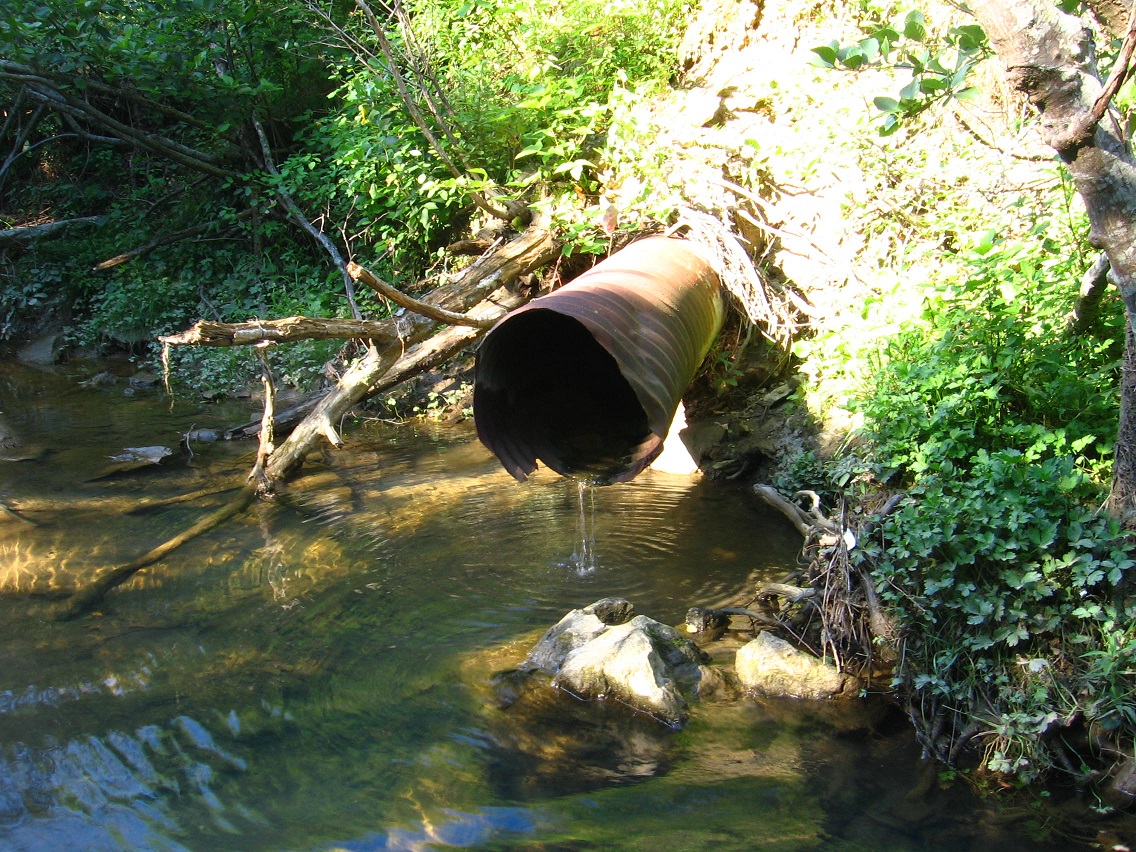
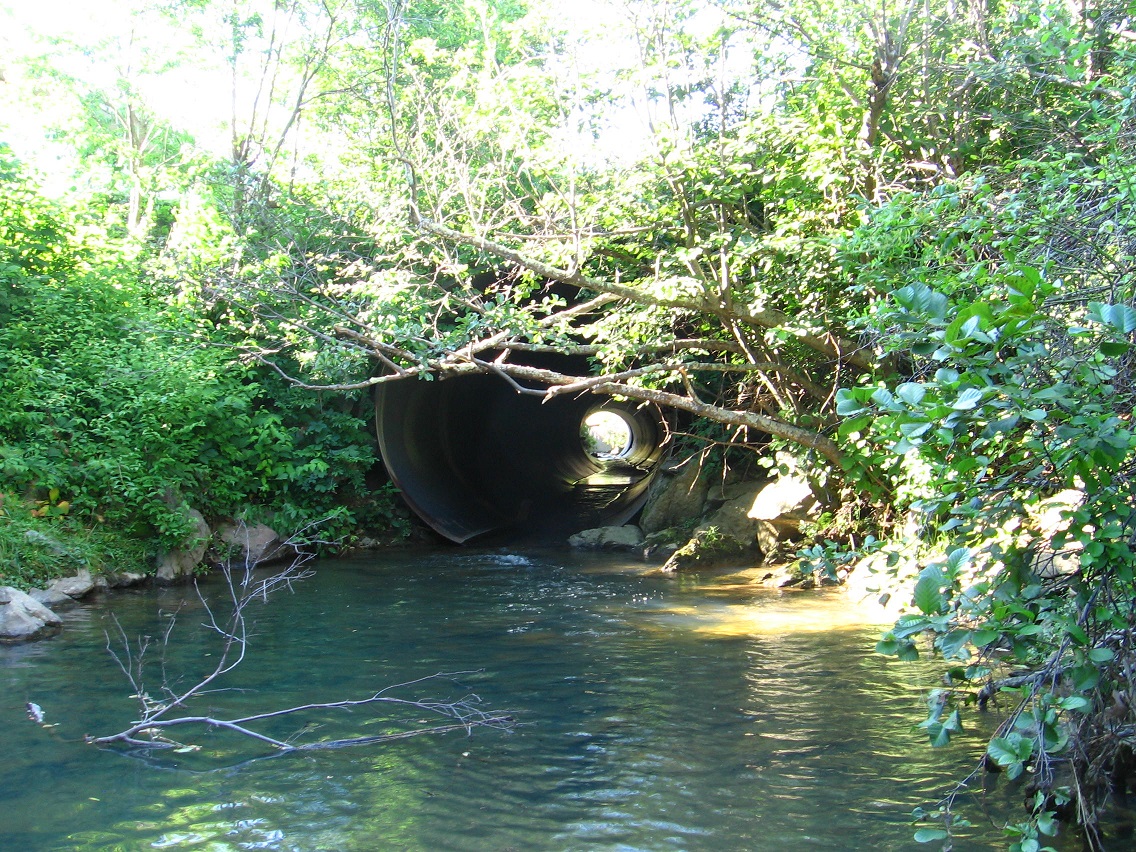
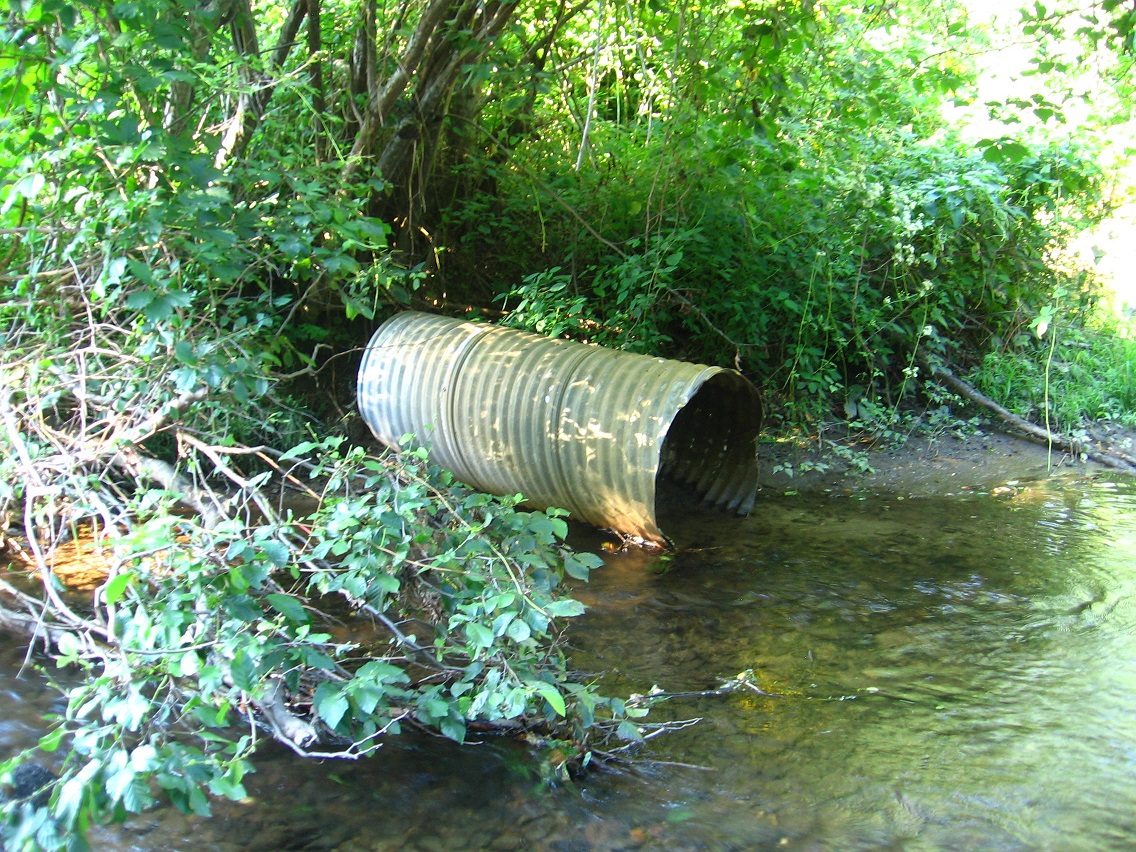
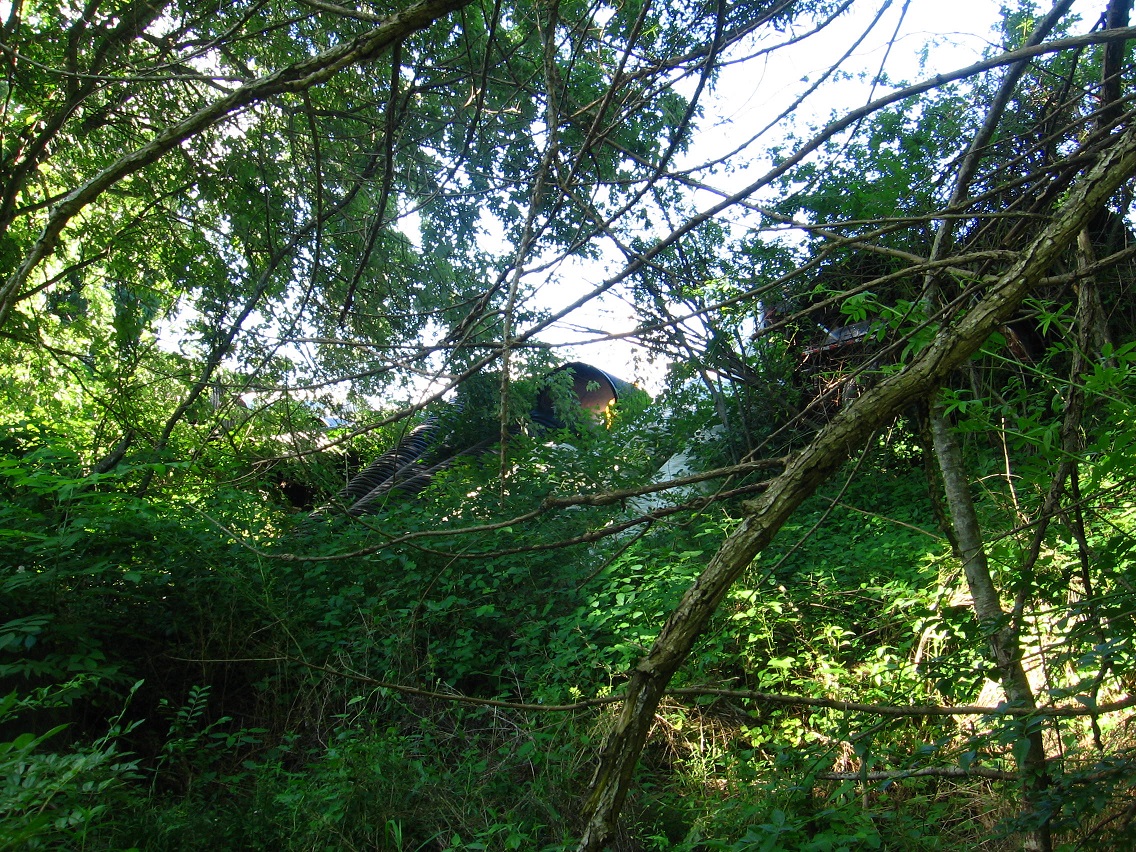
And then there’s the pipes dangling over the cliffs to the north and west of the one pictured above. I didn’t get a chance to examine them closely this day. They also clearly show up on GoogleEarth.

A nice long stretch of rocky beach lies near the beginning of this strip, and seems to represent the part most protected from prying eyes.

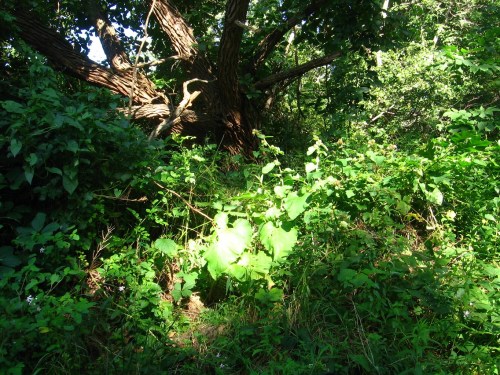
Another very interesting tree lies on the north side of the strip, just past the numerous pipes.
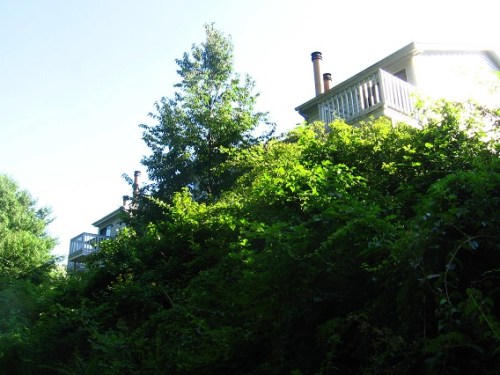
Moving beyond this wider swath of land between stream and civilization, we quickly encounter a series of apt. buildings, the first of which can be quite clearly seen from the creek. People within the apts. can also see me, and one did while tossing refuge in a pile at the top of the creek bank near me as I waded by. He seemed appropriately puzzled about what I was doing. But then he moved on, perhaps thinking I was fishing for trout, although I had no rod in hand. Or perhaps he just didn’t care and had more important things to consider at the time, like what to cook for supper.
Beyond the row of apts. in continuing to head upstream, we come again to that important confluence first spoke about here. To the right is the mouth of Blue Mountain Creek. To the left is the continuation of Leola Creek upstream to the mall and beyond. But since they’re both of about equal volume, the name situation could have been reversed. Or at least Blue Mountain Creek could have instead become the namesake continuation of Leola Creek.

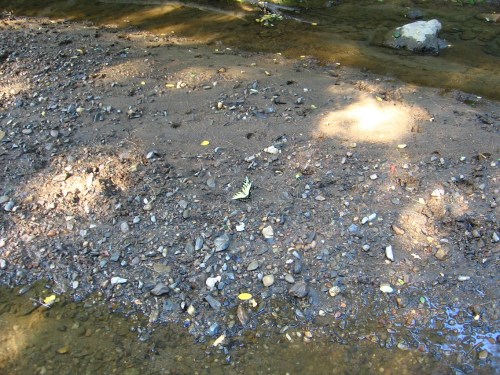
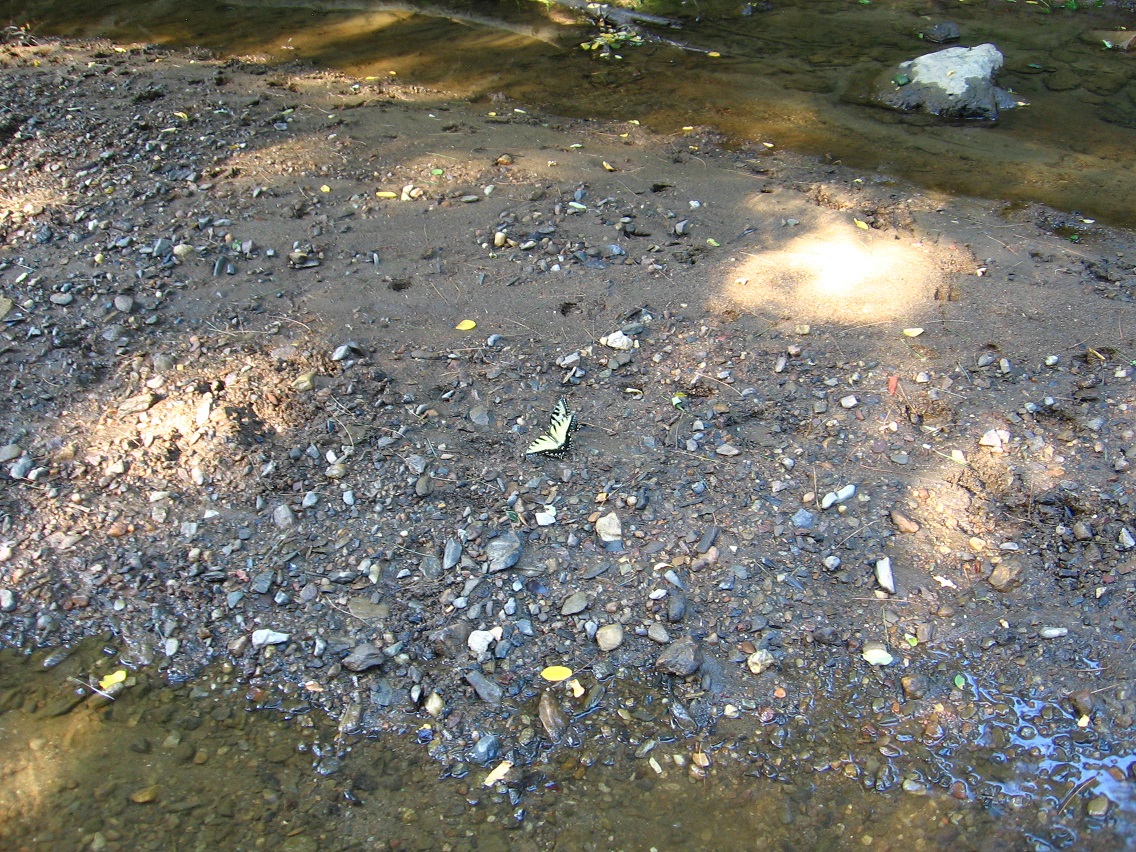
Monarch butterflies on a sandbar (well, mudbar) near the stream conjunction.
An old motor found in Blue Mountain Creek just upstream from its mouth. I followed this creek for maybe 100-150 yards to a deeper pool fronting a wide culvert underneath a highway, but decided not to go any further in that direction.

Instead I went back to the conjunction and kept on following Leola Creek upstream. Wading quickly turned trickier in this smaller flow, as the creek bottom became rockier and more uneven. I had to take it slow and easy to avoid loosing my balance on the slippery stones.
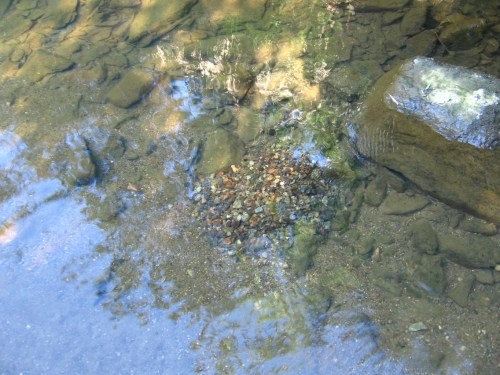
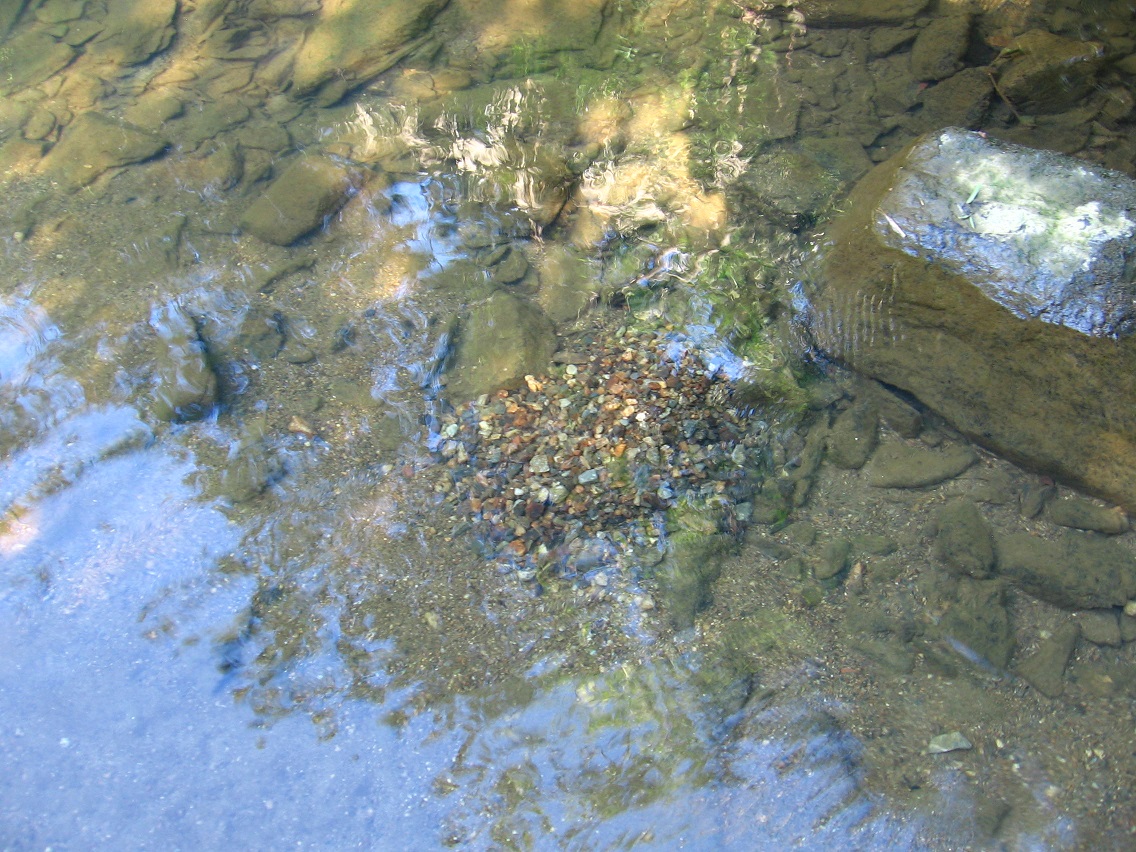
Piles of small rocks like this were encountered all along my journey up Leola Creek. I do not yet know or understand their meaning.
—–
* On perhaps a related note, check here:
https://schulzmuseum.org/about-the-man/frequently-asked-questions/
Why is the comic strip named Peanuts?
Originally, Charles Schulz named his strip Li’l Folks, but when it became syndicated in 1950 by United Feature Syndicate, there was concern about possible copyright infringement with a cartoon called Little Folks by Tack Knight that had been published in the 1930s. Schulz suggested Charlie Brown or Good Ol’ Charlie Brown, but the syndicate decided upon Peanuts. The name Peanuts was likely chosen because it was a well-known term for children at the time, popularized by the television program The Howdy Doody Show, which debuted in 1947 and featured audience section for children called the “Peanut Gallery.”
“I don’t like the name of my strip at all. I wanted to call it Good Old Charlie Brown, but the person at the syndicate who selected Peanuts just picked it at random from a list of possible titles he jotted down. He hadn’t even looked at the strip when he named it. The syndicate compromised on Sunday, though. Once I rebelled and sent it in without any title. We finally agreed to put Peanuts at the top and include Charlie Brown and His Gang in the sub-title on Sunday.”
– Charles M. Schulz, 1969








 Sunklands